



Thomas Powers, a Pulitzer Prize-winning journalist and writer, is best known for writing about intelligence organizations. His books include “Intelligence Wars: American Secret History from Hitler to al-Qaeda,” “Heisenberg’s War: The Secret History of the German Bomb” and “The Man Who Kept Secrets: Richard Helms and the CIA.”
Additional Photos
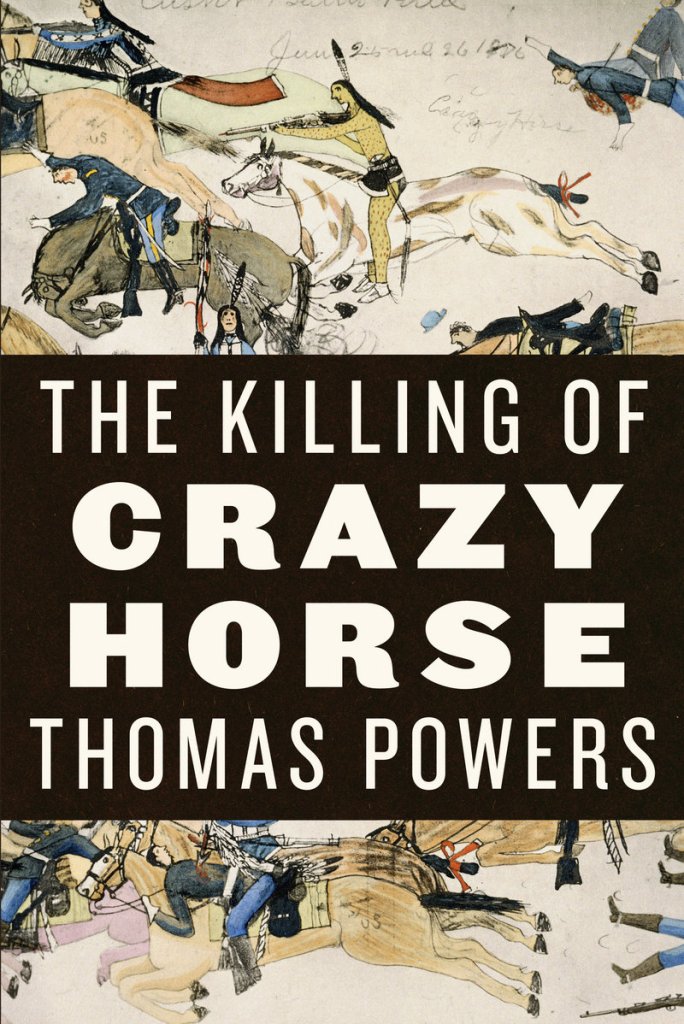
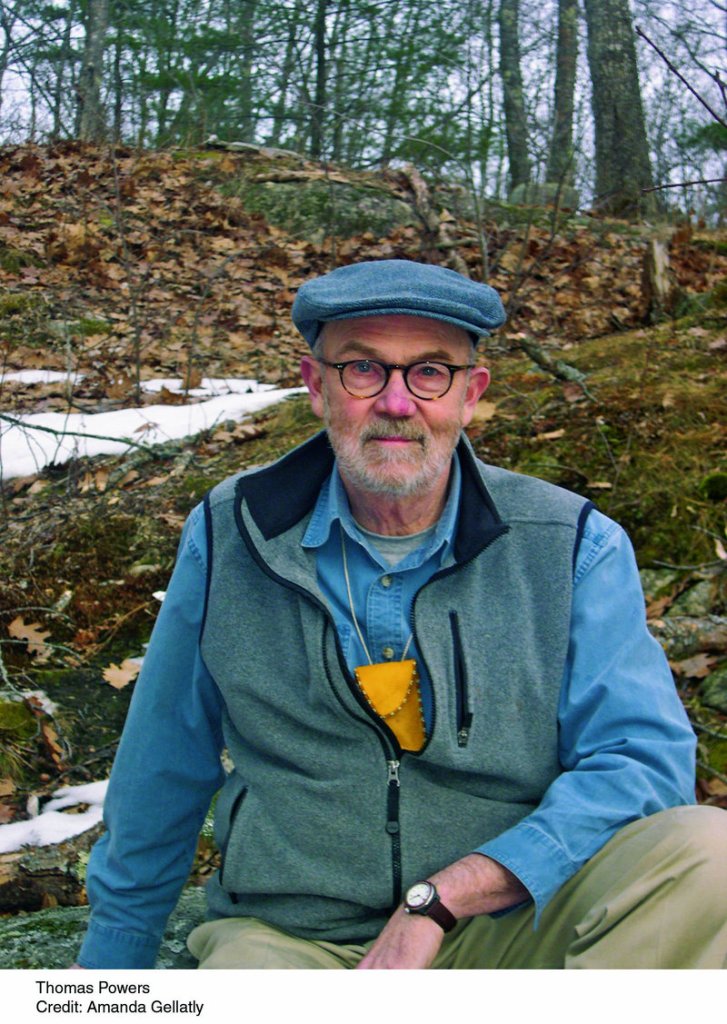
His latest book, “The Killing of Crazy Horse,” published by Knopf earlier this month, stems partly from a childhood interest, and partly from a trip he made to Little Bighorn in 1994.
Powers will be speaking to the Maine Historical Society at 7 p.m. Thursday. A crew from C-Span will be at the event, recording it for a future broadcast.
Powers lives in Vermont, but has connections to Maine beyond the talk. He has two daughters living in Maine — one in Phippsburg, the other majoring in nursing at the University of Southern Maine.
Q: How did you come to write this book? It seems like quite a switch from what you have written in the past.
A: The switch is more apparent than real, and seemed more apparent to me than it actually was. I was looking for something different to do, but in some ways it is the same: reporting on a secret American political act.
In 1994, I went to the Little Bighorn battle location and I read a book about Crazy Horse, which inevitably described his death. I was surprised by the richness and complexity of the characters, and I felt I had something to add to that.
It turned out there was a huge amount of material. It seems that everyone in the Territories understood immediately how important this event was, and wrote an account of it.
Q: You said somewhere that you weren’t going to place the blame for the killing of Crazy Horse, but just set out the information. But it can go from the specific — William Gentles, who held the bayonet that stabbed him — to the broad — the entire U.S. policy on Indians. Can you place it somewhere on that spectrum?
A: I didn’t want to place the blame, but an understanding of the reasons is in the book.
One place is the rival chiefs, who were jealous of him and remained wary of his reputation. Another was obviously the military officers, who were both afraid of him and mad at him for killing Custer. And the U.S. government was in a nervous state because of the Nez Perce war, and acted in a panicky fashion.
Woman Dress (a Sioux leader) almost certainly told a false story to the Army to further alarm them, saying Crazy Horse was planning to kill General Crook. Billy Garnett (a half-Sioux translator) should have understood this, because when he went to the village that day, Crazy Horse wasn’t going to the place where the killing was going to take place.
As with any murder mystery, it gets complicated.
Q: Can you speculate if the history of the Sioux — and the United States — would have been different if Crazy Horse had not been killed?
A: Crazy Horse had very deliberately and seriously decided not to fight the whites anymore, and one of the reasons why he was killed the way he was is that he refused to believe that the Army was out to get him. He walked right into the maw there, and just made up his mind that he was going to trust them, right until he saw the bars on the door.
Crazy Horse was not a political person. Red Cloud had a natural gift for politics and running things, and dealing with the whites to try to get his way,
Crazy Horse would have spent a lonely, sad couple of decades sitting at the reservation. Instead, he died at the very moment when the Sioux gave up their traditional way of life, and that is kind of appropriate.
So I don’t think we can turn this into a case of lost opportunity, and that is a great part of the sorrow.
Q: My knowledge of Plains Indian history is, to say the least, limited, and I had trouble early on following different tribes and bands of tribes: Oglala, Hunkpapa, Brul?Did you consider a chart or any kind of aid like that? About 100 pages in, I did an Internet search to sort of help me out.
A: A chart is not a bad idea, but it’s a bit late. Some people have told me this part is a little tough going, but I decided to write it in as rich a way as possible and see how it goes.
Q: What surprised you in your research?
A: I was surprised to discover how many Indians in South Dakota still take this event personally and seriously. To this day, the Oglala who live at Pine Ridge have two divisions: Crazy Horse people and Red Cloud people. Not that they think about it all day, but it is there.
If you go out West, there is an almost continuing murder investigation, a running story going on for years about some Indian found somewhere, and there is no real investigation of it but a lot of suggestive evidence that maybe it was done by white teenagers in pickup trucks. That kind of rawness and friction is there even after all this time.
Another thing that surprised me is that my interest in and respect for the Lakota religion got much deeper. I had not realized what a complex and interesting way they have of looking at the world, that there is some kind of universal field there, sort of like physics, where everything is connected with everything else.
Another thing I like about this story is that it has a big story linked with very interesting characters. It is one thing to collect the facts, and then you have to figure out how to tell the big, complex story. The actual writing of the book took as much time as finding out who these people were.
Tom Atwell can be contacted at 791-6362 or at
tatwell@pressherald.com
Send questions/comments to the editors.

Success. Please wait for the page to reload. If the page does not reload within 5 seconds, please refresh the page.
Enter your email and password to access comments.
Hi, to comment on stories you must . This profile is in addition to your subscription and website login.
Already have a commenting profile? .
Invalid username/password.
Please check your email to confirm and complete your registration.
Only subscribers are eligible to post comments. Please subscribe or login first for digital access. Here’s why.
Use the form below to reset your password. When you've submitted your account email, we will send an email with a reset code.