




Rackstraw Downes moved to Maine to paint. When he finished painting Maine, he left.
Just like that.
Additional Photos

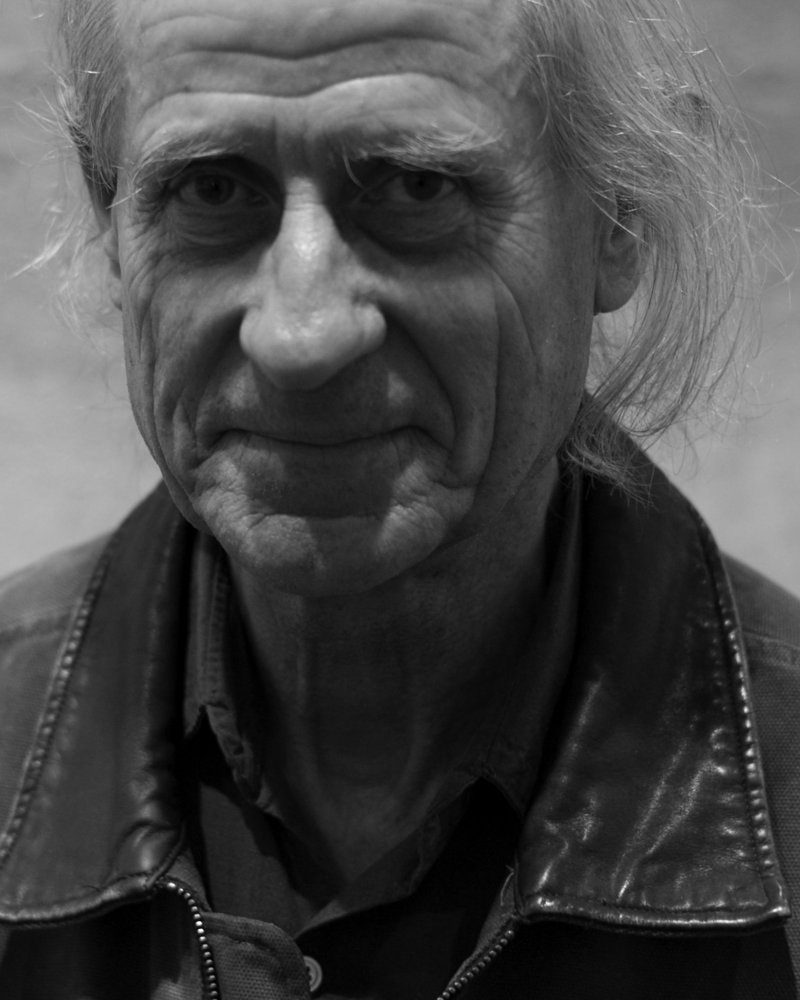
No hard feelings, no regrets.
“There was a strong moment, a distinct moment, when I felt it was time to move,” Downes says by phone from somewhere in West Texas, his latest geographical concentration. “I think that for some landscape painters, moving is a way of reinventing your style and making your appetite keener. You are excited by a fresh thing.
“On the other hand, you don’t know what you are looking at until you have been there.”
The Portland Museum of Art hosts “Rackstraw Downes: Onsite Paintings, 1972–2008” through March 20. Downes will discuss his work at 6 p.m. Thursday in a public lecture at Holiday Inn the Bay in Portland.
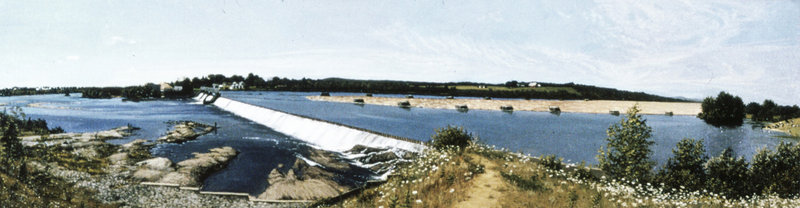
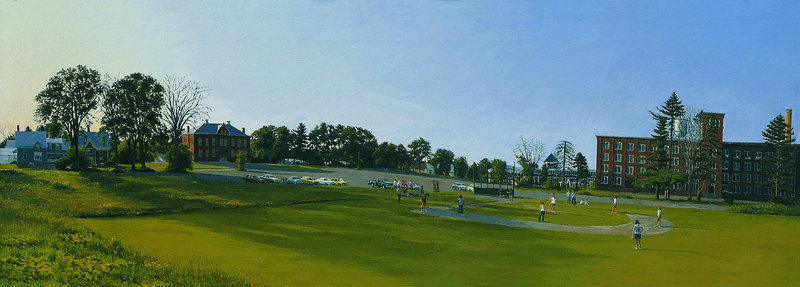
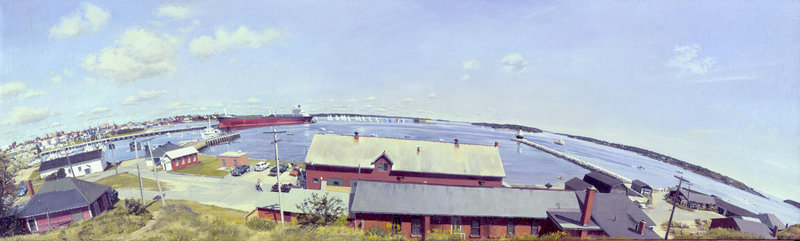
The exhibition includes two dozen large-scale landscapes that illustrate Downes’ encompassing, panoramic painting style. Maine is well represented in the show, with views of a dam in Fairfield, a ball field in Skowhegan, a lumber yard in Searsmont, Portland’s Back Cove, a view of Portland Harbor and the mouth of the Passagassawaukeag River in Belfast.
Downes, recipient of a 2009 MacArthur Foundation “genius” grant of $500,000 that allows him to paint without financial concern, spent 20 years in Maine beginning in the 1960s. Alex Katz, a New Yorker and part-time Mainer, suggested that Downes might find Maine an attractive subject.
The two knew each from Yale, where Katz instructed the young, aspiring British-born painter. Downes heeded his teacher’s advice. He bought a farm near Belfast and began making open-air paintings.
His work is defined by its attention to detail, said PMA curator Susan Danly. His scenes are minutely rendered in a realistic manner.
But Downes approaches his work conceptually, and often allows the melding of the natural world with man-made objects to become the subject of his focus.
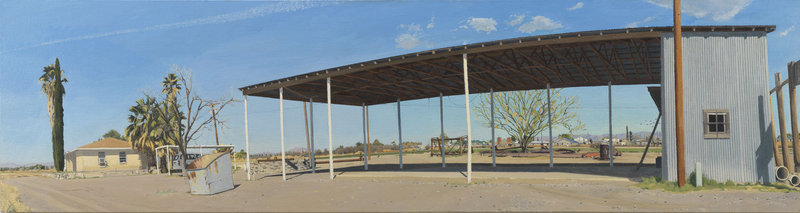
In “Onsite Paintings,” his focus ranges from roadways, urban centers and industrial scrapyards of the East Coast to oil fields and empty plains of Texas.
He completes his work on site, and paints directly from observation. He sometimes spends many months on a single piece, returning to the site to capture details of lighting and weather.
Viewers get a wide perspective of his vision in the PMA show. The exhibition follows Downes’ career through examples of his work painted in Maine, Texas, New Jersey and New York, including two empty interior spaces in the World Trade Center.
These days, Downes, 70, lives in New York and Texas.
Texas has his attention now as Maine did before, but in a different way. Because he grew up in England, Downes felt acclimated in Maine. Things looked and felt familiar, aesthetically and culturally.
Texas is altogether new for him.
Galveston held him initially. The oil fields reminded him of New Jersey, and after he began spending time there, he learned that birders from across the world gather there to watch annual spring migrations across the Gulf of Mexico. The birds arrive at the Galveston oil fields and collapse, exhausted from their journey.
The contrast between the natural and industrial interested him.
“There was this wonderful mixture of modernity and practicality and natural life, all kind of muddled up there,” he said.
More recently, he’s found west Texas to his liking.
“It’s completely different out here,” he said. “There are deserts here, and mountains. I’m surrounded by mountains. That ideal appeals to me very much.”
He comes out in November, and stays until April. The rest of the year, he’s back in New York.
Downes maintains relations with the Skowhegan School of Painting and Sculpture, with which he has been long associated. Otherwise, his contact with Maine is limited.
“I sold the house, sold the land. That was a kind of farewell, and I feel quite comfortable about that. I had 20-odd great years there, which were quite productive,” he said.
“And then it was over. I don’t mind that at all.”
Staff Writer Bob Keyes can be contacted at 791-6457 or at: bkeyes@pressherald.com
Follow him on Twitter at: twitter.com/pphbkeyes
Send questions/comments to the editors.

Success. Please wait for the page to reload. If the page does not reload within 5 seconds, please refresh the page.
Enter your email and password to access comments.
Hi, to comment on stories you must . This profile is in addition to your subscription and website login.
Already have a commenting profile? .
Invalid username/password.
Please check your email to confirm and complete your registration.
Only subscribers are eligible to post comments. Please subscribe or login first for digital access. Here’s why.
Use the form below to reset your password. When you've submitted your account email, we will send an email with a reset code.