



A small (and some would say naïve) part of me remains hopeful that the Food and Drug Administration will bar AquaBounty’s genetically engineered Atlantic salmon from entering our food supply and environment, but my rational side is steeling myself against a seemingly inevitable approval.
This brave new salmon comes with growth hormones spliced into its genetic code, which cause the fish to grow twice as fast as normal salmon.
Additional Photos
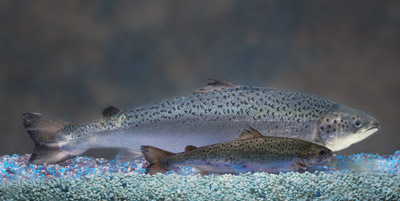
Consumer advocates and independent scientists claim AquaBounty relied on shoddy science when investigating the properties of this transgenic fish. The problems with the research AquaBounty presented to federal regulators, they say, include a woefully small sample size, a lack of double-blind methods and a test procedure that was too insensitive to adequately measure the components it purported to detect.
Even with such sloppy research techniques, the limited data are disturbing. They indicate that the genetically engineered salmon have the potential to contain higher levels of a cancer-causing hormone and are likely to increase the severity of reactions in folks who are allergic to fish.
A federal advisory panel (heavily weighted with members who have ties to the GMO industry) recently held hearings on whether to approve the altered salmon for human consumption. If approved, this would be the first genetically engineered animal to enter our food supply.
The panel has yet to issue its recommendation, but based on comments by its members, the committee appears likely to advocate that the FDA approve this new type of fish.
In contrast, consumer groups, independent scientists and citizens have been vocal in their opposition to this latest laboratory creation. But will the FDA listen?
Bob St. Peter isn’t optimistic. St. Peter heads Food for Maine’s Future, a group that advocates for local rather than corporate control over the food supply.
“It’s a technology consumers aren’t asking for and are openly objecting to, but the FDA is on track to approve the salmon,” St. Peter said.
Among the hundreds of comments the agency received from the public – the vast majority of which argue against approval – there was a box of 171,645 comments collected by Food & Water Watch, a national food safety group.
However, when I contacted the FDA to find out why those comments weren’t reflected in the agency’s official tally of public reaction, I was told all comments that use a form letter or contain similar wording are bundled together and counted as one comment.
So, 171,645 individuals objecting to AquaBounty’s salmon have been boiled down to one comment. Such a move doesn’t engender much confidence in the FDA’s ability to take consumer input seriously.
Sadly, this type of wholesale discounting of public opinion has become par for the course with federal agencies that regulate food.
Instead, the well-documented revolving door that continually shuffles top staffers from food and drug companies into influential positions in the agencies that supposedly regulate them ensures that corporate agendas take precedence in rules governing what we eat.
Not only has this biased regulatory system brought us salmonella in eggs and E. coli in hamburgers, it’s flooded our food system with genetically engineered organisms, which have never been rigorously tested for safety or labeled when they hit the supermarket.
Instead, you and I and every other American – from formula-fed babies to those hospitalized with compromised immune systems – have become unwilling guinea pigs in a colossal experiment that pits human health against corporate profits.
AquaBounty claims its transgenic fish is safe to eat, won’t escape into the wild and will help solve world hunger. In next week’s column, I’ll examine the accuracy of each of those claims.
Staff Writer Avery Yale Kamila can be contacted at 791-6297 or at: akamila@pressherald.com
Send questions/comments to the editors.

Success. Please wait for the page to reload. If the page does not reload within 5 seconds, please refresh the page.
Enter your email and password to access comments.
Hi, to comment on stories you must . This profile is in addition to your subscription and website login.
Already have a commenting profile? .
Invalid username/password.
Please check your email to confirm and complete your registration.
Only subscribers are eligible to post comments. Please subscribe or login first for digital access. Here’s why.
Use the form below to reset your password. When you've submitted your account email, we will send an email with a reset code.