



Maine election officials are expecting an unusually low turnout for Tuesday’s primary elections, which could influence the outcome of the hotly contested U.S. Senate races.
Today is the deadline to request an absentee ballot or to vote early by casting an absentee ballot at a city or town hall. So far, the number of absentee voters – a good early indicator of election-day turnout – is much lower than it was for the June primary elections in 2008 and 2010.
Additional Photos
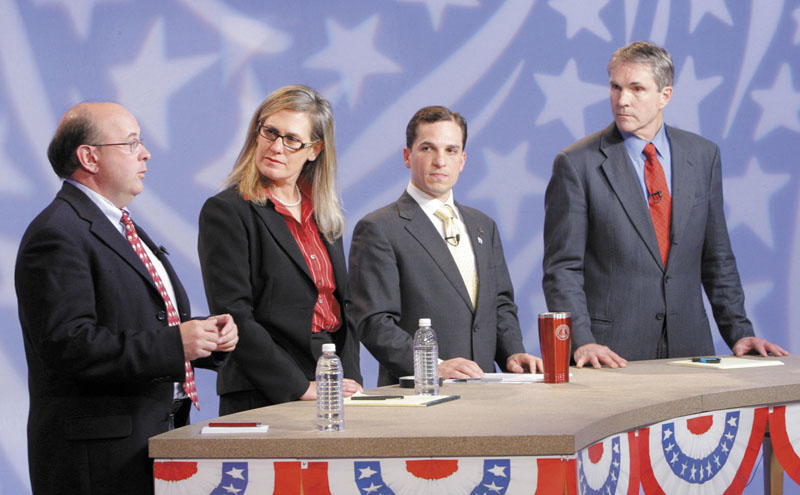
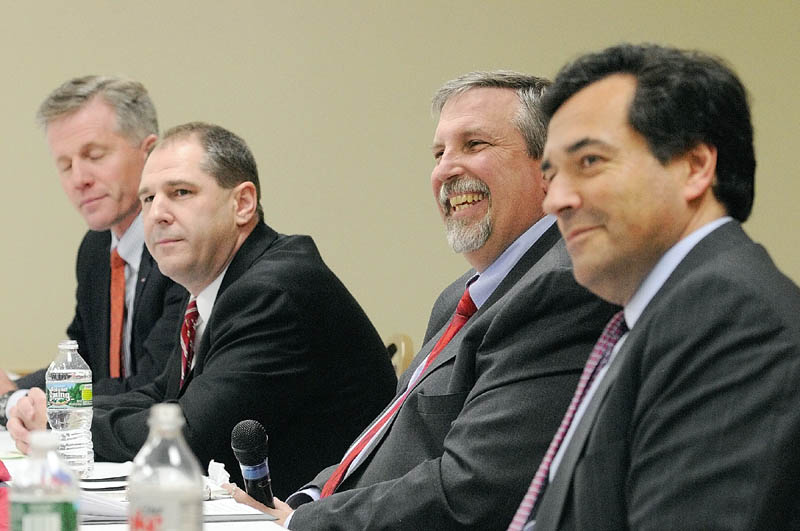
Only 4,229 Mainers had requested absentee ballots or voted early as of Tuesday, said Megan Sanborn, spokeswoman for the Maine Secretary of State’s Office. Even with a last-minute rush, the numbers will fall far short of those for the June 2010 primary – 36,946 absentee ballots cast – and the June 2008 primary – 14,430 cast.
“This one is extremely low,” said Sanborn.
While voters may still be trying to make up their minds, some election officials say voters just don’t seem interested in the state and congressional primaries, even though Tuesday’s vote is the first step in electing Maine’s next U.S. senator. A total of 10 Democrats and Republicans are on the ballots seeking their party’s nomination for the seat.
South Portland usually gets requests for 600 to 700 absentee ballots in primary elections, but the city had only 144 absentee requests as of Wednesday, said City Clerk Susan Mooney. “There doesn’t seem to be a huge interest in this election so far.”
Bangor City Clerk Lisa Goodwin is seeing the same trend. “There’s nothing really urging them forward, I guess,” she said.
And Biddeford City Clerk Carmen Morris said absentee voting there is down by nearly half from 2010, even after getting ballots to the city’s nursing homes. “There wasn’t even a lot of interest there.”
Unlike in past years, no referendum questions are on the ballot to draw independent voters to the polls. Only registered Republicans and Democrats can participate in the primaries, although independent voters can enroll in a party at the polls if they want to vote.
There also appears to be an Angus King factor, Mooney said. The popular former governor is running for the Senate seat as an independent, which means he won’t be on the ballot until November. Voters who like King, or those who figure he’s likely to win, have even less reason to vote Tuesday.
“I hear a lot of talk about support for King, and he isn’t going to be on a ballot for the primary,” Mooney said.
Portland City Clerk Kathy Jones said the dip in absentee voting could be misleading, because voters who have many choices could still be undecided. That’s what happened in Portland’s 15-way mayoral race in November, when the turnout on Election Day was larger than expected.
“Maybe people are just waiting and wanting to make sure before they vote,” Jones said.
Local election officials predict the statewide turnout will be less than 20 percent of registered voters.
Some experts have said it could be as low as 15 percent.
In June 2010, Maine’s gubernatorial primaries helped attract a 32 percent turnout. The June 2008 turnout was about 19 percent.
In 1996, the last time Democrats and Republicans competed for an open U.S. Senate seat, 20 percent of registered voters cast ballots. (Susan Collins ultimately won that seat.)
A 20 percent turnout would mean that 80,000 to 100,000 voters cast ballots in each U.S. Senate primary, roughly a third of the members in each major party.
Political experts say a small turnout tends to benefit candidates who appeal to the party’s most hard-core members – conservative Republicans and liberal Democrats. It also gives even more of an advantage to candidates with name recognition, and those who have money for last-minute media campaigns.
Phil Harriman, a political analyst and a former Republican legislator from Yarmouth, said he’s not surprised by the signs of a low turnout, given that most of the Senate candidates didn’t begin campaigning until March. Sen. Olympia Snowe, R-Maine, announced Feb. 28 she would retire from the seat.
“I think it’s going to come down to what have they got in play over the next week (that) will help the voter decide between their top two or three candidates,” Harriman said.
David Farmer, a Democratic political consultant, said a low turnout “helps the person who has the highest name identification and the strongest field organization.”
However, Farmer said, he believes the Senate race will attract more voters on Tuesday than some expect.“With so many candidates working so hard, I’d be surprised if it’s as low as 15 percent,” he said.
Staff Writer John Richardson can be contacted at 791-6324 or at:
jrichardson@pressherald.com
Send questions/comments to the editors.

Success. Please wait for the page to reload. If the page does not reload within 5 seconds, please refresh the page.
Enter your email and password to access comments.
Hi, to comment on stories you must . This profile is in addition to your subscription and website login.
Already have a commenting profile? .
Invalid username/password.
Please check your email to confirm and complete your registration.
Only subscribers are eligible to post comments. Please subscribe or login first for digital access. Here’s why.
Use the form below to reset your password. When you've submitted your account email, we will send an email with a reset code.