



“You’ve probably seen or heard the national debate that is raging over the $716 billion robbing of Medicare that will directly impact costs and care for tens of millions of seniors across this country.”
— email from Maine People Before Politics, a conservative interest group, to supporters
Additional Photos
Let’s start with the implication that seniors are getting a bad deal here:
Benefits to Medicare recipients are not expected to be touched under these Medicare cuts. Payments to health providers and insurers, however, will be scaled back.
In fact, the nation’s main senior citizen advocacy group, the AARP, has said the law at issue here, the Patient Protection and Affordable Care Act, colloquially known as Obamacare, “strengthens Medicare and improves long-term care services.”
How’s that?
The federal Department of Health and Human Services recently announced that in the first half of 2012, 1 million Medicare recipients actually saved an average of $629 on prescription drugs after the health care reform law filled a previous coverage gap. Also, the law stipulates guaranteed Medicare benefits can’t be rolled back, according to FactCheck.org.
“Nothing in the Medicare payment reductions directly impacts the eligibility or benefits that Medicare enrollees receive, assuming that the law is implemented roughly as designed,” said John McDonough, a professor of public health practice at the Harvard School of Public Health.
Any talk of Medicare “robbing” is a half-truth by omission. The $716 billion in savings from Medicare will indeed pay for about half of the cost of Obamacare over 10 years. That money isn’t being cut now — it’s a Congressional Budget Office estimate of a planned reduction slowing Medicare’s growth from 2013 through 2022.
This Medicare dispute is at the center of one of the biggest rhetorical battles between national Republicans and Democrats.
It’s a complex issue often turned into sound bytes, such as the email sent by Jason Savage, the executive director of Maine People Before Politics, the advocacy group that grew out of Gov. Paul LePage’s transition team.
Savage’s email to supporters last week contained a list of 48 Democratic Maine state legislators who signed a brief to the U.S. Supreme Court earlier this year urging justices to uphold Obamacare.
“Unfortunately, we now have proof that the 2010 government takeover of health care was designed to rob funds from Medicare to pay for the massive new program,” Savage wrote.
Savage is partially correct: the savings will go toward paying nearly half the cost of Obamacare, wrote McDonough on his Boston Globe blog Wednesday.
Still, nothing is really “robbed,” the way almost anyone uses the word, and that money is largely coming from reduced payments to hospitals, other health providers and insurers.
In 2009, hospital associations agreed to Medicare and Medicaid cuts over 10 years in anticipation of the expansion of health care coverage under Obamacare, according to the Wall Street Journal. The idea was that more customers would more than offset the cuts.
With a CBO estimate adjusted for 2013 through 2022, hospitals will lose $260 billion out of the total savings because of lower reimbursements for Medicare services. There are further cuts targeted toward some hospitals.
One change for insurers comes in payments to Medicare Advantage plans, designed in the Bush administration to tamp down costs of plans through competition from private insurers. Those ended up being more expensive than regular Medicare plans, according to the Washington Post, which said those plans will be scaled back with future reimbursement levels tied to merit-based metrics.
But cuts aren’t without bad possibilities, some sources say.
The Brookings Institution has said it’s too early to tell if reduced payments to hospitals mean there will be negative impacts on quality of or access to health care. The Washington Post has said the reductions “could” affect Medicare quality.
Verdict: The statement ignores the benefits and leaves out crucial information surrounding the targets of cuts.
Savage’s “robbing” rhetoric doesn’t quite fit the scope of the cuts, but his numbers are good. Since benefits for some seniors have already improved, it’s a stretch to suggest for certain that seniors will be negatively impacted, although it is possible in the future.
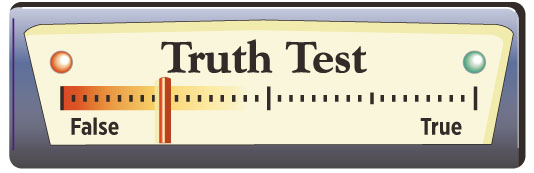
We rate this statement mostly false.
Staff Writer Michael Shepherd can be contacted at 621-5632 or at:
mshepherd@mainetoday.com
Send questions/comments to the editors.

Success. Please wait for the page to reload. If the page does not reload within 5 seconds, please refresh the page.
Enter your email and password to access comments.
Hi, to comment on stories you must . This profile is in addition to your subscription and website login.
Already have a commenting profile? .
Invalid username/password.
Please check your email to confirm and complete your registration.
Only subscribers are eligible to post comments. Please subscribe or login first for digital access. Here’s why.
Use the form below to reset your password. When you've submitted your account email, we will send an email with a reset code.