



LAKOTA, N.D. – The use of unmanned aerial drones, whose deadly accuracy helped revolutionize modern warfare high above the battlefields of Iraq and Afghanistan, is now spreading intrigue and worry across the plains of North Dakota.
Amid 3,000 acres of corn and soybeans and miles from the closest town, a Predator drone led to the arrests of farmer Rodney Brossart and five members of his family last year after a dispute over a neighbor’s six lost cows on his property escalated into a 16-hour standoff with police.
Additional Photos
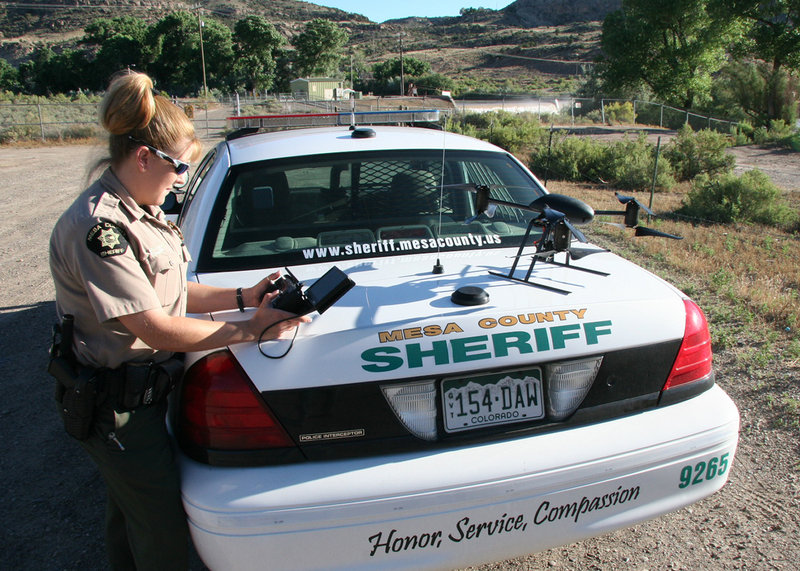
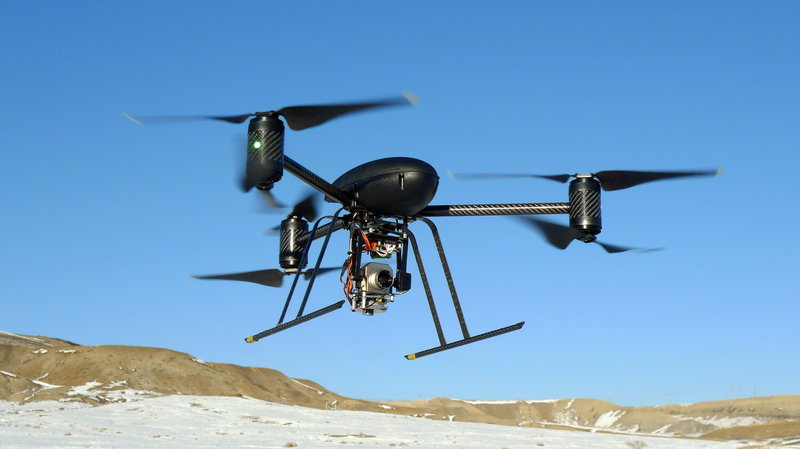
It is one of the first reported cases in the nation where an unmanned drone was used to assist in the arrest of a U.S. citizen on his own property, and a controversial sign of how drones, in all shapes, sizes and missions, are beginning to hover over American skies.
Far from just the menacing aircraft bearing Hellfire Missiles and infrared cameras from combat, unmanned aerial systems, the preferred term in the industry, now include products so small they fit in the palm of your hand and can look as innocent as remote-controlled hobby airplanes.
They can quickly scout rural areas for lost children, identify hot spots in forest fires before they get out of control, monitor field crops before they wither or allow paparazzi new ways to target celebrities. The government has predicted that as many as 30,000 drones will be flying over U.S. skies by the end of the decade.
But can drones fly in domestic airspace without crashing into an airplane? Can they be used in a way that doesn’t invade privacy? Who’s watching the drone operators — and how closely?
“All the pieces appear to be lining up for the eventual introduction of routine aerial surveillance in American life — a development that would profoundly change the character of public life in the United States,” the American Civil Liberties Union warned in a policy paper on drones last year, titled “Protecting Privacy From Aerial Surveillance.”
In the North Dakota case, fearing that the Brossarts had armed themselves, local law enforcement asked for the assist from the Predator — unarmed but otherwise identical to the ones used in combat — that’s stationed at Grand Forks Air Force Base as a SWAT team converged on the property.
It put Rodney Brossart front and center in the debate over the burgeoning use of domestic drones, and the threat they may represent when authorities are given the ability to watch everything from above.
“I’m not going to sit back and do nothing,” Brossart said recently, sitting in the shade outside his small house where farm equipment, trailers and the top half of a school bus sit in the yard in various states of disrepair. As drone use expands nationwide, he’s worried. “I don’t know what to expect because of what we’ve seen.”
Groups from the Electronic Privacy Information Center to the American Library Association have joined to raise concerns with the Federal Aviation Administration about the implications of opening up U.S. air space to drones, as have Reps. Edward Markey and Joe Barton, co-chairs of the Congressional Bi-Partisan Privacy Caucus.
But the federal government already has been quietly expanding their use in U.S. air space. Even as the wars abroad wind to an end, the military has been pleading for funding for more pilots. Drones cannot be flown now in the United States without FAA approval. But with little public scrutiny, the FAA already has issued at least 266 active testing permits for domestic drone operations, amid safety concerns. Statistics show unmanned aircraft have an accident rate seven times higher than general aviation and 353 times higher than commercial aviation.
Under political and commercial pressure, the Obama administration has ordered the FAA to develop new rules for expanding the use of small drones domestically. By 2015, drones will have access to U.S. airspace currently reserved for piloted aircraft.
“Think about it; they are inscrutable, flying, intelligent,” said Ryan Calo, the director of privacy and robotics for the Center for Internet and Society at Stanford Law School. “They are really very difficult for the human mind to cleanly characterize.”
While drone use in the rest of the country has been largely theoretical, here in eastern North Dakota it is becoming a way of life.
Drivers on Highway 2 near the Grand Forks base say they often see the U.S. Customs Predator B (the B indicates it is unarmed) practicing “touch and go” landings in the morning. A local sheriff’s deputy talked of looking up from writing reports in his patrol car one night to see a drone quietly hovering over him. Don “Bama” Nance, who spent 20 years in the Air Force before retiring to Emerado, now cuts the grass on the base golf course.
“They’re always overhead on the third hole,” he said.
The Grand Forks base has been flying drones since 2005, when it switched missions from flying tankers to unmanned aerial systems. So, too, have the storied Happy Hooligans of the North Dakota Air National Guard, which has flown drone missions in Iraq and Afghanistan from its base in Fargo.
And use is growing. Predators operated by Customs and Border Patrol completed more than 30 hours of flight in 2009 and more than 55 hours in 2010, mapping the flooded Red River Valley areas of North Dakota and Minnesota. In 2011, the Predator B flew close to 250 hours in disaster relief support along the northern border.
The Grand Forks base, which now has two Predators flying, expects to have as many as 15 Northrop Grumman Global Hawks and six to eight General Atomics Predators/Reapers. That will add an additional 907 Air Force personnel to the base.
For this wide swath of eastern North Dakota, that is part of the appeal: jobs. The University of North Dakota has eagerly partnered with the military and defense contractors, and often operating behind locked doors and secrecy, university officials are working to make the area a hub of unmanned aircraft activity. The state has invested an estimated $12.5 million to make it happen. The local Economic Development Corporation has added a drone coordinator in charge of recruiting more companies to join the 16 drone-related ones that have already set up shop.
“Where aviation was in 1925, that’s where we are today with unmanned aerial vehicles,” said Al Palmer, director of UND’s Center for Unmanned Aircraft Systems Research, Education and Training. “The possibilities are endless.”
Send questions/comments to the editors.

Success. Please wait for the page to reload. If the page does not reload within 5 seconds, please refresh the page.
Enter your email and password to access comments.
Hi, to comment on stories you must . This profile is in addition to your subscription and website login.
Already have a commenting profile? .
Invalid username/password.
Please check your email to confirm and complete your registration.
Only subscribers are eligible to post comments. Please subscribe or login first for digital access. Here’s why.
Use the form below to reset your password. When you've submitted your account email, we will send an email with a reset code.