



BUENOS AIRES, Argentina —
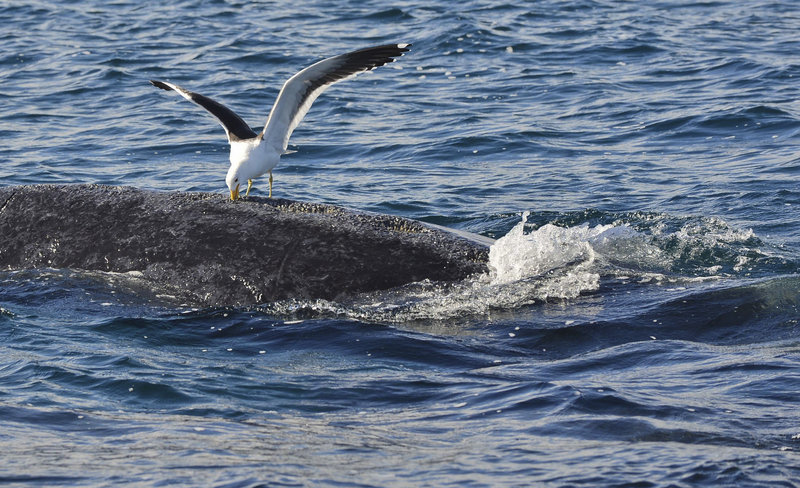
Saving the whales is something Argentines take so seriously that authorities are planning to shoot seagulls that have developed a habit of attacking the huge marine mammals.
Additional Photos
Environmentalists say the plan is misguided. They say humans are the real problem, creating so much garbage that the gull population has exploded, endangering the whales.
Both sides agree that what was bizarre animal behavior a decade ago has now become a real hazard for threatened southern right whales in one of their prime birthing grounds, turning whale-watching from a magical experience to something from a horror movie.
Seagulls off the coast of the Patagonian city of Puerto Madryn have discovered that by pecking at the whales as they come up for air, they can create open wounds. Then, each time the whales surface, it’s dinner time: Gulls swoop down and dig in, cutting away skin and blubber with their beaks and claws.
“It’s not just that the gulls are attacking the whales, but that they’re feeding from them, and this way of feeding is a habit that is growing and becoming more frequent,” said Marcelo Bertellotti, who works for the National Patagonia Center, a government-sponsored conservation agency. “It really worries us because the damage they’re doing to the whales is multiplying, especially to infant whales that are born in these waters.”
Whales also are changing their behavior in response: Instead of breaching the water and dramatically displaying their tails, they rise just barely enough to breathe through their blow-holes before descending to safety, Bertellotti said.
Bertellotti’s answer: Shoot the gulls that display this behavior with air rifles and hunting guns, and recover each downed bird before they are eaten along with the ammunition, causing still more damage to marine life.
Whale-watching is big business for Chubut. Southern right whales have recovered to about 8 percent of their original population since becoming a protected species worldwide, and hundreds come to the calm, warm waters of the gulf formed by the Valdez Peninsula to give birth and raise their newborns each July to December.
Gull attacks were rare until about eight years ago, said Milko Schvartzman, who coordinates the oceans campaign for Greenpeace in Latin America. But more gulls have caught on, and the population has boomed to the point where whales are attacked at least every fourth time they surface, he said.
Now the tourists are suffering along with the whales, he said. “It’s not so pleasant anymore.”
Environmentalists advocate reducing the seagull population by denying the birds food by closing open-air garbage dumps around the gulf and stopping fishermen and a nearby seafood packing plant from dumping scraps into the water.
Send questions/comments to the editors.

Success. Please wait for the page to reload. If the page does not reload within 5 seconds, please refresh the page.
Enter your email and password to access comments.
Hi, to comment on stories you must . This profile is in addition to your subscription and website login.
Already have a commenting profile? .
Invalid username/password.
Please check your email to confirm and complete your registration.
Only subscribers are eligible to post comments. Please subscribe or login first for digital access. Here’s why.
Use the form below to reset your password. When you've submitted your account email, we will send an email with a reset code.