



NEW YORK – Chimpanzees going through a midlife crisis? It sounds like a setup for a joke.
But there it is, in the title of a report published Monday in a scientific journal: “Evidence for a midlife crisis in great apes.”
Additional Photos
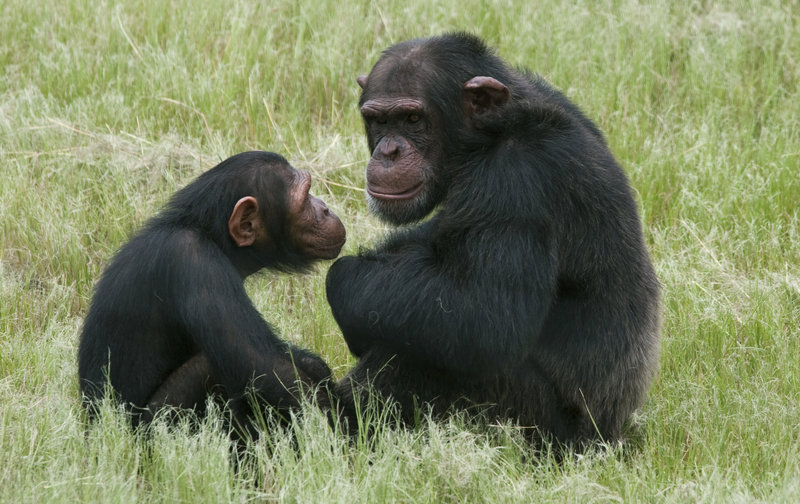
In it, researchers report that captive chimps and orangutans show the same low ebb in emotional well-being at midlife that some studies find in people.
That suggests the human tendency toward midlife discontent may have been passed on through evolution, rather than resulting simply from the hassles of modern life, said Andrew Oswald, an author of the study and a professor of economics at the University of Warwick in England who presented his work Monday in the Proceedings of the National Academy of Sciences.
A second study in the journal looks at a younger age group and finds that happiness in youth can lead to higher income a few years down the road.
Several studies have concluded that happiness in human adults tends to follow a certain course between ages 20 and 70: It starts high and declines over the years to reach a low point in the late 40s, then turns around and rises to another peak at 70. On a graph, that’s a U-shaped pattern. Some researchers question whether that trend is real, but to Oswald the mystery is what causes it.
“This is one of the great patterns of human life. We’re all going to slide along this U for good or ill,” he said. “So what explains it?”
Copy the Story LinkSend questions/comments to the editors.

Success. Please wait for the page to reload. If the page does not reload within 5 seconds, please refresh the page.
Enter your email and password to access comments.
Hi, to comment on stories you must . This profile is in addition to your subscription and website login.
Already have a commenting profile? .
Invalid username/password.
Please check your email to confirm and complete your registration.
Only subscribers are eligible to post comments. Please subscribe or login first for digital access. Here’s why.
Use the form below to reset your password. When you've submitted your account email, we will send an email with a reset code.