
Ann and Ralph Parady of Cape Elizabeth are lucky. Late in life, they’ve formed a partnership that’s helped them maintain upbeat jovial demeanors.
Married just four and half years ago, Ann Parady credits her second marriage with preventing depression.
“I’m just not depressed because I’m a newlywed,” said Ann Parady.
The Parady’s, along with 11 other seniors in Cape Elizabeth, attended a lecture last week by Dr. Paul Grayce titled “Depression and Coping Strategies.” Presented as a part of a monthly series by the Cape Elizabeth Triad, the lecture hit home with seniors. Triad, a social support group for seniors, is sponsored by the Cape Elizabeth Police Department.
Though the Parady’s story is encouraging, many seniors live alone, after their spouses have died, struggling with depression. One Cape resident in attendance lost her husband eight years ago to Parkinson’s disease. Since then, she’s experienced depression, but would only speak about it under the condition of anonymity.
“It’s sad when they’re gone and you’re not,” she said. Parkinson’s, a chronic progressive disease, attacked her husband for 20 years before it took his life. After he died, she lived alone for nearly five years before moving to Cape where her son lives. Though she lives alone, she has companionship in other seniors in the community and her dog. She said she and her friends don’t discuss depression.
Grayce defined depression as the loss of pleasure in life. Though there are numerous symptoms of depression, he said, clinical depression is characterized by anhedonia, a loss of pleasure.
This loss of pleasure, he said, manifests in many symptoms, including weight loss or gain, increased levels of morbid thoughts and suicide attempts. According to Grayce, the Center for Disease Control and Prevention reported suicide was the 14th leading cause of death in adults 65 and older.
Another female attendant who agreed to speak on the condition of anonymity said this seminar couldn’t have come at a better time. “I’ve been very depressed,” she said.
This 71-year-old woman took care of her father until he died at the age of 108. She never married. Now, she said, “everybody’s gone, everybody’s dead,” including her two siamese cats.
Diagnosed with clinical depression, she was prescribed anti-depressants but never took them. After listening to Grayce tout the positive impact of prescription anti-depressants, she’s decided to try them out. “I’m gonna go home and start it,” she said.
Grayce discussed various antidepressants including monoamine oxidase inhibitors that he said would help manage depression. The inhibitors work by blocking the protein that absorbs the endorphins in the brain. Instead of sweeping the mood-enhancing endorphins like dopamine and serotonin away, those endorphins stay in the brain, elevating mood, and warding off depression. Much of the lecture focused on pharmaceutical options for managing depression.
For Ralph Parady, the lecture was useful for understanding his daughter’s depression. His daughter, who has struggled with depression her whole life, takes medication. Now, he said, he has a better grasp on how changing medications affects her stability.
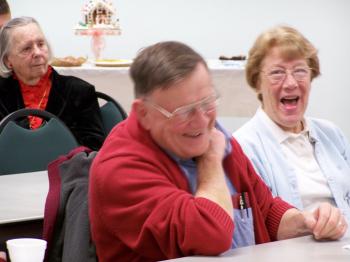 Ralph and Ann Parady (front) of Cape Elizabeth say they don’t feel depressed. Married just four and half years ago, they say they’re still newlyweds and that keeps them from getting the blues.
Comments are no longer available on this story