

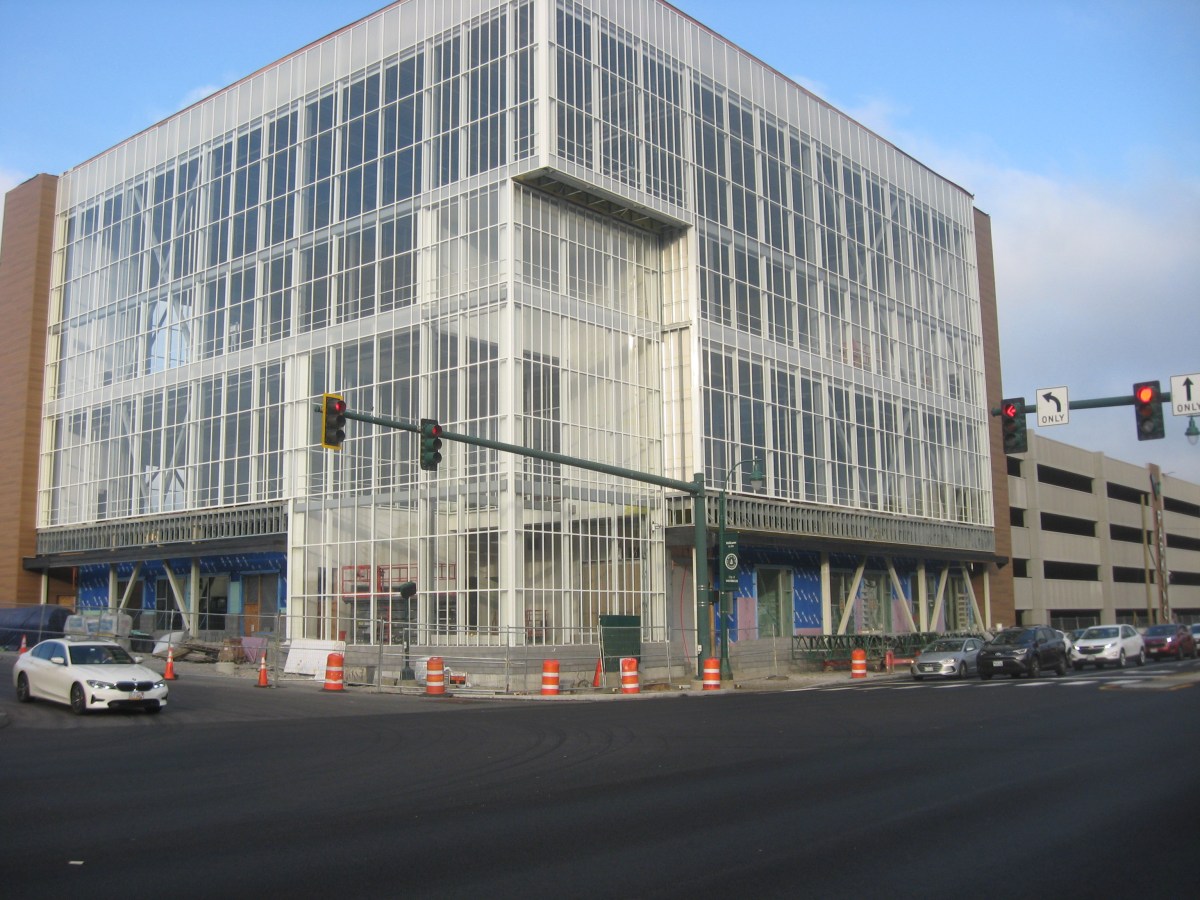
Vertical Harvest, a hydroponic farm in downtown Westbrook, is being sued for allegedly failing to fully pay back a broker that secured a $48.75 million federal loan to get the farm started.
The lawsuit, filed on Dec. 19, 2025, alleges Raiven Fund Management, a Canadian venture capital firm, and Paul Dugsin, a principal of Raiven named chair of the board of Vertical Harvest, misled the broker, Waterside Commercial Finance, into agreeing to defer payment of 2% of the proceeds of the USDA loan, which amounts to about $975,000. Waterside is seeking full payment of damages, attorneys’ fees and any other penalty the court finds appropriate.
Vertical Harvest is a four-story hydroponic farm that expects to produce 3 million pounds of leafy greens annually. It received nearly $60 million in financing, and after some construction delays, is now operational, CEO Nona Yehia said Thursday.
Yehia said in an email that Vertical Harvest is focused on operating the business, building revenue and serving customers as the lawsuit proceeds.
“We are aware of the filing and want to be clear that the claims being asserted are inaccurate and materially misleading,” Yehia wrote. “This is a commercial dispute arising from a complex financing and vendor relationship, not an operational failure or cessation of business.”
Dugsin did not respond to a request for comment Thursday.
According to the lawsuit, at the closing of the loan, Vertical Harvest paid Waterside $75,000, and in April of 2024, Vertical Harvest and Waterside entered into a “subordinated note agreement” to determine the terms for repayment of the remaining $900,000. A subordination agreement ranks debts by order of priority, so Waterside agreed to be paid only after the obligations to the senior lenders are satisfied.
According to the payment plan, if the repayment isn’t made in eight months, Vertical Harvest would owe Waterside $1.8 million, double the original amount. Afterward, interest will accrue at an annual rate of 25%.
The agreement confirmed that the payment plan was approved by senior lenders and repayment would not violate existing financial obligations. The repayment would remain mandatory unless Vertical Harvest provides written proof that the USDA or senior lenders object to the payment plan.
The lawsuit states that if Vertical Harvest and Dugsin had not confirmed that senior lenders approved repayment, Waterside would not have entered into the agreement. According to the lawsuit, Dugsin personally and separately confirmed the senior lenders’ approval, so he is sued individually, and Raiven is vicariously liable because of Dugsin’s role at Raiven.
In a separate breach of the agreement, the lawsuit alleges, Vertical Harvest did not pay Waterside after it received new financing that exceeded $500,000. Vertical Harvest allegedly received new capital from Raiven in September 2025, which it failed to disclose to Waterside, and then did not make any payments to Waterside.
The lawsuit is not the first financial issue Vertical Harvest has had while trying to get off the ground. In the fall of 2025, the city of Westbrook filed a lien against Vertical Harvest as it owed almost $45,000 in unpaid taxes. At the time, Yehia said the farm was not yet working at full capacity.

Comments are not available on this story. Read more about why we allow commenting on some stories and not on others.
We believe it's important to offer commenting on certain stories as a benefit to our readers. At its best, our comments sections can be a productive platform for readers to engage with our journalism, offer thoughts on coverage and issues, and drive conversation in a respectful, solutions-based way. It's a form of open discourse that can be useful to our community, public officials, journalists and others.
We do not enable comments on everything — exceptions include most crime stories, and coverage involving personal tragedy or sensitive issues that invite personal attacks instead of thoughtful discussion.
You can read more here about our commenting policy and terms of use. More information is also found on our FAQs.
Show less