


Read all of our coverage of Maine's 2026 election or stay up to date with the latest developments through the Maine Political Report in your inbox or text messages from politics editor Kirby Wilson.
PORTLAND — A group of 10 candidates vying to be Maine’s next governor got a question more disarming than most they’ve encountered on the campaign trail: When they face a big, hard choice, what is the No. 1 rule in their heart that will help them decide what to do?
It came from two East End Elementary School students at a forum put on by Portland Public Schools on Monday night, and candidates across the political spectrum found some common ground in their responses.
Stand up for those who don’t have a voice. Do the right thing, no matter what. Honesty, trustworthiness, sincerity, empathy, faith and community.
Structured as a modified parliamentary forum and moderated by the captains of Deering High School’s Model United Nations team, Hilina Gugsa and Noah Rasheed, the gubernatorial hopefuls answered to public school students in Maine’s largest and most diverse school district at Amanda C. Rowe Elementary School.
They tackled questions about school funding, diversity, low standardized test scores, immigration enforcement and student homelessness.
The forum featured all five Democratic candidates, Shenna Bellows, Troy Jackson, Angus King III, Hannah Pingree and Nirav Shah; Republicans David Jones and Robert Wessels; and independents Ed Crockett, John Glowa and Derek Levasseur.
Absent were Republican front-runner Bobby Charles, the four other Republican candidates, independent Rick Bennett and another unaffiliated candidate, Alexander Murchison.
“You are standing in Portland, a city that represents diversity, the challenges and opportunities and the future of Maine’s workforce and community,” Rasheed said, kicking off the forum. “We want to know that your priorities align with the realities we see every day when we walk through the main doors.”
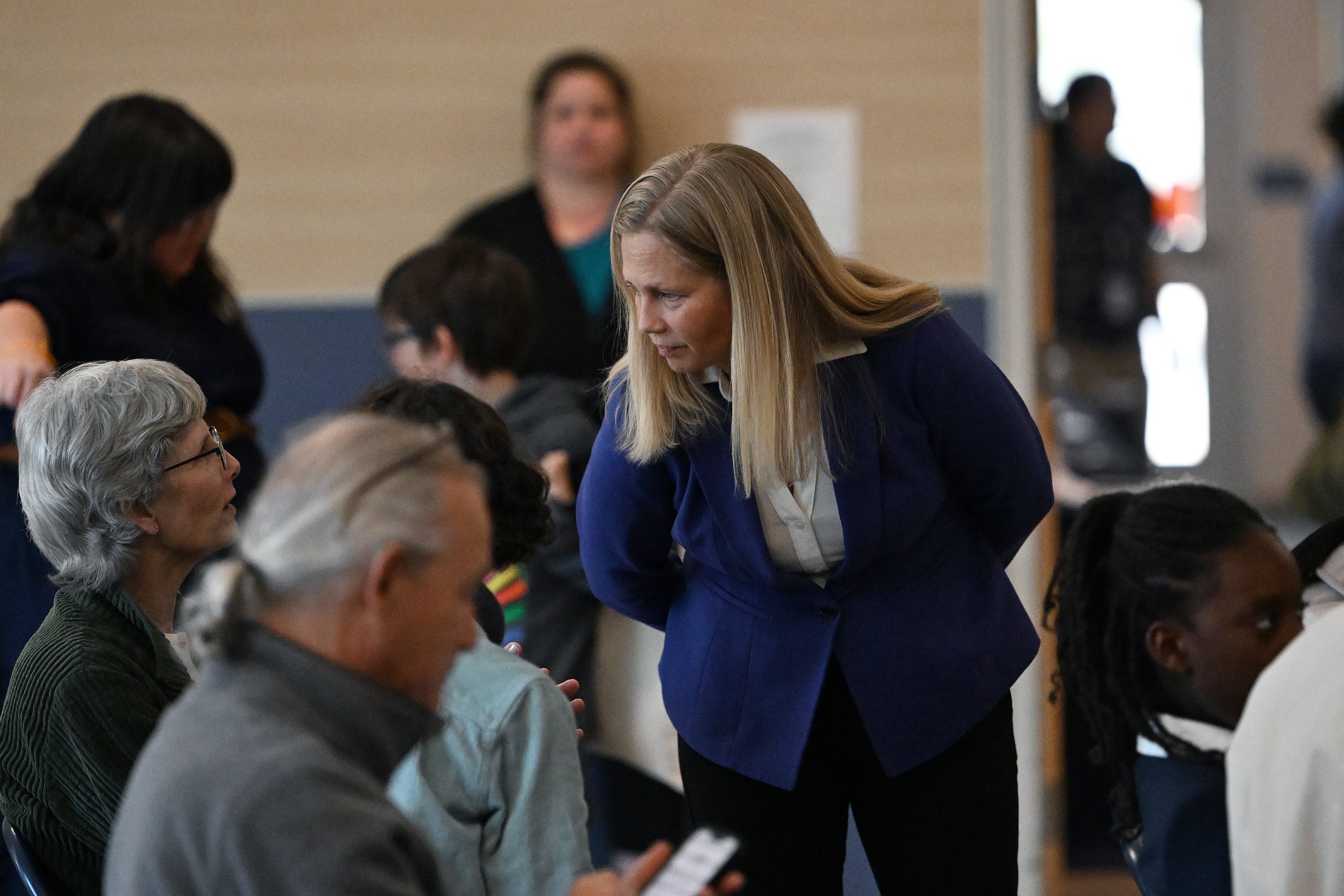
Addressing a crowd of parents, district staff and students, most of the candidates spoke about the ways that public school had shaped their lives as students or as the children of teachers (Crockett was the only Portland alumnus on stage). Many candidates professed support for Portland schools and said they would do more to support public schools across the state.
But some floated ideas unlikely to be popular among public school families in deep blue Portland: support for deportations and federal immigration enforcement operations in the state, advocacy for school voucher programs, and opposition to funding support for homeless students.
A few criticized Maine’s education system overall and even Portland Public Schools specifically. Jones called Portland “the poster child for why we need school choice in the state of Maine” and said the state’s largest city “holds Maine back.”
Candidates tackled the issues of school funding in the state and declining test scores with calls to return to the fundamentals in math and literacy, and a few had concrete proposals for education funding reforms. Bellows laid out a plan for a statewide moratorium on property taxes while doubling property taxes on vacation homes owned by out-of-staters; Shah, meanwhile, proposed a 2% hotel tax to support school funding.
All five Democrats and Crockett committed to restoring full funding to a now-complete pilot program aimed at preventing student homelessness. In a rapid-fire round, everyone but the two Republicans raised their “yes” paddles in support of universal pre-K, free community college tuition and free school meals.
In response to a question about the U.S. Immigration and Customs Enforcement operation in the city in January — during which more than 1,000 students, and nearly half of the district’s multilingual population, missed school — most candidates said they would support a statewide “safe zone” policy to make schools a sanctuary from immigration enforcement. Jackson went a step further, saying if he had been governor, he would have had ICE officers arrested.
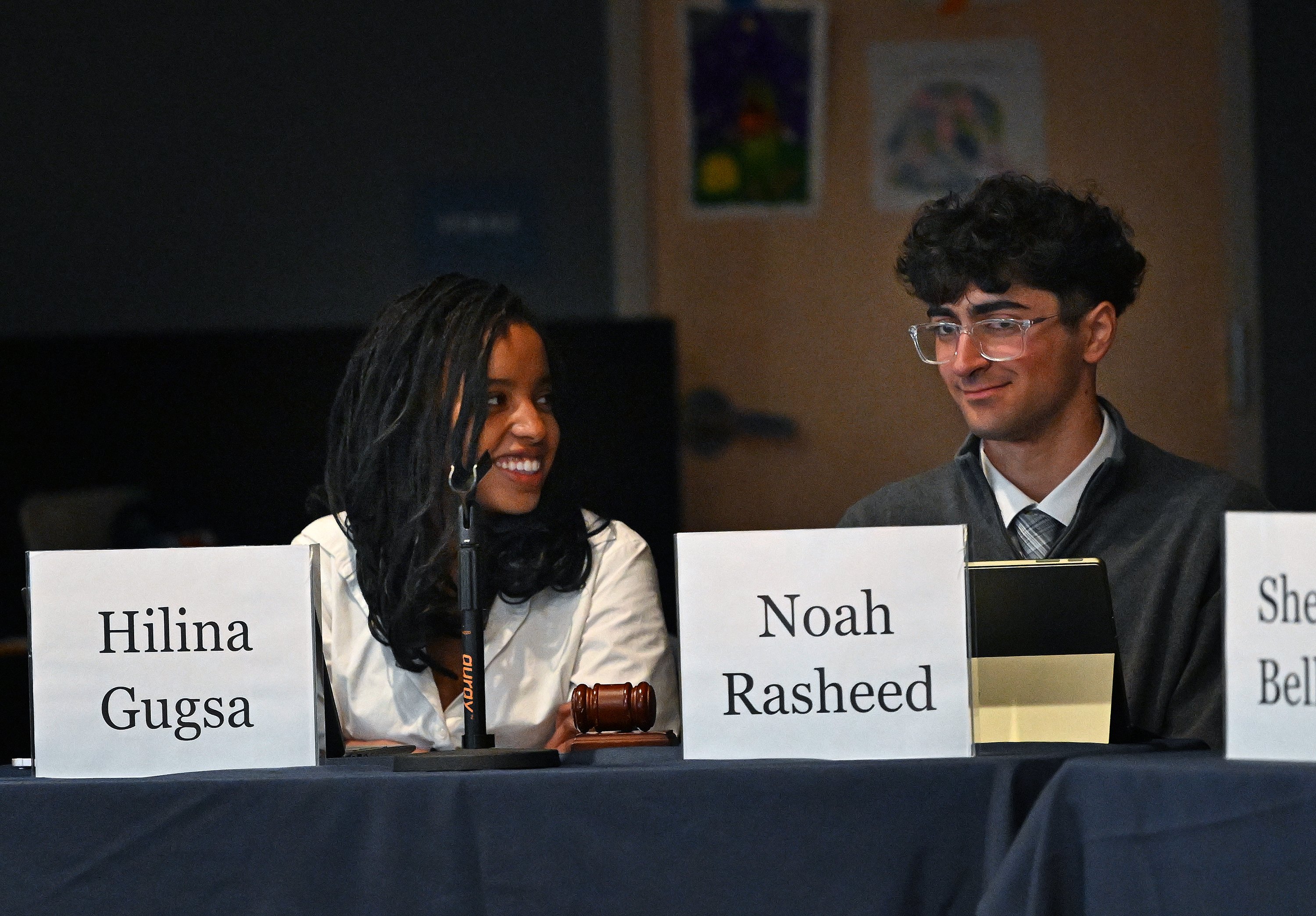
After the debate, Gugsa, one of the moderators, said she was surprised by the diversity of opinions on the topics, which she thought would be more homogenous. Gugsa, 17, won’t be able to vote in the upcoming primaries — but her co-moderator, Rasheed, 18, will.
Rasheed appreciated hearing from all of the candidates, but he’s still planning to vote for the one he came into the evening supporting: Bellows.

We invite you to add your comments. We encourage a thoughtful exchange of ideas and information on this website. By joining the conversation, you are agreeing to our commenting policy and terms of use. More information is found on our FAQs. You can update your screen name on the member's center.
Comments are managed by our staff during regular business hours Monday through Friday as well as limited hours on Saturday and Sunday. Comments held for moderation outside of those hours may take longer to approve.
Join the Conversation
Please sign into your Press Herald account to participate in conversations below. If you do not have an account, you can subscribe here. Questions? Please see our FAQs.