
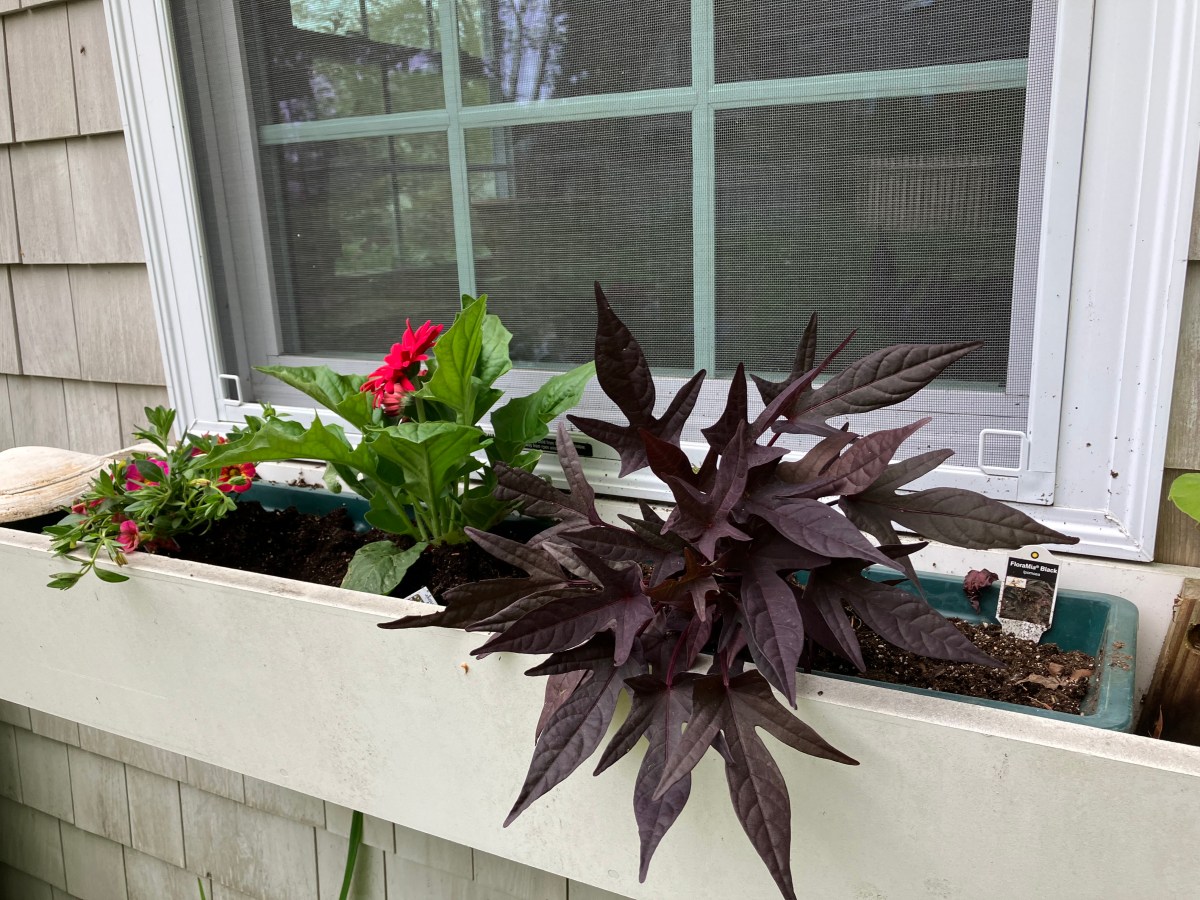
Almost anything can be grown in a container. And almost everyone does some container gardening, although for some people, the containers hold just a few houseplants.
But the end of May and early June are times when people get serious about their containers. Some people create flowered pots to leave at the grave sites of their loved ones, or create window boxes or containers for patios at home.
We put window boxes on our garden shed just because we like the way they look, and we spend more time looking at the shed than we do the house.
We also always put containers of some kind with an attractive plant growing in it on our patio tables.
A THRILLER, A SPILLER AND A FILLER
The general rule for planting mixed containers, rather than just one flower type, is to have a thriller, a spiller and a filler.
The first plant many people think of for containers are pelargoniums, which are commonly referred to as geraniums. They are annuals and will not stand a frost, but they’re popular because they survive all summer long, continuing to bloom through high heat, weeks without rain and lots of wind. They are a tough plant (Perennial geraniums are a completely different plant, but they are also tough plants, great in Maine gardens). The annual geraniums come in a wide range of colors, with the most popular red or white. The only color they don’t come in is blue.
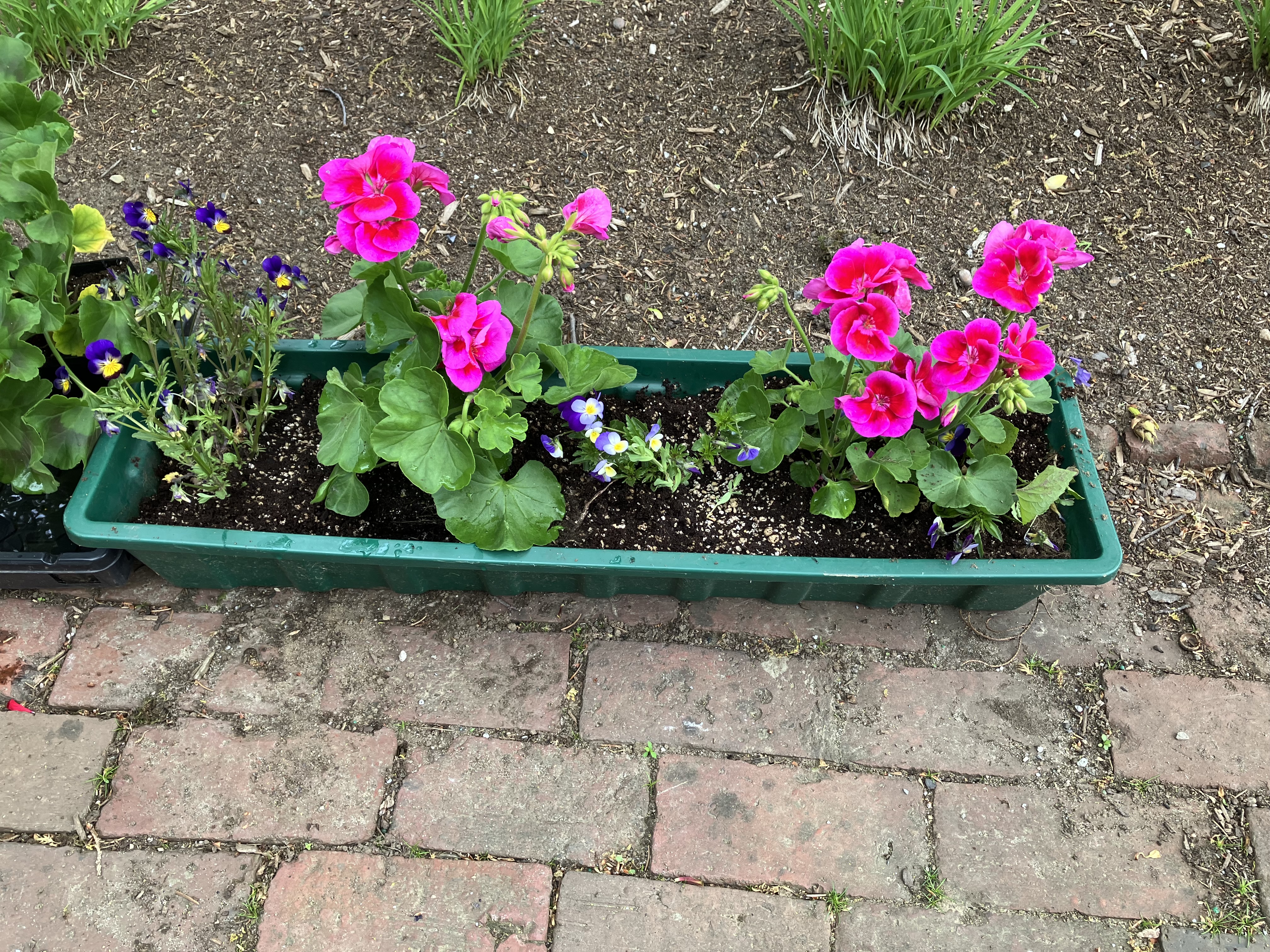
Cranesbill, which has the botanical name Geranium, often fills the role of a spiller, and it is a perennial rather than an annual. It also works well in containers because it has a long blooming season, and the foliage will grow beyond the pot and spill down the side.
The thrillers are tall flowering plants, for instance gladiolus, which have tall spikes of flowers that are often more than a foot long.
The filler does what it sounds like: It fills in gaps and hides roots. Common fillers are petunias, impatiens and coleus.
You could also think about adding perennials or houseplants to your containers. Nancy likes to put baby perennials such as lady’s mantle or succulents from our gardens to fill up the pots. They go back into our gardens in the fall.
YOUR FRUITS AND VEG
For the past decade or so, there has been a trend of people growing fruit and vegetables in containers. It’s a way for people in apartments or with small yards to experience the joy of growing something edible.
The most common vegetables for containers are tomatoes, peppers, and eggplants, but you could try strawberries, beans, onions or almost anything — except maybe corn.
Just remember to pick a variety of tomato, cucumber, bean or pepper that is going to be a bush rather than a trailing variety.
CONTAINERS
Don’t limit your thinking to just the typical flower pots. Almost anything that will hold soil will work. I’ve seen many people using half barrels and, although I think they are ugly, some people do plantings in tires that have already completed their useful life.
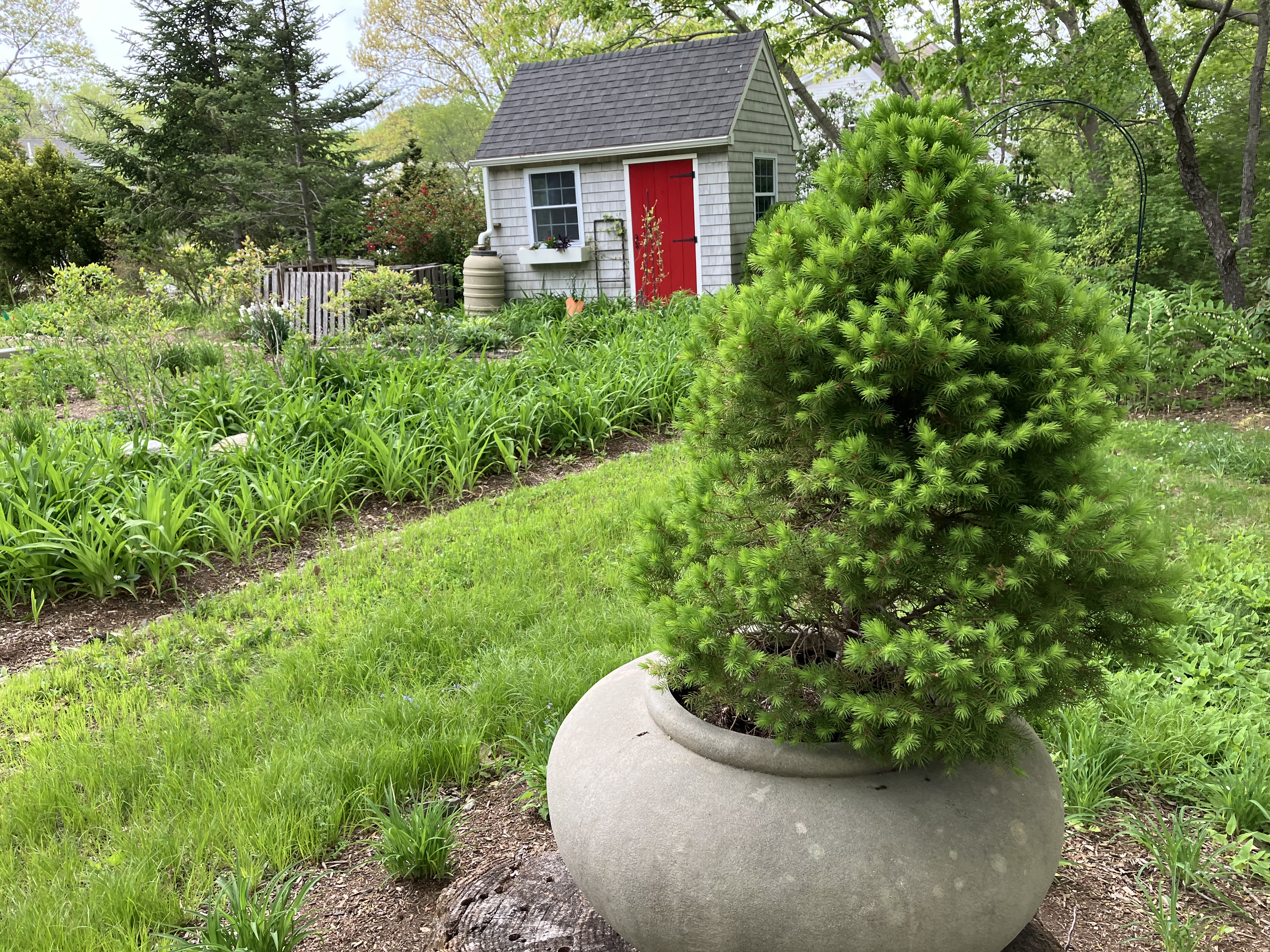
Nancy told me a friend of ours sometimes picks up old toys from her daughter’s daycare center and uses them as containers for flowering plants. It might work if you’re careful what you use – drainage holes are always needed for containers, no matter how cute they are.
ABOUT THE SOIL
You don’t want to dig soil from some hidden spot in your yard for the container garden. You want to start with good soil mix. A common choice used to be Pro Mix, but with many gardeners avoiding the use of peat, it’s fallen out of favor.
Coast of Maine produces several organic blends that work well. We often add some decomposed ground leaves that we created on our property, or some coir that we purchase in blocks from a local nursery. With your own chopped-up leaves or the coir, cut it into sections or put the entire block in a large pail, add water and wait a bit for the coir to absorb the water. Crumble it into your soil mix and mix everything thoroughly before you plant your container.
WATERING
Containers dry out faster so you need to keep an eye on them. I am in charge of watering patio containers using the water from our rain barrels, also on the patio located behind a series of container-grown bananas.
From The Garden is published in partnership with Eat Drink Lucky and sponsored by Skillins Greenhouses.
Comments are not available on this story. Read more about why we allow commenting on some stories and not on others.
We believe it's important to offer commenting on certain stories as a benefit to our readers. At its best, our comments sections can be a productive platform for readers to engage with our journalism, offer thoughts on coverage and issues, and drive conversation in a respectful, solutions-based way. It's a form of open discourse that can be useful to our community, public officials, journalists and others.
We do not enable comments on everything — exceptions include most crime stories, and coverage involving personal tragedy or sensitive issues that invite personal attacks instead of thoughtful discussion.
You can read more here about our commenting policy and terms of use. More information is also found on our FAQs.
Show less