
Christiana Lauzon answered a call from an unlisted phone number and had a five-minute conversation that she said left her shaking. It was a cold February morning, and the state agency that investigates reports of abuse and neglect of dependent adults had just called to say it was closing its investigation into her father’s care.
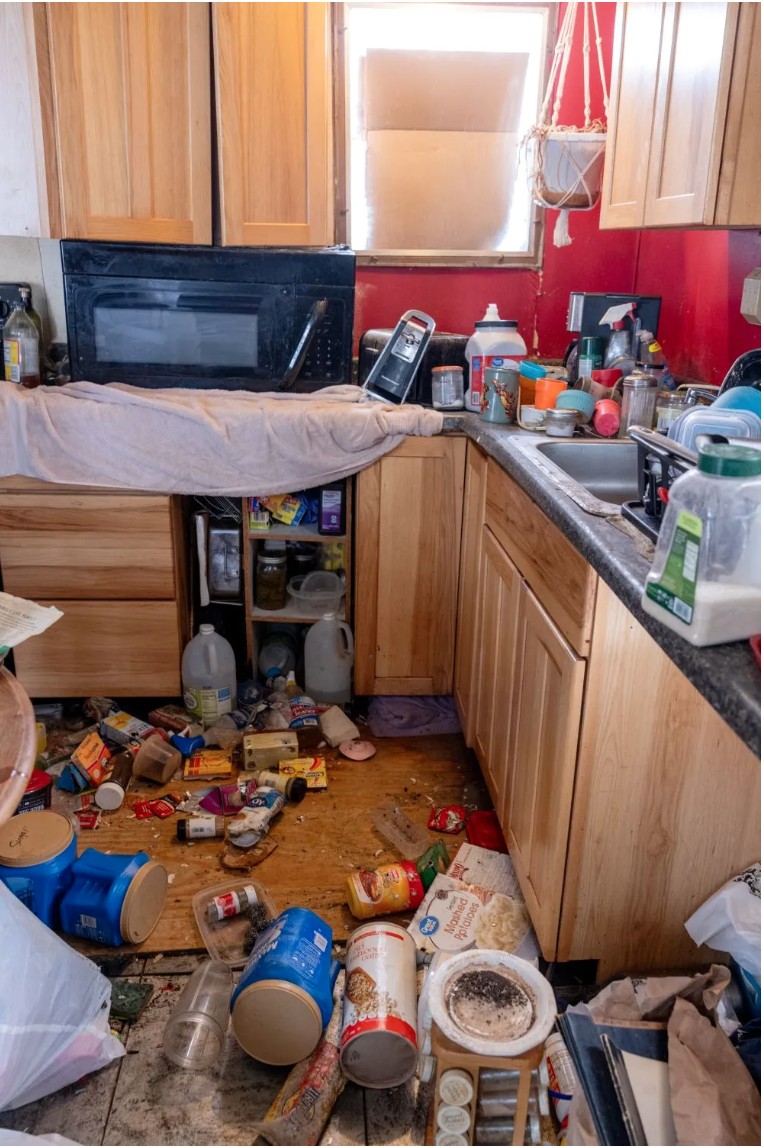
Her father, Mark Lauzon, had relied on caregivers to help him at his home in Augusta, but Christiana Lauzon had discovered it in a state of squalor with rat feces covering her father’s bed. Water from the sink flooded the counters. He had gotten an infection that spread to his bones, requiring his toe to be amputated.
In the call, the staff member with Adult Protective Services did not say what the investigation found — or whether investigators had found anything at all — and declined to answer her questions.
“He said, ‘This is a courtesy call. I’m just doing my job,’” Christiana Lauzon said. “I said, ‘You didn’t.’”
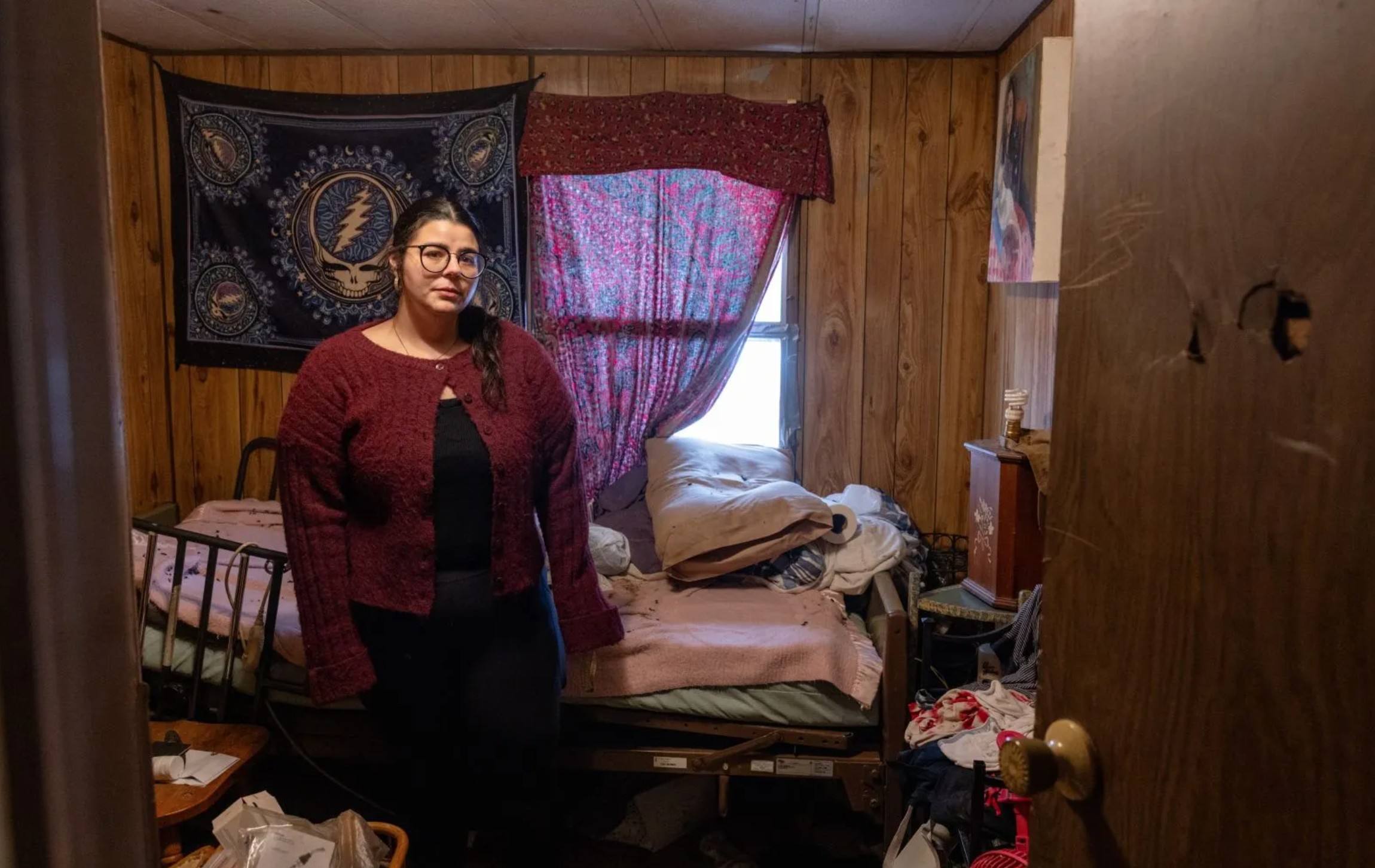
About a month later, a similar situation played out again when the state agency declined to release records to Christiana Lauzon that she hoped would give her more insight into its investigation. She is now her father’s legal guardian. Yet to this day, she still does not know what Adult Protective Services found in its investigation or understand why the agency opted to keep her in the dark.
It’s not known how often the agency shares details about its investigations into allegations of abuse, neglect or exploitation of dependent and incapacitated adults. The agency can decide to release investigation records to family members or legal guardians, but it doesn’t have to. It retains discretion, and it doesn’t have to explain its reasoning.
RELATED STORY: 5 facts about agency that investigates abuse and neglect of older Mainers
Under Maine law, Adult Protective Services records are subject to limited disclosure because even adults who are dependent retain privacy rights, an agency spokesperson said. The state will release investigative records to the dependent adults if they ask.
But the fact that adults who cannot care for themselves have to request details about investigations into their own abuse or neglect may mean they don’t ask for the records at all, making it difficult to gain insight into the state’s findings and investigative process.
To Christiana Lauzon, this feels like a cruel Catch-22.
“My dad’s not allowed to sign anything,” she said. “I’m speaking on his behalf, so it’s weird to me that he’s allowed to request them, but he’s considered incapacitated.”
Christiana Lauzon, who is 34, first learned from her father’s doctors that they had notified Adult Protective Services of their concerns about her father’s care after he showed up to a medical appointment on Dec. 3, 2025, with visible feces on his sweatpants, according to his medical records. Her father did not have a legal guardian at the time. Christiana Lauzon lives in Massachusetts, and, while they had kept in touch by phone, she had not seen him for two years.
Her dad, Mark Lauzon, 59, is a quiet man who likes to be on his own and doesn’t talk about his feelings much, which made it difficult to fully understand the state he was living in, she said. His antipsychotic medications also made it difficult for him to communicate. Her father has schizoaffective disorder, symptoms from multiple strokes and is estranged from many in his family, she said.
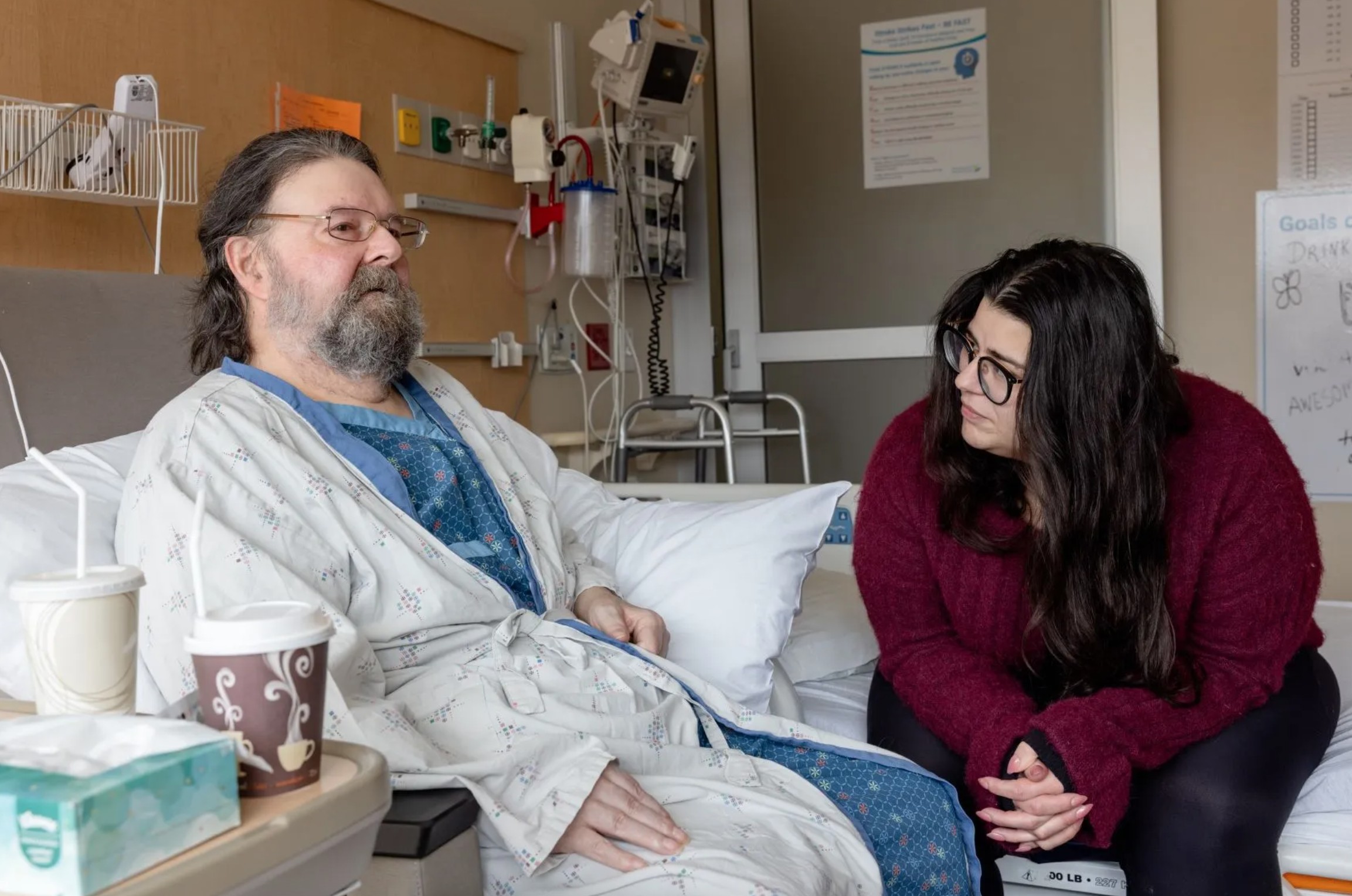
She had believed he had help. He had been paying his neighbor and long-time friend to take care of him for about 12 hours each week, according to medical and court records, and the neighbor’s wife assisted as well. After Mark Lauzon’s partner died in 2023, he relied on them for cooking and cleaning, and to take him to appointments and make sure he took his medication, according to probate court records.
But his living situation had deteriorated. Sometime after his doctor’s appointment, a cut on his big toe became so infected that he took an ambulance to the emergency room at MaineGeneral Medical Center in Augusta on Dec. 19, according to his medical records.
Christiana Lauzon didn’t know any of this at the time. On Dec. 20, after she hadn’t heard back from her dad for days, she decided to drive up to his place in Augusta. He wasn’t there, but she peered inside and discovered his home was infested with rats. There were rat feces on his bed, where he spent most of his time.
“Anybody with these conditions would get an infection,” she said.
If Adult Protective Services investigators had stepped into her father’s home after getting the initial call, they likely would have been concerned about his care and might have gotten him help before his infection became dire and began to spread to his bones, Christiana Lauzon said. Doctors later amputated her father’s toe on Dec. 26.
A court-appointed visitor drew a similar conclusion after reviewing Christiana Lauzon’s petition to become her father’s legal guardian. The visitor, a retired attorney, said in a report to Kennebec County Probate Court that the case represented “another example of people reaching out to APS for assistance and intervention without adequate response.”
“If [an Adult Protective Services investigator] visited the trailer in which Mark was living and concluded that the conditions were safe and his hygiene was good, it underscores either total incompetence or a deliberate effort to ignore Mark’s needs,” the visitor continued. “It is not unreasonable to conclude that had a full investigation been conducted … the infection in Mark’s toe would not have progressed to the stage where amputation was required.”
As doctors weaned her father off his antipsychotic medications, he regained memories and became more coherent. He said in a June interview that he remembered not being fed much, sometimes just chips and a soda for meals; he lost about 150 pounds. He didn’t remember getting help with bathing. He also believed his caregivers had been giving him his medications all at once instead of three times a day. His heart was in atrial fibrillation — an irregular, rapid heartbeat — when he was admitted to the hospital, according to medical records.
He wanted to tell his story, he said.
“I want someone to know what those people did. I want people to know that these people were not nice to me,” Mark Lauzon said. “It takes a lot for me to actually even say that because they were really good friends for a long time.”
Concerned that Adult Protective Services wasn’t acting quickly enough, Christiana Lauzon called the agency 25 times that December, according to her call logs. But she found she could not learn any details about its investigation. Some of her calls were official reports to the intake team, and she was able to share information that could be relayed to investigators. But when she tried to reach the case manager for her father’s investigation, and then later the case manager’s supervisor, she said she didn’t hear back until Dec. 30, after her father’s toe had been amputated.
While the agency’s policy is to not give updates on a case, people who submit reports of alleged abuse or neglect — such as Mark Lauzon’s daughter and doctors — always get a call back, Gina Googins, associate director of Adult Protective Services, said in an interview.
“In situations where I’ve received complaints of that and looked into it, the calls have been returned,” she said.
Adult Protective Services saw calls to its intake line nearly double in the last seven years. It received about 9,900 calls in 2019 and 18,500 last year. Googins attributed the increase to heightened awareness of reportable incidents.
When Christiana Lauzon received a call back from Adult Protective Services on Dec. 30, she recalled the case manager telling her she did not have concrete evidence of abuse. A month and a half later, on Feb. 10, an investigation caseworker called to say the case was closed. He didn’t tell her whether the state had substantiated abuse, neglect or exploitation.
Adult Protective Services told The Maine Monitor this is standard protocol. People who submit reports are not told the outcome, only that a case was closed. If the agency substantiates abuse or neglect, it sends a letter to both the victim and the perpetrator letting them know what it substantiated and the appeals process, Googins said.
Christiana Lauzon, who collected all her father’s mail, never saw a substantiation letter from the state, so she said she believes the state closed his case without finding any abuse, neglect or exploitation.
“I’m upset that I couldn’t get help for my dad,” she said. “I had nowhere to go for help but APS. … It doesn’t feel like it mattered at all.”
Christiana Lauzon wondered how thorough the Adult Protective Services investigation had been. To find out, she requested the investigation records. As both her father’s blood relative and his legal guardian, Adult Protective Services could legally release the records to her.
She had been granted emergency legal guardianship after her father had been hospitalized with the infection to make medical decisions on his behalf. The caregivers also filed for guardianship. She faced them during a court hearing and was appointed full guardianship on Jan. 15 as her father’s next of kin.
“Mr. Lauzon suffered serious physical harm because he was unable to care for himself. His cognitive decline and physical disability put him in grave danger of exploitation. He supports having his daughter as Guardian,” Kennebec County Probate Court wrote in its order appointing Christiana Lauzon legal guardian of her father.
But on March 13, Christiana Lauzon received a notice from Adult Protective Services saying the agency “will not elect to exercise its option to disclose records to you at this time.” There was no further explanation.
Adult Protective Services does not comment on specific cases, so agency staff could not explain the decision to deny the daughter’s request. But while the agency is mandated to release records to a victim, neither guardianship status nor family relationship automatically entitles others to information about an investigation, the agency said.
“Every single request is different and has its own factors that are in play,” Googins said.
In a statement, the Maine Department of Health and Human Services, which oversees Adult Protective Services, or APS, said it takes reports of abuse, neglect and exploitation seriously.
“When APS receives a report that meets the criteria for investigation, an onsite assessment is conducted to evaluate the individual’s safety, health, and well-being. Protecting the health and wellness of vulnerable adults, and supporting the dignity, safety, and rights of the individuals APS serves, remains the top priority,” the health and human services department wrote.
The Monitor sent a letter to Mark Lauzon’s caregivers asking for an interview and heard back from a lawyer speaking on their behalf who wrote, “After reviewing the privacy provisions enumerated by HIPAA we determined it is not appropriate or lawful to discuss any medical clients they may have served.”
Because it appears Adult Protective Services did not substantiate abuse, neglect or exploitation, The Monitor is not naming the caregivers.
In an interview at the MaineGeneral Medical Center’s Alfond Center for Health in March, Mark Lauzon said his caregivers did the best they could, but it wasn’t enough. He has tremors from a stroke, and his right hand shook more as he became agitated recalling the care he received.
“They were supposed to be my friends,” he said. “They didn’t do the job, basically. They were actually being paid to take care of me, [but] I ended up losing my big toe.”
In an interview three months later, on June 1, he was angrier. He said he felt the caregivers had kept him from his family and had exploited him for their own gain.
“I really think that they should be held accountable for what they did,” he said. “They were fully capable of taking care of me, and they didn’t do that. They really hurt me.”
‘HE WAS MORE THAN MY DAD’
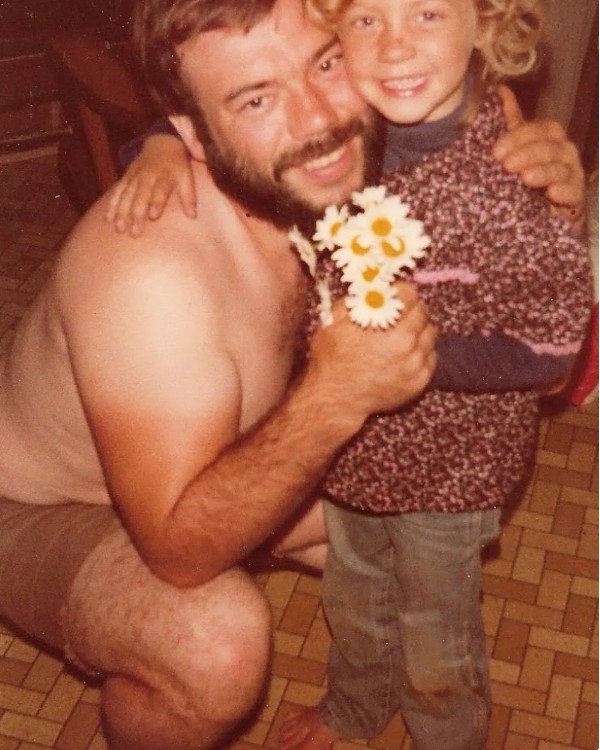
Christiana Lauzon is not the only person to be denied records from Adult Protective Services. Aimee Dunn’s stepfather died in a house fire in Lincolnville five days after Adult Protective Services closed its investigation into his living conditions in 2023, and Dunn said she felt desperate for answers. It was two years before she heard back from the agency, and the response was no.
Dunn was not surprised she couldn’t get investigative records because she is not a blood relative. But her father, Fritz Trisdale, had raised Dunn since she was 2 years old.
“He was my dad more than my dad, you know?” she said. “I get the legality of it, but I would like to think I could get some sort of answer from somebody.”
Dunn, her mom and her sister originally called Adult Protective Services multiple times in 2023 because they had been worried that Trisdale could no longer live by himself safely, Dunn said. The family was not worried about abuse but rather self-neglect, and Dunn had hoped the agency could help her get in-home assistance for her stepfather or a spot for him in a facility.
Cases of potential self-neglect — where people often fail to eat appropriately, care for a home, maintain good hygiene or manage their financial affairs — make up half of Adult Protective Services investigations nationally.
For Trisdale, the problem was his memory. He was never diagnosed with dementia or Alzheimer’s, but he had begun doing things that were not safe, Dunn said. For instance he would forget to turn off the kettle, and the water would burn off and scorch the metal. He also put flammable items close to the heater.
Trisdale and Dunn lived next to each other. “When I would wake up in the night … I always went over to the side door and looked over at the house because I always expected to see flames,” Dunn said.
A few weeks after the first report, an Adult Protective Services worker called to say she had visited, but she couldn’t say anything about the investigation. There wasn’t much the agency could do because Dunn and her mom were still helping Trisdale, Dunn recalled the woman saying.
“I thought to myself: What are we supposed to do? Not help him and then wait for something bad to happen before they’ll intervene? That just didn’t seem logical,” she said.
On June 19, 2023, Adult Protective Services told Trisdale’s wife — Dunn’s mother — that it was closing its investigation and did not explain why, Dunn said.
“It makes you think that maybe their life didn’t matter or it’s not worth looking into further,” Dunn said.
Five days later Trisdale died in a house fire that the fire marshal determined had started on the porch, Dunn said.
Dunn wanted to know, at least, that investigators had looked at every angle, even if they came up with nothing. So in February 2024, eight months after the house fire, Dunn emailed Adult Protective Services to ask about the process for obtaining any Adult Protective Services records related to her stepfather. She received an automatic response acknowledging the request and then nothing more.
Two years later, Dunn remembered the request and emailed again. Within three days, Adult Protective Services apologized for the delay and said her request had been overlooked. In its response, Adult Protective Services asked Dunn six additional questions, including whether she had power of attorney and why she wanted the records.
She responded with answers to the questions on April 19. Five days later, Adult Protective Services denied the request, but the denial letter was dated April 18 — a day before Dunn had answered the questions. The letter used the same language as the letter Christiana Lauzon received: “The Department will not elect to exercise its option to disclose records to you at this time.”
“They had already determined that they weren’t going to tell me anything, no matter what my answers were,” Dunn said.
‘I REALLY THOUGHT I WAS GOING TO DIE IN THERE’
Adult Protective Services has to weigh privacy and protection for victims against the desire from family members for information, Googins said.
The agency considers many factors in making its decision, Googins said. Is the family member the alleged perpetrator? Why does someone want the records? Does the victim want the records disclosed? Is the investigation ongoing? Is the guardianship being contested?
“It’s so broad. It really depends on the situation,” Googins said.
While releasing records to family members may provide clarity and closure for specific cases, it is important to think broadly about how policies affect the autonomy and privacy of older adults, said Mary Lou Ciolfi, assistant director of policy and education at the University of Maine Center on Aging.
Ciolfi said these cases can become examples of “compassionate ageism” when a family member tries to protect an older adult but ends up stifling their freedom by not allowing them to make personal decisions that involve risk. By requesting investigation reports and records from the state, family members may be invading their loved one’s privacy and right to determine what information is shared with their family, Ciolfi said.
Christiana Lauzon said she believes Adult Protective Services used her contested guardianship as an excuse to deny her records request. Her father said he wants the agency to release his records.
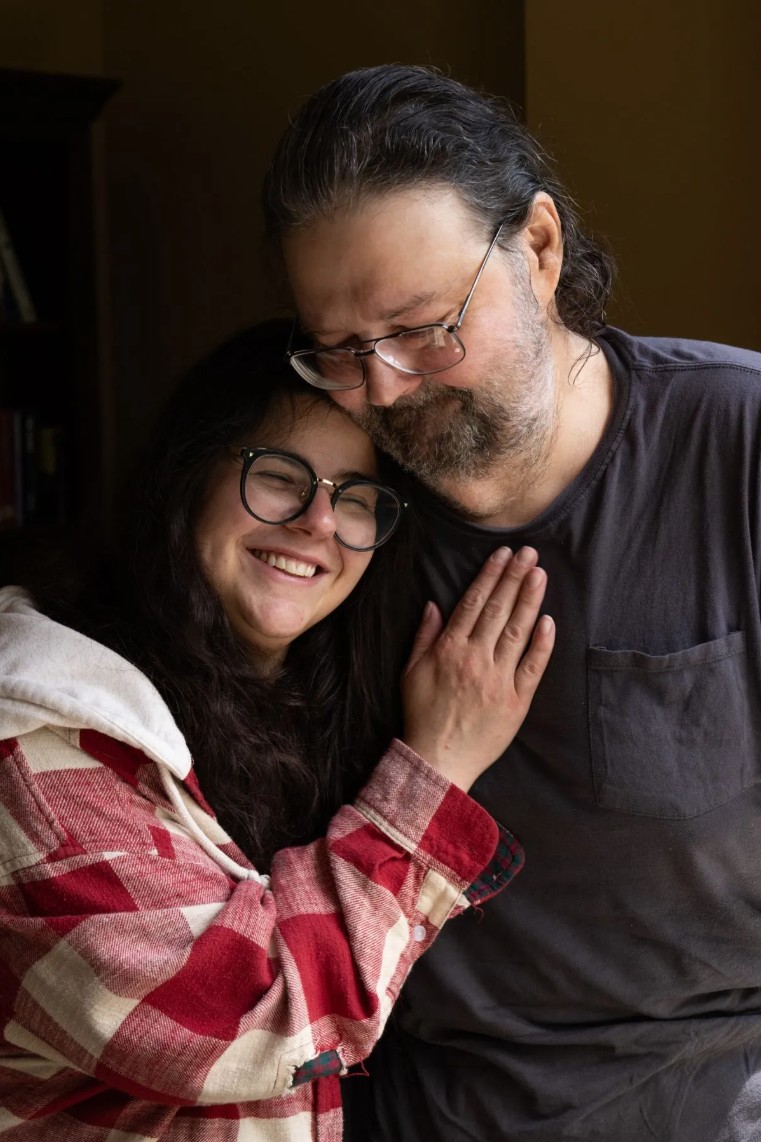
On April 1, Christiana Lauzon moved her father to a long-term care facility in Massachusetts, 15 minutes away from where she lives. He said he is happy, making friends and reconnecting with some family members. He is remembering more as his medication has been tapered.
But the recovery hasn’t been completely smooth. They both find it hard to trust caregivers.
At his new home in Massachusetts, Mark Lauzon became emotional and said he is grateful for his daughter because she got him away from his former caregivers.
“I really thought I was going to die there,” he said.
He plans to request Adult Protective Services records about its investigation, but he’s only able to do so because he’s in a better situation now and has regained some cognitive function, his daughter said.
“My dad is what APS is supposed to protect,” Christiana Lauzon said. “What are they actually doing? Are they actually visiting these people? Are they just saying they do? And I know that sounds terrible, but the experience I had was so disheartening. Every time I talked to someone, it was just dead ends.”
This story was originally published by The Maine Monitor, a nonprofit and nonpartisan news organization. To get regular coverage from The Monitor, sign up for a free Monitor newsletter here.
Comments are not available on this story. Read more about why we allow commenting on some stories and not on others.
We believe it's important to offer commenting on certain stories as a benefit to our readers. At its best, our comments sections can be a productive platform for readers to engage with our journalism, offer thoughts on coverage and issues, and drive conversation in a respectful, solutions-based way. It's a form of open discourse that can be useful to our community, public officials, journalists and others.
We do not enable comments on everything — exceptions include most crime stories, and coverage involving personal tragedy or sensitive issues that invite personal attacks instead of thoughtful discussion.
You can read more here about our commenting policy and terms of use. More information is also found on our FAQs.
Show less