


The Maine Public Utilities Commission issued a ruling this week preserving its authority to regulate a proposed cogeneration plant that would power hundreds of homes and businesses on Portland’s eastern waterfront.
Portland Foreside Development Co. had requested an advisory ruling that the natural gas-fired plant would be exempt from regulation as a public utility. The plant would generate electricity and heat for several properties in the 10.5-acre mixed-use development, including a 132-unit condominium building, a 200-apartment complex and a 130-room hotel with 38 residences that are planned.
While the entire development — including an existing Sun Life office building and yacht-ready marina — is owned by developers Casey Prentice and Kevin Costello, each entity has been established separately for financing purposes and bankruptcy provisions, according to the commission’s written decision issued Wednesday.
As a result, a majority of commissioners questioned whether the operation of the plant, including the distribution and sale of electricity and thermal energy to end users, should be subject to regulation as a transmission and distribution utility or a competitive electricity provider.
“Additional investigation into the relationship between the various entities in common ownership within the Portland Foreside organizational structure and end users of the energy is needed,” the decision states.
The commission called the company’s structure “complex” and said it was unclear whether the plant, also operated as a separate entity, would qualify for exemption. The plant would be off the public grid and not linked to Central Maine Power Co.
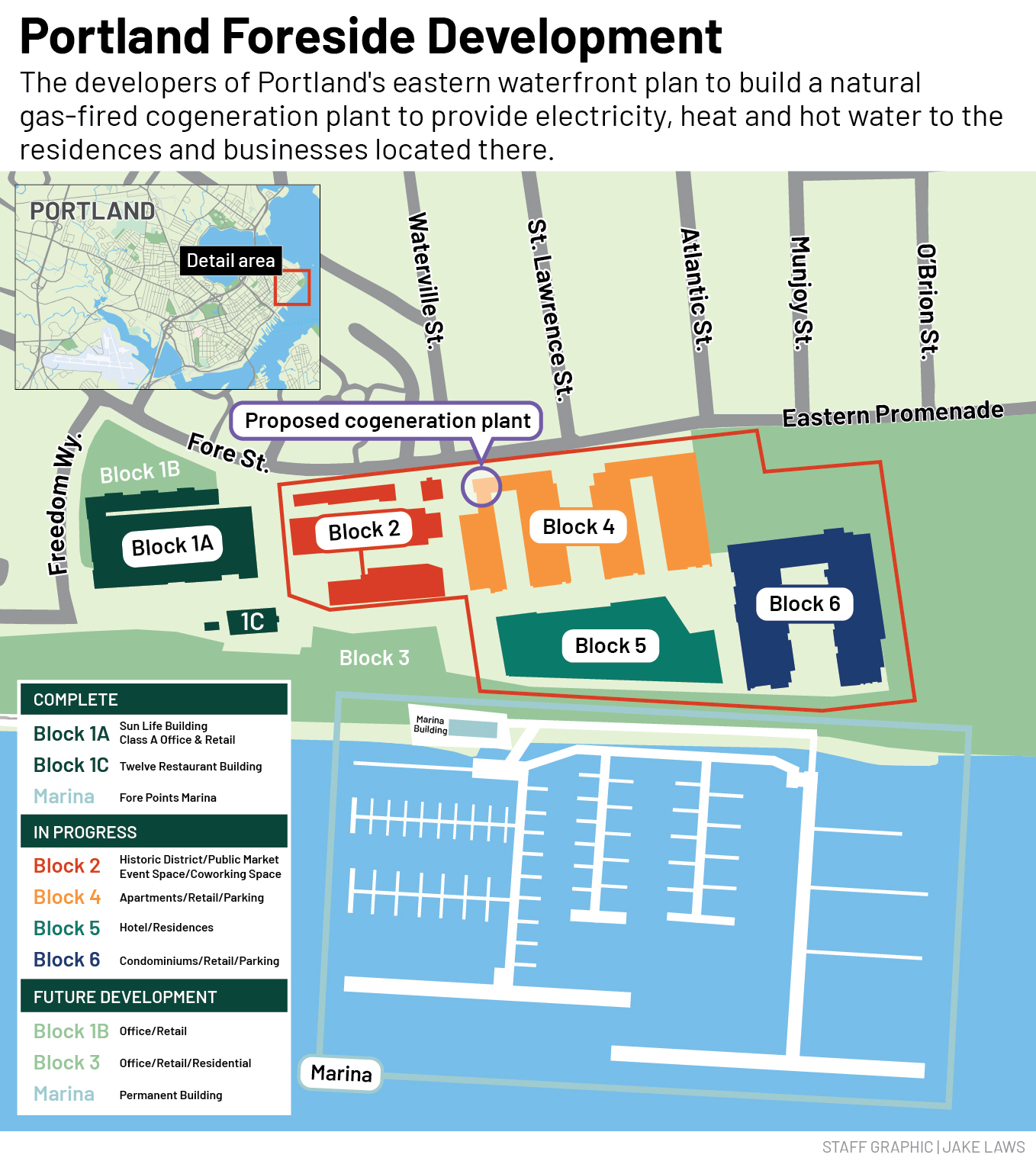
WHAT STATE LAW SAYS ABOUT COGENERATION PLANTS
Under state law, any cogenerator may be exempt from PUC oversight if it generates or distributes electricity solely for its own use, the use of its tenants, or the use of or sale to its associates, but “not for the use of or sale to others without approval or regulation by the commission.”
The commission said it couldn’t determine clear lines of ownership or understand how power and heat would be distributed or sold within the development because it had no plans to review, no homeowner’s association has been established and the developers admitted that each entity “as building owner and landlord, will determine how electric and thermal services are billed within their respective lease or occupancy agreements.”
The commission voted 2-1 on the ruling, with Patrick Scully dissenting from Chairman Philip Bartlett and Carolyn Gilbert. In his dissenting statement, Scully said he supported the advisory ruling because “the commercial and residential tenants and condominium unit owners clearly meet the definition of ‘associates’ as they are.”
Bartlett said the developers may appeal the decision or seek an advisory ruling in the future when additional clarifying information is available.
The developers didn’t respond to repeated requests for interviews.
At the second of two recent hearings held on the plant, Prentice said getting the exemption was an important aspect of seeking financing for the next phase of the development, now estimated at over $1 billion.
The plant wasn’t part of the master plan that the Portland Planning Board approved for the development in 2023, but it was licensed by the state Department of Environmental Protection last summer.
It would be built next to the densely populated Munjoy Hill neighborhood, raising concerns about emissions, exhaust stacks and other environmental impacts.
There are over 4,400 combined heat and power cogeneration plants across the U.S. Twenty are in Maine, including at Northern Light Health Eastern Maine Medical Center in Bangor, Colby College in Waterville, Portsmouth Naval Shipyard in Kittery, Mid-Maine Waste Action Corp. in Auburn, and several pulp and paper mills, according to the Onsite Energy Installation Database.
The Portland Foreside plant would be built in 2027, according to the DEP license.

We invite you to add your comments. We encourage a thoughtful exchange of ideas and information on this website. By joining the conversation, you are agreeing to our commenting policy and terms of use. More information is found on our FAQs. You can update your screen name on the member's center.
Comments are managed by our staff during regular business hours Monday through Friday as well as limited hours on Saturday and Sunday. Comments held for moderation outside of those hours may take longer to approve.
Join the Conversation
Please sign into your Press Herald account to participate in conversations below. If you do not have an account, you can subscribe here. Questions? Please see our FAQs.