


Read all of our coverage of Maine's 2026 election or stay up to date with the latest developments through the Maine Political Report in your inbox or text messages from politics editor Kirby Wilson.
President Donald Trump called Democratic U.S. Senate candidate Graham Platner a “thug,” “a cheap, no-good person” and “worse than any human being that’s ever run for office, probably.”
National Republicans have created websites dedicated to chronicling the political newcomer’s worst words and deeds.
Platner, meanwhile, issues daily social media posts calling his opponent U.S. Sen. Susan Collins “spineless and corrupt” while deriding the political establishment as the “Epstein class.” He said Friday that Trump’s criticism “might be the highest compliment I have ever received.”
And local Democrats have launched their own “Shady Susan” webpage highlighting her increased wealth during her three decades in office.
Welcome to the 2026 general election for one of Maine’s two U.S. Senate seats, which is shaping up to be five months of deeply negative, scorched-earth campaigning fueled by tens of millions of dollars in outside spending.
“I think the Senate race will be an absolute mudslinger,” said Michael Franz, a political science professor at Bowdoin College. “It seems way more assertive, aggressive than the 2020 election.”
The stakes are high for both parties. Democrats need to flip four seats to regain control of the Senate and political observers say as many as seven seats are reasonably in play.
Maine is considered the party’s best pick-up opportunity, since Collins is the only Senate Republican running in a state won by Democrat Kamala Harris in the 2024 presidential race by nearly 7 percentage points.
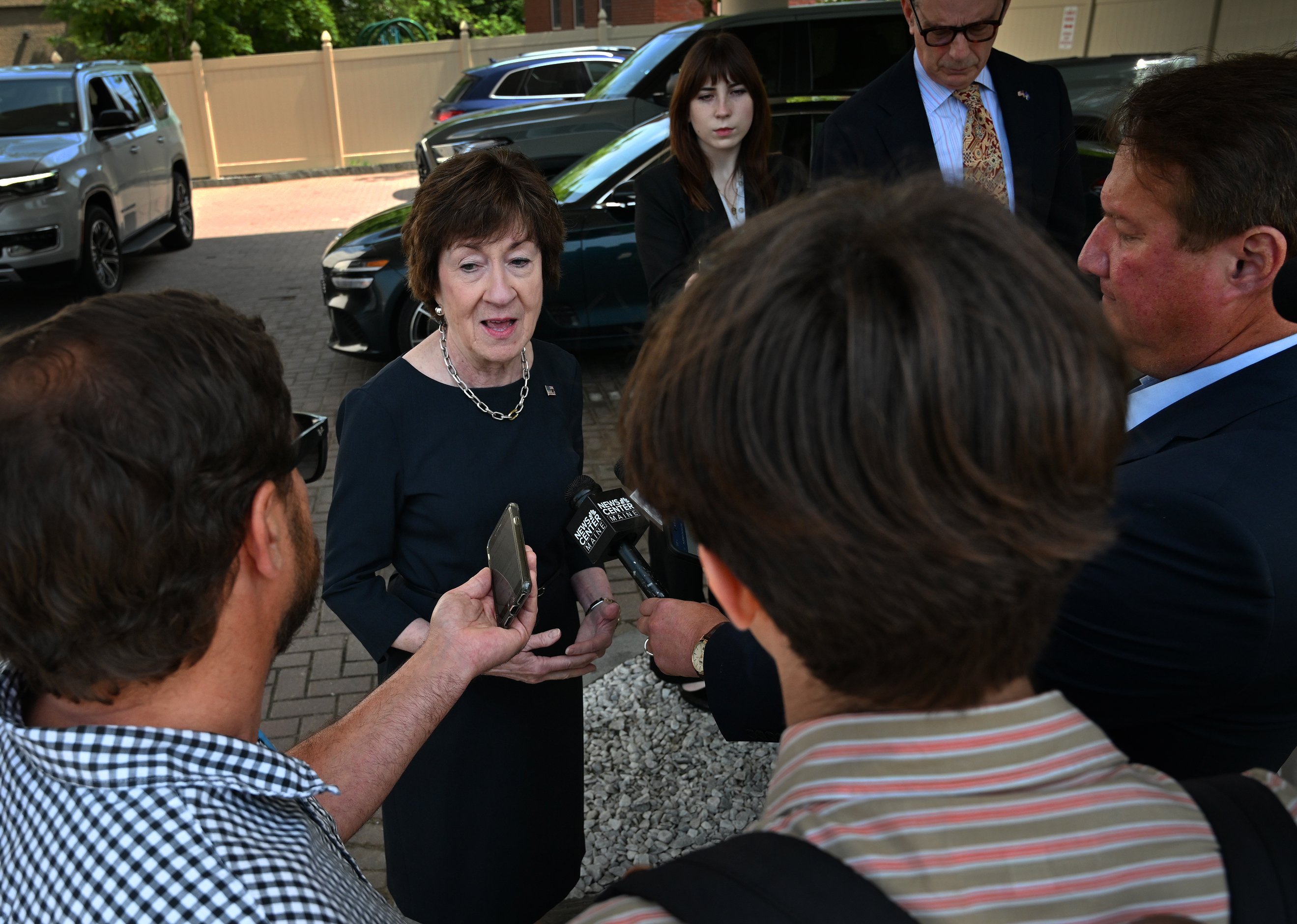
Collins is running with high disapproval ratings — a poll conducted last month by the University of Massachusetts Lowell measured a minus-17 point approval rating for Collins with 53% holding an unfavorable view — in a midterm cycle that is expected to be difficult for Republicans, who control the presidency and both congressional chambers.
And President Donald Trump, who often drives Republicans to vote, is not on the ballot.
Polls and election forecasters suggest a close race. Sabato’s Crystal Ball, an election handicapping website from the University of Virginia Center for Politics, has rated Maine’s race as one of four toss-ups, along with Ohio, Michigan and Alaska. Texas, North Carolina and Iowa, are also potential targets, forecasters say.
Those factors — the importance of the race for both parties, a seemingly endless stockpile of money and the overall heightening political tensions in the country — are conspiring to make this a fiery cycle, as candidates and outside groups try to move voters to their side.
“It’s going to be a bloodbath,” said Robert Glover, a political science professor at the University of Maine in Orono.
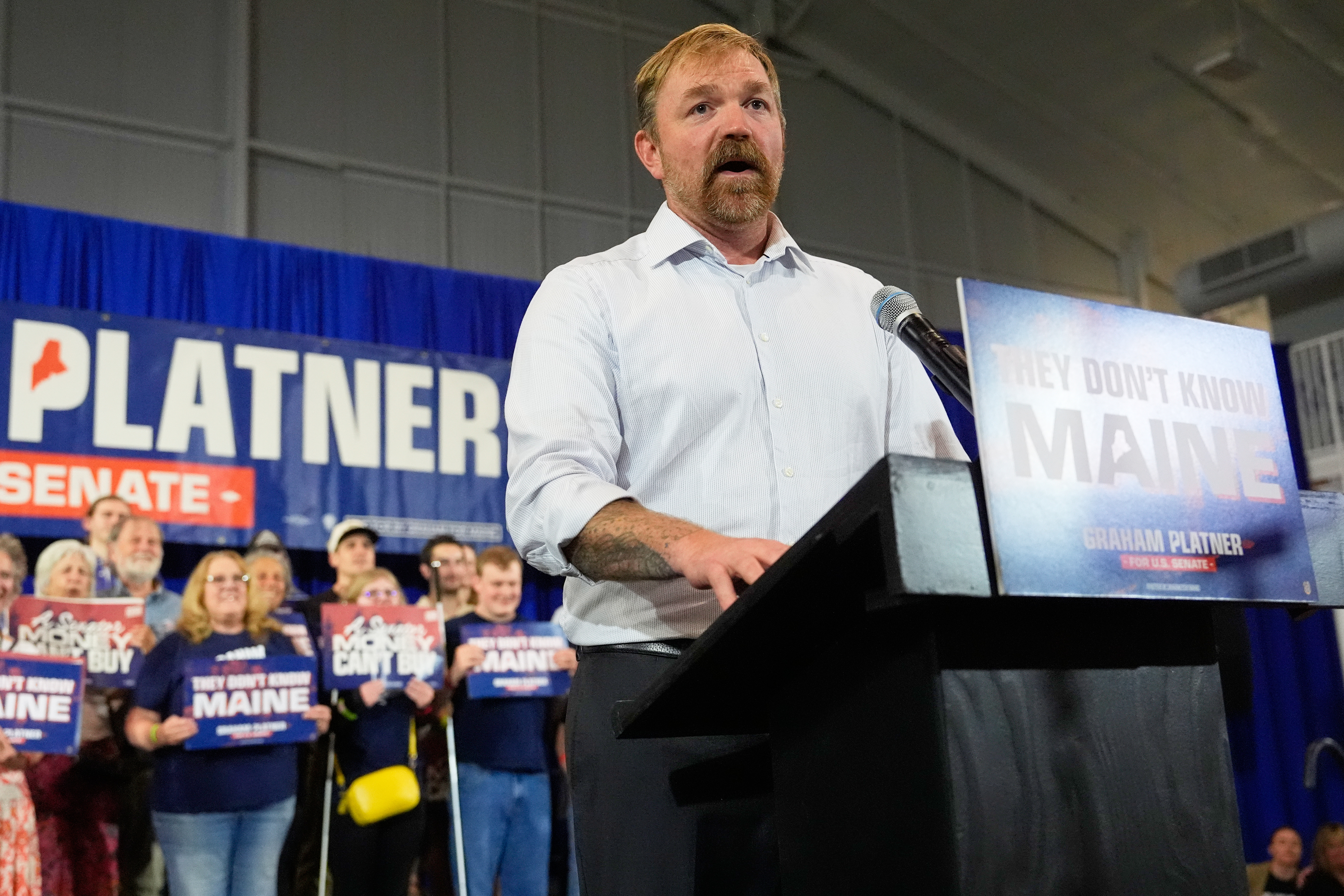
In his victory speech after the primary vote on Tuesday, Platner showed he’s planning to hammer Collins on corruption and tie her to Trump and other powerful elites associated with Jeffrey Epstein, the late financier who ran a sex trafficking ring. He’s working to make her the figurehead of a political system that works against working people.
“Susan Collins is getting rich while we’re getting screwed,” Platner said. “Susan Collins doesn’t serve us, she serves Donald Trump. She serves the Epstein class. She serves her corporate donors and the corrupt political system that has rigged the economy against us.”
The Maine Democratic Party is beating the same drum. It launched a “Shady Susan” website, containing negative information about the state’s senior senator.
Dan Shea, political science professor at Colby College and co-author of “Campaign Craft,” said negative ads can fire up the political base and donors. But he believes Platner and Democrats are making a mistake by going negative against Collins, who has been in office about nearly three decades and is well-known in the state.
“We are not accustomed to flamethrowers. We know each other in Maine. It’s a big small town,” Shea said. “This truly hard-hitting negative stuff can backfire.”
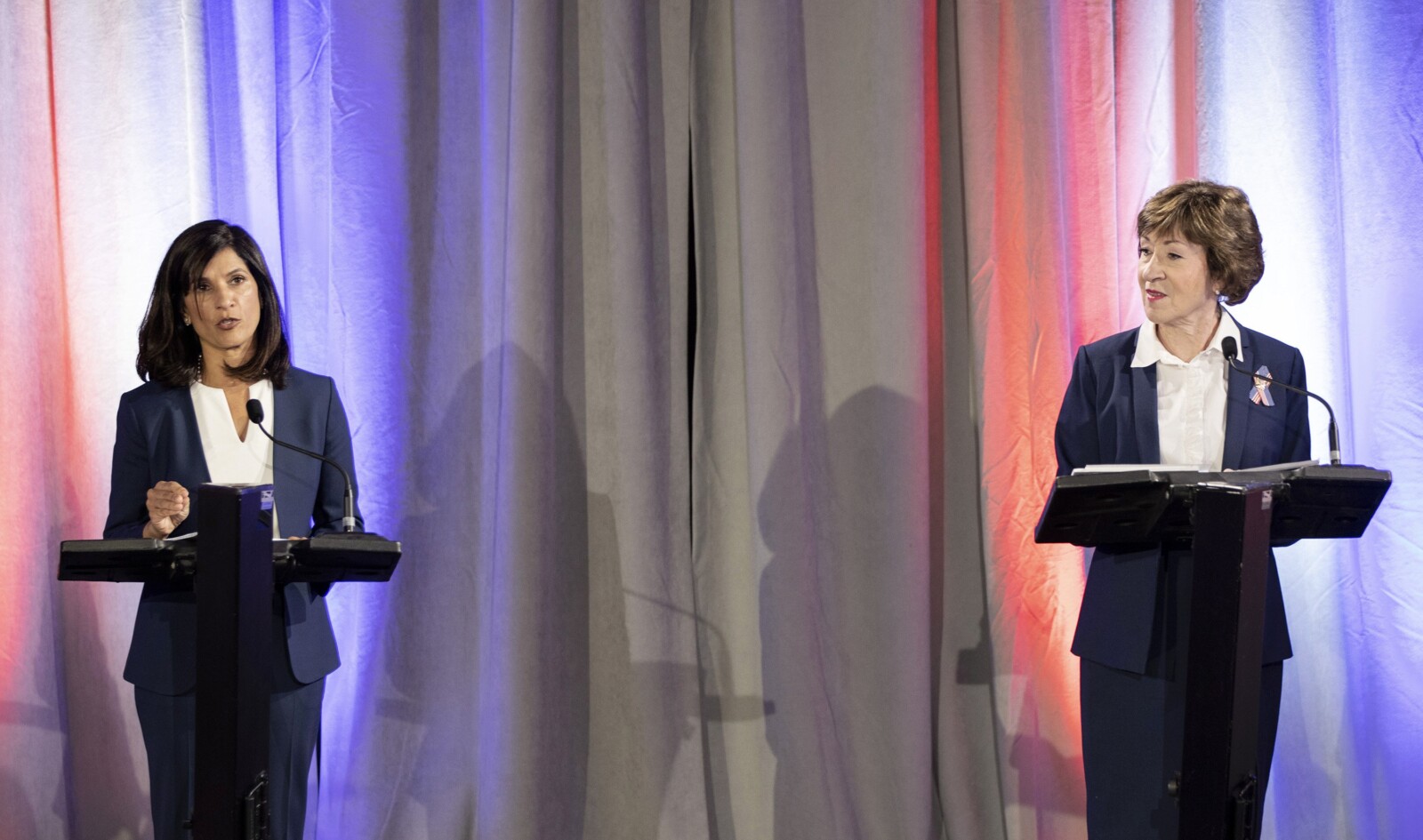
Shea noted that such attacks did not work in 2020, when Democrat Sara Gideon lost by 9 percentage points to Collins after leading in most pre-election polls.
Most of the negative ads that year came from outside groups, which cannot legally coordinate with candidates. But Gideon put out a couple of ads hitting Collins for her unkept promise to serve only two terms and for provisions in the pandemic-era Paycheck Protection Program that helped larger businesses.
Collins responded with several late-cycle ads featuring Bill Green, a popular and folksy TV personality who vouched for her character.
Shea doesn’t think portraying Collins as corrupt will get Platner anywhere, but showing her as a symbol of an oppressive political system and as a Trump ally might.
But even that argument could be tough to make.
Collins has sided with Trump’s agenda 95% of the time and fallen in line on key votes — most famously a deciding vote to confirm Brett Kavanaugh to the U.S. Supreme Court.
Yet she has also defied him at other pivotal moments, voting to impeach him after the Jan. 6, 2021, riots at the Capitol Building, reportedly working with the Senate majority leader to recruit anti-Trump candidates and voting against the One Big Beautiful Bill Act.
There’s no doubt Platner will face relentless attacks, most of which have roots in his prior behavior and actions. Platner has apologized for past online remarks, saying he was struggling with post-traumatic stress disorder and depression following four combat tours in Iraq and Afghanistan.
But the negative headlines aimed at the political newcomer so far haven’t drowned out a campaign message that has helped build one of the largest grassroots movements the state has seen. Those issues include tax billionaires, universal healthcare, ending forever wars overseas and fighting for more rights for workers.
Gov. Janet Mills tried going negative against Platner, and ended up suspending her campaign as his only real primary challenger. Some saw that as a mistake of her campaign, and yet Republicans are now doubling down on that approach.
Republicans have launched two microsites highlighting Platner’s past remarks and current controversies, BigotedPlatner.com and GrahamPlatner.org.
Franz, from Bowdoin, said Platner, as a political newcomer with no public service record and a trove of controversial online statements, is more susceptible to well-funded attacks from outside Republican groups. That may allow Collins to largely keep her hands clean, he said, and focus on the money she has brought to the state.
“Collins might be able to just sort of stay above the fray,” Franz said. “These outside groups will be doing all of the dirty work. And Collins knows this. The campaign knows this. And I think they benefit from that division of labor, even though it’s not an explicitly designed division of labor.”
She hasn’t entirely stayed out of it though. When asked by reporters, Collins has expressed concerns about Platner’s old internet posts saying a wounded soldier didn’t “deserve to live” and more recent reports detail intimidating behavior toward women.
When he criticizes her for voting to support the Iraq war, she notes he volunteered to fight.
“It’s already sitting out there,” Shea said. “It’s already in people’s minds. The best approach is to just push that narrative — to beat that horse until it’s dead twice over.”
While Democrats were not concerned with the attacks in the primary, Franz said they could raise doubts among low-information voters and independents, who comprise 32% of the electorate, making them the second-largest voting bloc in Maine.
Campaign spokesperson Shawn Roderick said in a written statement that Collins, who chairs the powerful Senate Appropriations Committee, plans to focus on delivering results for Maine.
Her campaign routinely highlights the $1.5 billion in federal earmarks she’s delivered to the state since 2022. Collins recently cast her 10,000th consecutive vote, the second-most in Senate history. And she touts her record of constituent services. (Democrats frequently note she hasn’t held a town hall event in decades.)
“Mainers aren’t looking for bitter campaigns, grand promises, or angry speeches riddled with lies,” Roderick said. “They aren’t interested in the name-calling and blame-gaming that Platner has resorted to every day of his campaign so far and has forecasted will be his strategy moving forward. They’re looking for results.”
Platner’s campaign did not respond to questions for this story.
Maine residents can expect to hear all of this as the state becomes inundated by ads fueled by out-of-state spending and third-party groups that operate independently from campaigns.
Republican-aligned groups have booked more than $119.4 million in broadcast, cable, digital and radio ads so far this cycle, while Democratic groups have booked more than $80.6 million, the political ad tracking firm Ad Impact says.
Those groups have booked a combined $120 million between the primary and general election. As fundraising continues, that number is only expected to grow, possibly setting new spending records.
Republican groups are highlighting Platner’s past comments online, including picking up a line of attack from Mills during the primary that focused on his comments blaming women for sexual assault. They’re also bringing up his past comments bashing police and lobstermen.
Democratic groups are tying Collins to Trump, including the aggressive immigration enforcement efforts in the state, the war with Iran and policies driving up prices for food, gas and other goods.
Glover said those advertising dollars go farther in Maine than other states, meaning residents can expect an onslaught for the next five months.
“We’re in for it,” he said. “And I guess we just have to endure it.”

We invite you to add your comments. We encourage a thoughtful exchange of ideas and information on this website. By joining the conversation, you are agreeing to our commenting policy and terms of use. More information is found on our FAQs. You can update your screen name on the member's center.
Comments are managed by our staff during regular business hours Monday through Friday as well as limited hours on Saturday and Sunday. Comments held for moderation outside of those hours may take longer to approve.
Join the Conversation
Please sign into your Press Herald account to participate in conversations below. If you do not have an account, you can subscribe here. Questions? Please see our FAQs.