


The volunteers who ran Maine’s first queer magazine did not try to hide.
They rented an office on Middle Street in Portland’s Old Port, painted the furniture pink and opened the doors to everyone. They soon found that the publication’s existence — in the mid-1970s — inspired people in unexpected ways.
“One day this guy came in and said, ‘I just want to kiss another guy before I die,'” said Peter Prizer, 78, who was one of the volunteers. “He came right over to me at my desk and gave me this big wet kiss in front of everyone, and I thought that was really great. And then he left.”
When it was created in 1974, the Maine Gay Task Force Newsletter was the state’s first publication focused on LGBTQ+ culture and activism. It became a magazine in 1977, under the name Mainely Gay.
Though publication ended in 1980, the volunteers remained close, and 46 years later, have put out one last issue as a way to celebrate and appreciate a piece of Maine’s LGBTQ+ history.
The final issue of Mainley Gay will be available for free at the Pride Portland celebration in Deering Oaks on June 20 and will be the subject of a free panel discussion at the University of Southern Maine’s McGoldrick Center in Portland on June 25, from 5:30-7 p.m.
The newsletter and magazine helped encourage others to start publications focused on the LGBTQ+ community’s struggles for equality, said Susie Bock, director of the Jean Byers Sampson Center for Diversity in Maine at USM.
The Sampson Center has more than 40 Maine-based publications in its collection as well as personal letters and papers from people involved in activism, including some who worked on Mainely Gay, Bock said.
“The first Maine Gay Task Force newsletters were distributed at gay bars and people said, ‘This is great, we’re sharing information’ and other people started doing it,” Bock said. “I think it’s important to bring this back (for one final issue) because today’s generation knows little about these newspapers.”
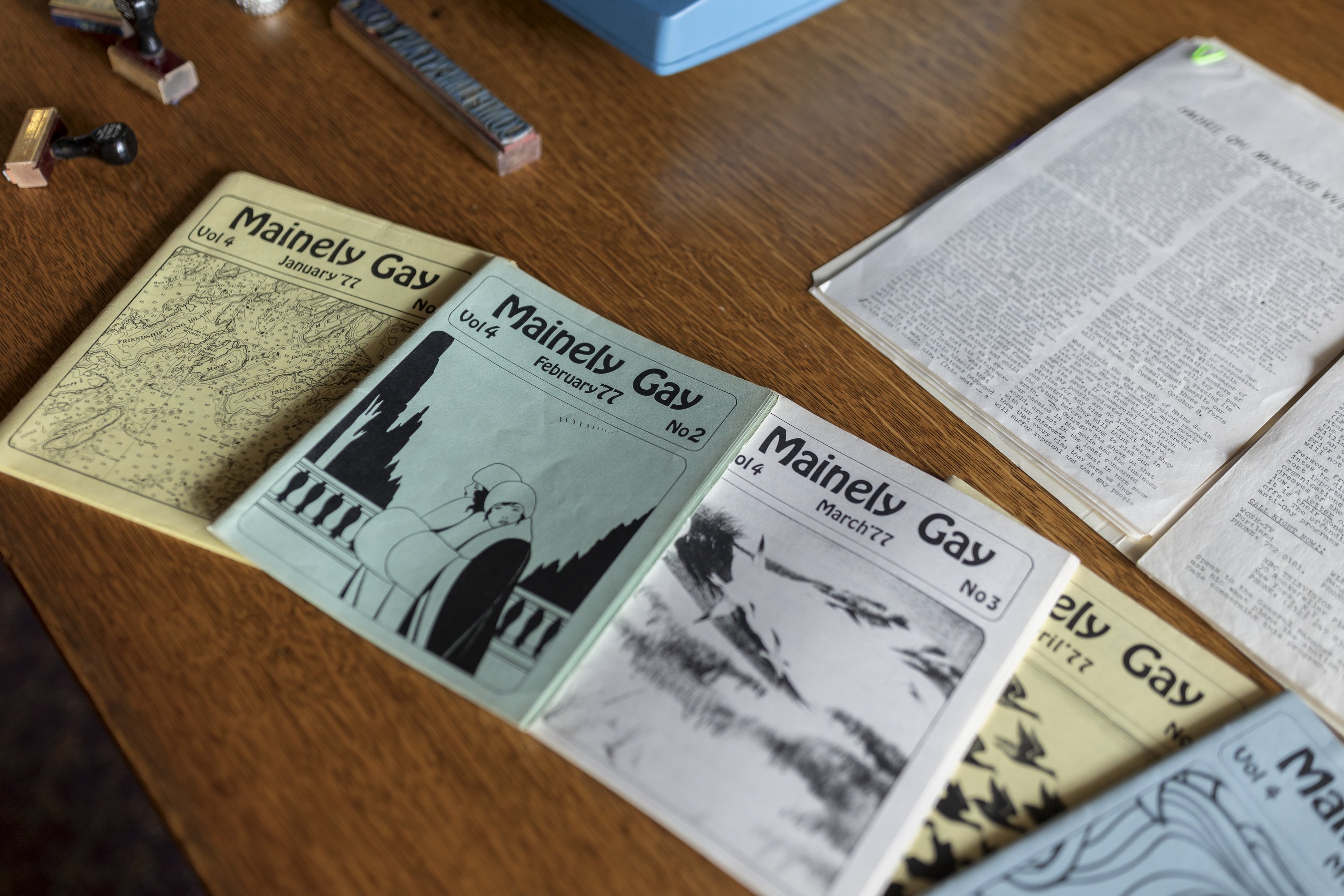
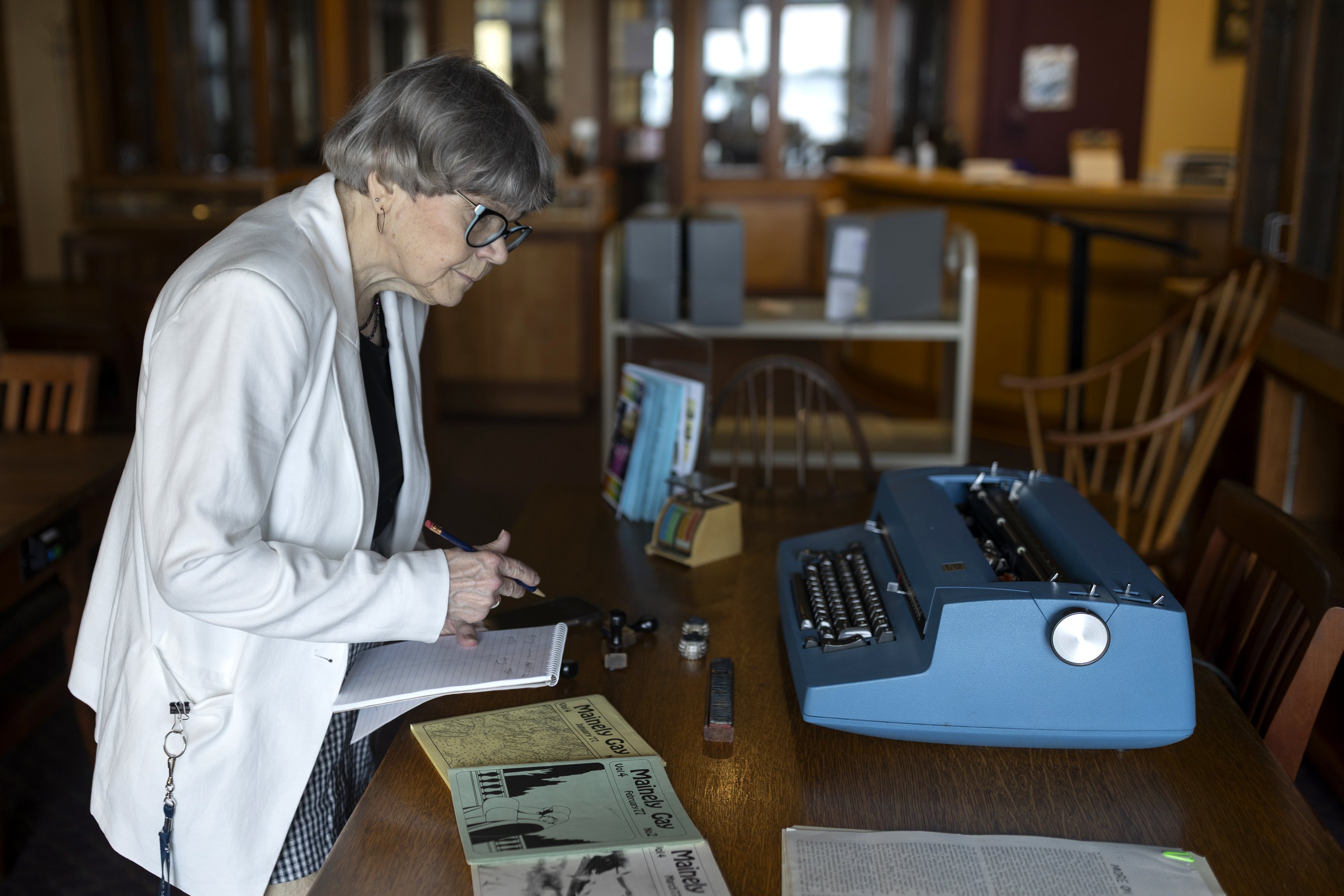
The original Mainely Gay magazines were made on a mimeograph machine, with pastel-colored pages stapled together and a professionally printed cover. The layout was straightforward, just typed articles and a few illustrations in black ink. It was funded largely by donations, including $1,000 to buy a state-of-the-art IBM Selectric typewriter.
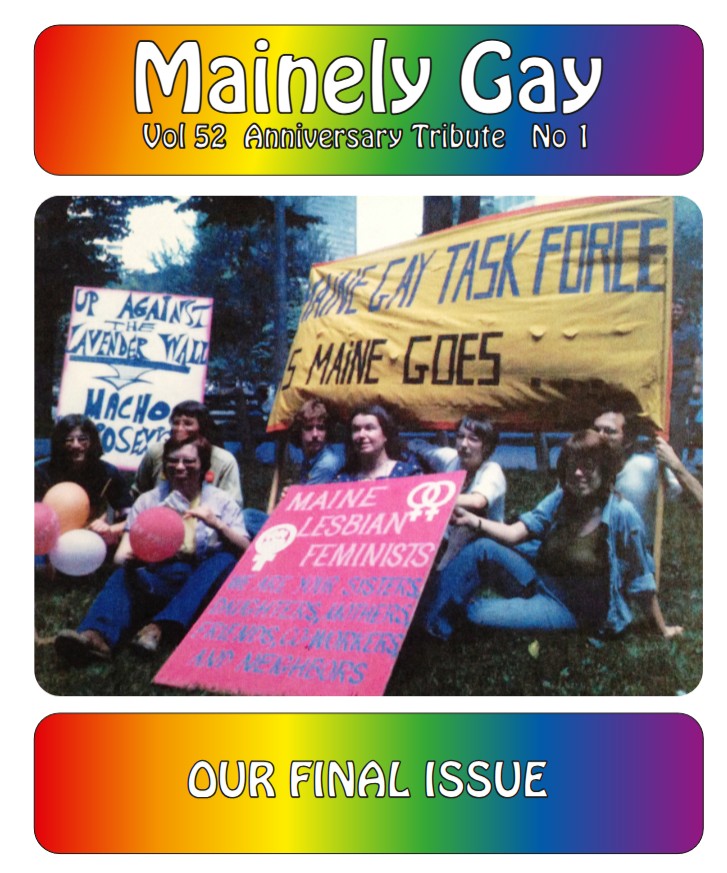
The cover of the final edition out now has a color photo, articles about the magazine’s origins and some from the original publication. One of the old pieces, from 1975, was about an arson at the Stage Door, a gay bar in Wells, that caused more than $40,000 worth of damage. Another article brought news of a picket line at an Ogunquit restaurant that was discriminating against the LGBTQ+ community. Ogunquit was known then and now as a haven for people in the LGBTQ+ community.

The Maine Gay Task Force Newsletter began at a time when Maine was one of the “battlegrounds” of early LGBTQ+ activism, said Steve Bull, of Kennebunkport, who was involved from the beginning.
In the early 1970s, the Wilde-Stein Club at the University of Maine in Orono, made up of LGBTQ+ students, gained wide attention because of its public fight for standing as an official student group, amid opposition from state lawmakers and others. The struggle was covered by newspapers, putting LGBTQ+ people and their take on issues in the news, at a time when that was rare. Bull said he had to come out to his parents so that he could act as a group spokesperson.
Around the same time, the first Maine Gay Symposium was held on the Orono campus, in 1974, with about 300 people from around the state. That meeting lead to the creation of the Maine Gay Task Force, and the newsletter, as a way for activists and concerned parties to stay in touch and stay informed, Bull said.
It helped create a statewide network out of what had been small, individual groups around the state in the days before the internet and social media. Protests, demonstrations and events were listed for a statewide audience. The organizers exchanged subscriptions with other queer publications around the country, so people in Maine would know what was going on in other places, Bull said.
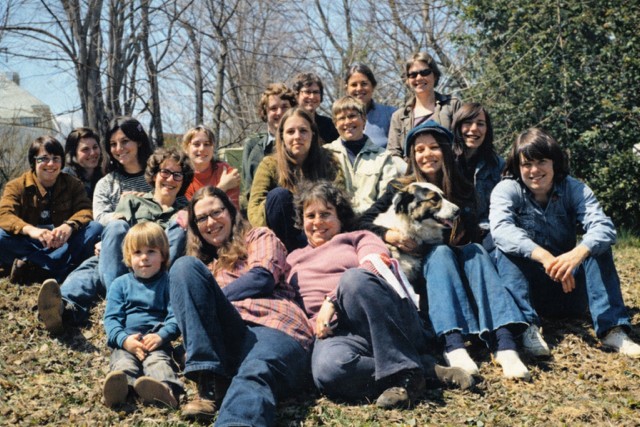
“I always called it a collective organizer, because it informed people what was going on here and around the country,” Bull said of the newsletter and magazine.
The panel discussion will include Bull, Prizer and others involved with the magazine and its final issue. Prizer hopes the commemorative issue and the story of Mainely Gay’s origins might inspire a new generation of activists.
“I always think setting an example is the best way to get people to do things,” said Prizer, who now lives in Bisbee, Arizona. “So maybe people in their 20s and 30s will say, ‘If these old geezers can get together and do something positive, we can too.'”

Comments are not available on this story. Read more about why we allow commenting on some stories and not on others.
We believe it's important to offer commenting on certain stories as a benefit to our readers. At its best, our comments sections can be a productive platform for readers to engage with our journalism, offer thoughts on coverage and issues, and drive conversation in a respectful, solutions-based way. It's a form of open discourse that can be useful to our community, public officials, journalists and others.
We do not enable comments on everything — exceptions include most crime stories, and coverage involving personal tragedy or sensitive issues that invite personal attacks instead of thoughtful discussion.
You can read more here about our commenting policy and terms of use. More information is also found on our FAQs.
Show less