


Michael Kelley left everything behind when he moved to Ireland in 2017.
The 54-year-old was born and raised in the Waldo County town of Swanville, just outside of Belfast. After a brief stint in the Army, he took ownership of the family homestead and helped raise three kids there with two romantic partners.
But his mental health had been deteriorating for years, family members said. He’d grown paranoid and occasionally violent. He told his family he’d been threatened by religious cults and organized crime groups.
He needed to flee. He did so with little explanation.
Kelley applied for asylum in Ireland, claiming political and religious persecution. The Irish government didn’t find his claims credible and denied his request. Kelley stayed anyway.
He was effectively homeless. Without a proper visa or citizenship, he lived under the radar, scrounging together odd jobs and temporary living situations.
At one point he set up a tent and lived off the land. At another, he lived and worked on a kelp harvesting boat, according to The Irish Times.
In interviews with the Portland Press Herald, several of Kelley’s family members and childhood friends spoke of a conflicted man who grew violent and conspiratorial over time, isolating himself from those closest to him until he put an ocean of distance between the place he grew up and the place he wanted to call home.
“He got worse over the years. It spiraled,” his sister, JaneA Kelley said in a Zoom interview. “You can’t reason with someone in that state.”
Eventually, Kelley found his way to the small town of Kenmare in southwest Ireland, where he met a sheep farmer named Michael Gaine in 2022.
Gaine, 56, owned a 1,000-acre farm where he kept herds of sheep, cows and other livestock. He offered Kelley room and board in a farmhouse on his property in exchange for labor. Kelley agreed.
He quietly worked there for about three years before Gaine went missing in early 2025.
THE DISAPPEARANCE
Gaine was last seen on March 20, 2025, inside a local shop buying minutes for his cellphone. The next morning, his family discovered his car parked at his farm with his personal belongings still inside.

Gaine was nowhere to be found. He was reported missing later that day.
Local police, volunteers and soldiers from the Irish Army began a sweeping search, combing through thousands of acres of rolling hills and steep mountains. The investigation captured the attention of Kenmare’s 2,500-odd residents and dominated headlines across the country.
It took two months to find any sign of Gaine.
On May 23, Gaine’s nephew went to spread fertilizer on the farm’s crops when he noticed a blockage in the equipment. He peeked inside. Pieces of what looked like flesh and bone had been stuffed inside the tank. Some of it had been spread over the fields around the farm.
The remains were Gaine’s, investigators from Ireland’s national police force confirmed.
Kelley was taken in for questioning before the remains were found, but released without charge. He remained a suspect but continued his life as usual for months afterward. He worked on the farm and occasionally busked in town, playing a traditional Irish flute for some extra cash.
In news interviews, Kelley maintained his innocence, even as he drew attention to his initial arrest. He claimed organized crime groups were trying to frame him for the killing, alluding to the same vague forces that compelled his move abroad nearly a decade ago.
“There may be elements that want to string me up because of my asylum case,” Kelley told the Irish Mirror. “The asylum case involved international crime. Crime that extends to Ireland.”
Kelley wasn’t formally charged with Gaine’s death until nearly a year later. Irish officials have provided few details about the case in the months between Kelley’s arrests or in the time since. Much about the killing and the circumstances that preempted it remain a mystery.
But as the case moves closer to trial, more details are trickling out about the enigmatic Waldo County man accused of one of the grisliest killings in Ireland’s recent memory.
UPBRINGING IN BELFAST
Kelley’s parents, Janice and Patrick, moved to Maine from New York in the late 1960s. They were “back-to-the-landers,” a term used to describe people who moved from large metropolitan areas in search of a rural, agrarian lifestyle.

The family wanted a quiet, idyllic rural lifestyle on the Midcoast. What unfolded was anything but.
They bought a former dairy farm in Swanville, one of many Midcoast communities that had become a haven for similarly minded folks, where they farmed the land and started a woodworking business. Janice brought a child from her previous marriage and then had two more children with Patrick: Michael and JaneA.
Janice drank heavily. Patrick was physically and verbally abusive to her. Janice filed for divorce in 1974 on the grounds of domestic violence, her daughter recalled, and took full custody of Michael and his siblings.
“They had a violent relationship,” JaneA said of her parents. “Mom always thought that Michael was too young to remember my father’s behavior, but I’m really not so sure.”
Friends and family recalled Michael as a smart kid who read often. He skied in the winters and joined the chess club and math team while attending Belfast Area High School.
Michael Hurely, Belfast’s former mayor, said Kelley babysat his little brother around that time. Kelley immediately struck him as an “odd guy,” Hurley said.

Kelley was sociable but introverted. He was sometimes picked on by others in class, and was usually pretty quiet — until someone brought up conspiracy theories.
Kelley had grand ideas about how the world really worked and who controlled it. He became convinced a secret cabal of elites was controlling the world, friends said, and that the government was hiding evidence of aliens.
Some of Kelley’s theories may have been colored in by his mother, who owned a “metaphysical shop” in Belfast. She sold records, crystals and secondhand books. Some of the novels and magazines on the shelves delved into new age religions, psychedelic mushrooms and UFO conspiracies. It wasn’t uncommon for Michael to have his nose in one of those books, his friends said.
“He didn’t seem like a bad kid. But still,” Hurley said, “He was a little off.”
A DETERIORATING MENTAL STATE
Kelley graduated from high school in 1989 and joined the Army shortly after. He was sent abroad to Germany but never saw combat. He became disillusioned with his service after just a few months, family members said.
He tried becoming a conscientious objector after seeing American forces relentlessly bomb fleeing Iraqi troops in February 1991, an incident that would become known as the “Highway of Death.”
The Army didn’t recognize his objection, but granted him a general discharge under honorable conditions toward the end of 1991, according to family members.
“He came back from the Army and he had gotten really into conspiracy theories and UFOs and stuff like that,” his sister said. “He wasn’t nearly as outgoing… It did change his temperament.”
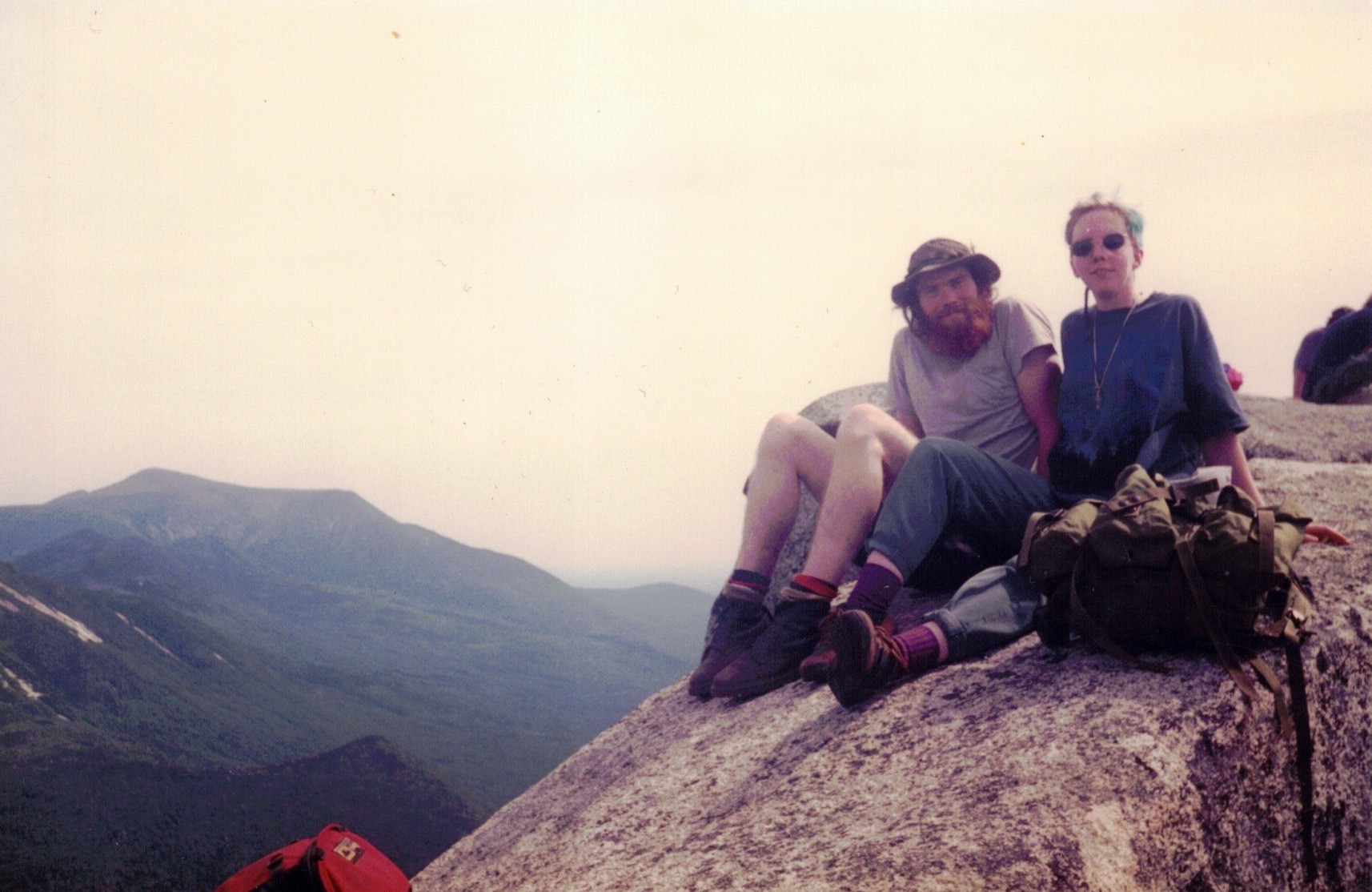
Kelley began having violent outbursts. He told stories of trashing his bunkmate’s living quarters in the Army for seemingly no reason, family members said. He began carrying a .45 revolver whenever he went into town and fell deeper into conspiracy theories.
Precise details about the following years are difficult to confirm. Kelley continued living on the family property in Swanville and distanced himself from his family. He couldn’t seem to hold a job, bouncing between stints as an HVAC technician, a butcher and other mostly menial work.
In 1998, he met Alicia Snow, who became a long-term romantic partner. A year later, they had a commitment ceremony at Kelley’s Swanville home. Then two kids. But the relationship broke down soon after.
Kelley was charged in 2001 with possessing marijuana and attaching false plates to his car. It’s unclear if he was arrested or served jail time. But the charges came at a time of escalating paranoia for Kelley, according to family members.
Snow responded to initial messages but did not agree to a specific interview time for this story. In interviews with Irish newspapers shortly after Kelley’s initial arrest last year, Snow said the Sept. 11 terrorist attacks worsened Kelley’s paranoia. He became “very unstable,” she told The Irish Times, and began stockpiling emergency supplies on their Swanville property. Snow and her children moved out later that year, she said.
It was around that time when Kelley met another woman, Karen Harden. They dated for a couple of years before getting married in 2006. She took Kelley’s name and still goes by Karen Kelley.
Later that year, Michael Kelley sought to regain custody of the children from his first relationship. Court documents show his state of mind had deteriorated further by that point.
He claimed Snow was “a witch” casting spells on their children, who needed him to intervene for their safety. The claims were flatly rejected by several judges, who kept the kids in Snow’s custody. Kelley later appealed to the Maine Supreme Judicial Court, which described him as an “inflexible parent who makes false allegations” and ruled in Snow’s favor in 2009.
“Kelley’s ability to determine fact from fiction is questionable,” the court’s decision reads.
MOVE TO IRELAND
Kelley’s mental state and living situation continued falling apart in the following years. The family home in Swanville fell into disrepair as he struggled to maintain an income. He grew convinced that criminal groups, government agencies and religious cults were out to get him.
“He said and did some really stupid things and then he swore by it,” Karen Kelley said. “He wouldn’t get evaluated. He wouldn’t see a psychologist. He flat out refused.”
Their marriage didn’t last. Michael filed for divorce in 2014. By that time, Karen said Michael had “gone overboard” with his theories and fears. Most of his family had cut contact with him as his behavior grew increasingly erratic.
He alleged the Swanville house was full of microphones and cameras following his every move, according to several family members, prompting Michael to “go underground” in Maine for a while.
He began living mostly off the land, sleeping most nights in a yurt he built on the property. Kelley’s living situation was both a product of and a contributing factor to his worsening mental state, his family said.
In 2017, Kelley seemed to reach a breaking point. He asked his father, one of the few family members with whom he remained in contact, for help buying a plane ticket to Ireland.
“I left behind a house, a family,” Kelley told the Irish Mirror last year. “Everything.”

It’s unclear why he chose to go to Ireland. His family traces its lineage back to the country, but Kelley didn’t explain his decision.
He called several family members and former partners while en route to the airport to inform them of the move. But he didn’t tell any of them why he was going. And he remained elusive once he arrived.
“He didn’t really talk much about his situation,” his sister, JaneA said. “He was very secretive about his exact location… He was just a stranger in a strange land.”
When Gaine, the Kenmare farmer, offered him a job and a roof to sleep under about four years ago, it was the most stable home Kelley had in years — until the low profile Kelley had worked to maintain was upended by Gaine’s sudden disappearance.
KELLEY’S CASE MOVES TOWARDS TRIAL
Since he was first questioned in Gaine’s death last year, Kelley has maintained his innocence. He claims there are “inconsistencies” in the prosecution’s case. The fertilizer tanks where Gaine’s body was found had been searched in the days immediately following his disappearance, Kelley said, but no traces of human remains were found inside until nearly two months later.
“The guards (Irish police) are not being forthright with all the elements of this case,” he told the Mirror.
Kelley’s case will be heard by Ireland’s Central Criminal Court, which deals with the country’s most serious cases.
He was given until June 10 to present an alibi if he plans to use that in his defense. It’s unclear if that’s happened yet. A spokesperson for the Irish Courts Service said his first hearing with the high court has yet to be scheduled. It will likely take “some months” for that to happen, they said.
While the killing and the mystery around it have gripped Ireland for more than a year now, its impact in Maine seems to have been much more muted. Few in Belfast or Swanville were aware of the case, much less following it. Even fewer knew Kelley or his family.
Kelley’s sister and former partners, many of whom hadn’t spoken to him in years, said his arrest and the subsequent media firestorm reopened old wounds. Many only learned of the incident after being contacted by Irish journalists.
“I actually felt some degree of guilt and shame,” said JaneA. “If he did kill this man, maybe I could have done more to get him help.”
Editor’s note: This story was updated at 9 a.m. on June 17 to clarify the relationships between Michael Kelley’s partners and his children.

We invite you to add your comments. We encourage a thoughtful exchange of ideas and information on this website. By joining the conversation, you are agreeing to our commenting policy and terms of use. More information is found on our FAQs. You can update your screen name on the member's center.
Comments are managed by our staff during regular business hours Monday through Friday as well as limited hours on Saturday and Sunday. Comments held for moderation outside of those hours may take longer to approve.
Join the Conversation
Please sign into your Press Herald account to participate in conversations below. If you do not have an account, you can subscribe here. Questions? Please see our FAQs.