


AUGUSTA — Attorneys for the seven school districts being sued by the Maine Human Rights Commission over their policies related to transgender students delivered oral arguments in Kennebec County Superior Court on Tuesday.
It was the first hearing in a case that’s occurring amid a shifting legal landscape for those policies in Maine and the country.
The commission, a quasi-state agency tasked with enforcing the Maine Human Rights Act, sued five school districts last November that adopted new policies in alignment with an executive order from President Donald Trump about the federal discrimination law Title IX. Two more districts were later added.
The president’s order interpreted that 1972 law to say that school districts that allow transgender students to compete on sports teams or use locker facilities in alignment with their gender identity are discriminating on the basis of sex. But the policies adopted by Maine districts directly violate the state’s Human Rights Act, which allows students to participate in school activities on the basis of their gender identity.
Six of the districts filed a motion to dismiss, arguing the commission’s case isn’t valid, while a seventh district filed a separate motion, arguing its policies don’t actually violate state law.
The seven districts named in the suit are: Maine School Administrative District 70 in Hodgdon, Regional School Unit 24 in Sullivan, RSU 73 in Livermore Falls, the Baileyville School District, the Richmond School Department, MSAD 52 in Turner and East Grand School in Danforth.
The lawsuit is playing out at the same time the U.S. Department of Justice is suing the state for its trans athlete policies, and as Maine voters may soon have the opportunity to overturn the provisions of the Human Rights Act that allow transgender students to compete on sports teams aligned with their gender identity.
A citizen’s initiative to change the law was set to appear on the November ballot, but the secretary of state’s office invalidated it last month after a review determined the group was about 500 signatures short of the required number. Last week a judge said the secretary of state was right to invalidate the initiative. The group behind it plans to appeal to the Maine Supreme Judicial Court, but the whole matter must be sorted out by Aug. 1 in order to lay out and print ballots for the November election.
John Baldacci Jr., representing six of the seven districts, argued before Superior Court Justice Michaela Murphy that the case should be dismissed on the basis that the commission had no right to file a lawsuit. He said state statute requires the commission to conduct an investigation before going to court, and it failed to do so.

Baldacci also argued that Title IX, as originally passed in 1972 , intended the term “sex” to apply to biological sex, not gender identity. He said many states, including Maine, are currently litigating that definition at the federal level.
The commission’s attorney, Barbara Archer Hirsch, said the agency was within its rights to bring a lawsuit without an investigation, and that it is working in the public interest in response to blatant disregard for the state law.
“The harm is that the policies on their face violate the Human Rights Act,” she said.
Murphy posed several questions to Archer Hirsch about the commission’s standing to bring the lawsuit. She pointed out that the Human Rights Act could soon be amended by a referendum, changing the whole legal landscape of the case. And she asked if the agency had ever filed a lawsuit without an actual harmed plaintiff before.

“I don’t think we have, but the commission hasn’t faced this sort of situation before,” Archer Hirsch said. “Where groups across the state have adopted policies that, in some cases at least … fly directly in the face of the purpose of the Human Rights Act.”
The final school district, Turner-based MSAD 52, filed a partial motion to dismiss just the counts of the lawsuit pertinent to itself. Attorney Trevor Brice said the district endeavored to be in compliance with both federal and state law, out of fear that not complying with the federal executive order could result in a loss of federal funding. He said its policy does not apply to bathrooms or other sex-separated facilities.
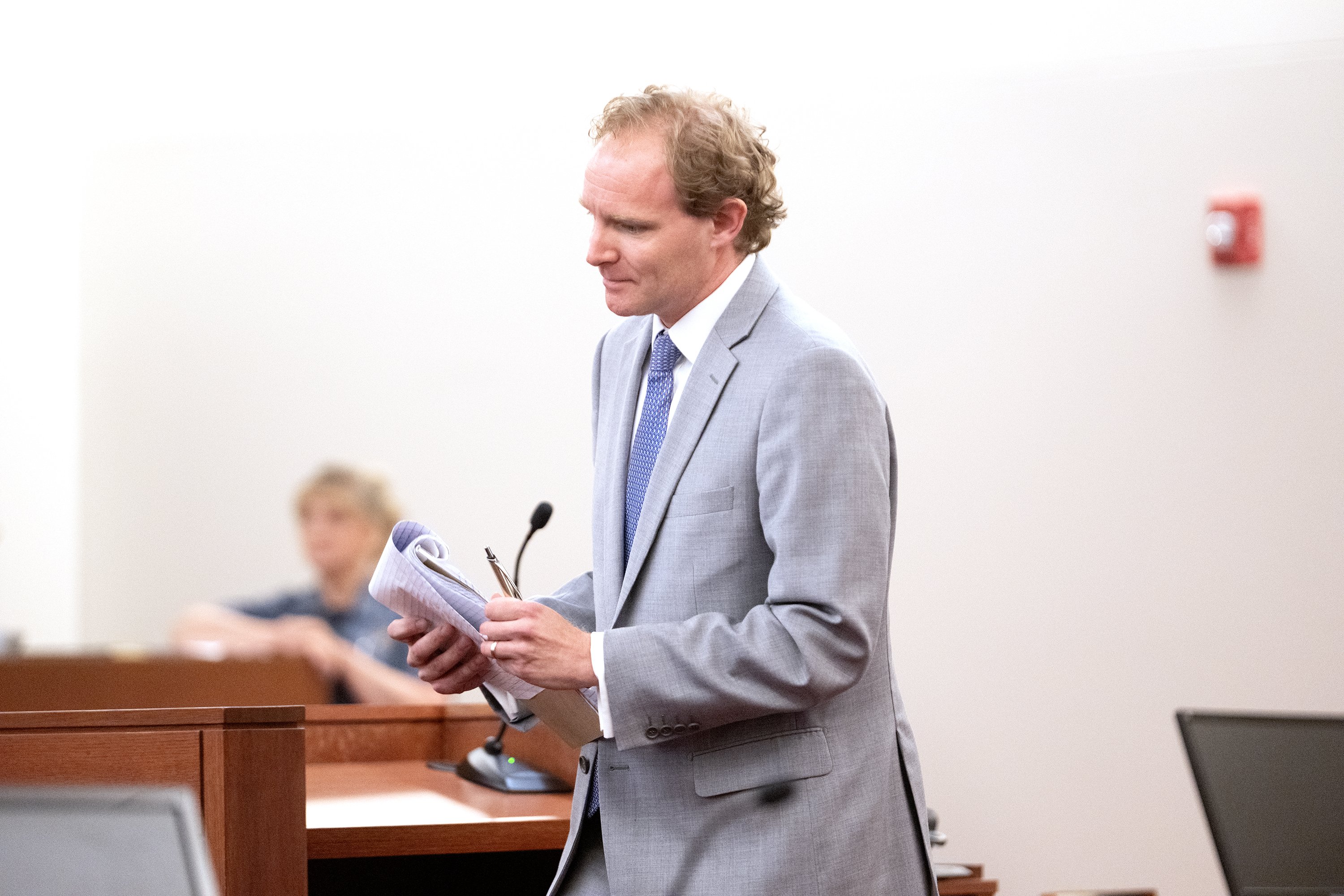
“This does not deny transgender or non-binary students access to sports teams of their choosing,” Brice said.
But Archer Hirsch said by deferring to the executive order (which directly contradicts the state’s Human Rights Act) in its policy, MSAD 52 too had violated state law.
Murphy told the attorneys she considered waiting until the referendum situation was resolved to hold oral argument on the motion to dismiss. She also contemplated waiting until after the U.S. Supreme Court decisions in two relevant cases are expected to be released later this month but “threw out the idea.”
She did, however, say it was possible she might stay the case until after Maine’s supreme court makes a decision on the ballot initiative’s viability. She also may allow attorneys to make supplemental arguments as the legal landscape on the issue continues to evolve.

Comments are not available on this story. Read more about why we allow commenting on some stories and not on others.
We believe it's important to offer commenting on certain stories as a benefit to our readers. At its best, our comments sections can be a productive platform for readers to engage with our journalism, offer thoughts on coverage and issues, and drive conversation in a respectful, solutions-based way. It's a form of open discourse that can be useful to our community, public officials, journalists and others.
We do not enable comments on everything — exceptions include most crime stories, and coverage involving personal tragedy or sensitive issues that invite personal attacks instead of thoughtful discussion.
You can read more here about our commenting policy and terms of use. More information is also found on our FAQs.
Show less