


The plants in your garden are growing robustly under the summer sun, but the next day they’ve been nibbled down to nearly nothing.
Your lawn is finally looking like you could play golf on it, when suddenly, cavernous holes appear in the grass.
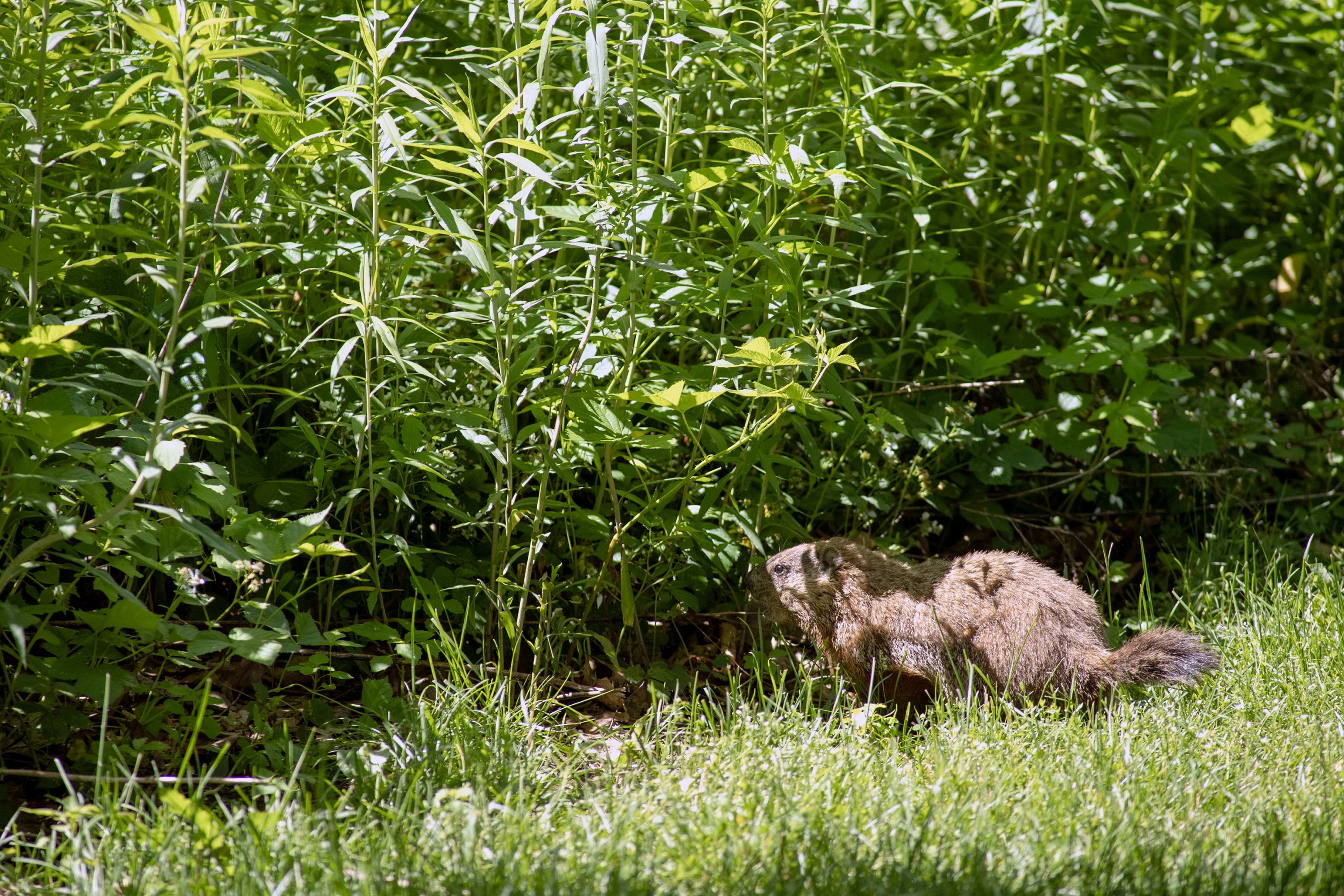
The diagnosis? A woodchuck has likely made a home on your property.
Chris Maher, a professor of biology at the University of Southern Maine, has been studying Maine woodchucks, also known as groundhogs, since 1998. She researches their social behavior with a long-term study at Gilsland Farm in Falmouth and knows their habits and preferences well.
She’s also familiar with fending them off in her personal time.
“Ironically enough, I’ve got a woodchuck right now in my yard. My zucchini plant? What zucchini plant? It was gone the next day,” she said.
Maher and a graduate student compiled and evaluated woodchuck management techniques used in Maine for the University of Maine Cooperative Extension. Here are her tips for deterring woodchucks from your property.
DON’T
There are several common strategies for attempting to remove woodchucks that Maher discourages.
The first is trapping the woodchuck and releasing it elsewhere. This runs counter to everything woodchucks need to survive, said Maher.
She studies their use of territory, which ranges between three-quarters of an acre and two acres and often includes several burrows dug in the ground, which they use year after year to rest and hide from predators. Releasing them in a field a few miles away from your yard would be akin to stripping a person of everything they have and dropping them in the middle of another country, she said.
“It’s not humane,” said Maher.
Even if you drop off the woodchuck in a suitable habitat, another woodchuck probably already lives there. They’re a highly territorial species, said Maher, and the newly arrived animal likely will be chased away by the resident woodchuck into a dangerous area, like a highway, or into an exposed area where it may be attacked by a predator.
Many relocated woodchucks die, often in a prolonged and painful manner. Between relocating a woodchuck and shooting it, the more humane option is to euthanize it, she said.
Another method Maher advises against is using poison. Its effects don’t discriminate, and you could end up also poisoning a small child or beloved pet.
DO
Maher’s general advice for getting woodchucks to leave your gardens and lawns alone is to make your property an undesirable home for them so they wander off on their own.
Modify the landscape so they’re no longer comfortable. Fill in the holes that lead to their burrows, so their safe areas are gone and they will consider setting up shop elsewhere, she said.
To protect your vegetables, build a fence around your garden. Maher suggests burying the fence at least a foot deep or layer rocks around its base — the woodchucks will try to tunnel underneath. Also try to make the fence flexible — since the woodchuck will try to climb over it — and instability is a deterrent. Try using loose netting or flexible plastic for the above-ground section of the fence.
Another technique to try is making woodchucks think there is a predator in the area, which will cause them to scatter. Apply repellants such as coyote or fox urine, which you can buy at farm supply stores or online, and spray it around your garden. Make sure to reapply the urine at regular intervals and after it rains, advised Maher, so the woodchucks think the predator is still around.
A dog in the yard may also do the trick of playing predator, she said. But this alone is not a good reason to go and adopt a dog.
For homeowners looking to foster pristine grass lawns, woodchucks can also be seen as allies. Maher said they dislike eating grass, while some of their favorite foods are dandelions and clover flowers.
“All the things we think of as weeds in our lawn are typically what they’re eating,” she said.

Comments are not available on this story. Read more about why we allow commenting on some stories and not on others.
We believe it's important to offer commenting on certain stories as a benefit to our readers. At its best, our comments sections can be a productive platform for readers to engage with our journalism, offer thoughts on coverage and issues, and drive conversation in a respectful, solutions-based way. It's a form of open discourse that can be useful to our community, public officials, journalists and others.
We do not enable comments on everything — exceptions include most crime stories, and coverage involving personal tragedy or sensitive issues that invite personal attacks instead of thoughtful discussion.
You can read more here about our commenting policy and terms of use. More information is also found on our FAQs.
Show less