


The Mi’kmaq Nation is expanding.
The tribe on Friday obtained title to Mesgilg Maqamigew, a nearly 3,400-acre parcel near Bridgewater. The land return is so large it will more than double the tribe’s holdings.
“For decades the Mi’kmaq citizens have seen their traditional hunting and gathering
grounds disappear to development or private ownership not allowing access,” Chief Sheila McCormack said in a news release. “This property will give our people a place for outdoor
recreation, a place to teach our children how to hunt and fish, and a place we can pass
down the traditions of our ancestors before they are forgotten.”
Of the four Wabanaki tribes, the Mi’kmaq Nation received federal recognition last, in 1991. It and the Houlton Band of Maliseet Indians hold far less land in Maine than the Passamaquoddy Tribe and Penobscot Nation, which each have more than 150,000 acres.
The Conservation Fund negotiated a below-market value sale and purchased the parcel last year from forestry company H.C. Hayne, then held it on behalf of the tribe. The organization worked with an alliance of tribes known as the Wabanaki Commission on Land and Stewardship, and First Light, a group of non-native, land-based organizations, to secure $1.9 million for project.
“Indigenous land return projects are a cornerstone of our conservation efforts,” Tom Duffus, Northeast representative for The Conservation Fund, said in a statement. “I’m thrilled that this special place is once again managed by the Mi’kmaq Nation, whose citizens have stewarded this landscape since time immemorial.”
Mesgilg Maqamigew means “big land,” a name chosen in recognition of the significance to the tribe of a parcel so large, contiguous and lush with resources.
The property contains forests, wetlands and more than three miles of North Whitney Brook, a stream with a thriving brook trout population, according to Mi’kmaq Environmental Health Director Shannon Hill.
The tribe has already located fiddleheads there, and Hill said they plan to use the land for hunting, fishing, gathering and timber. Snowmobile and ATV trails are available for public use.
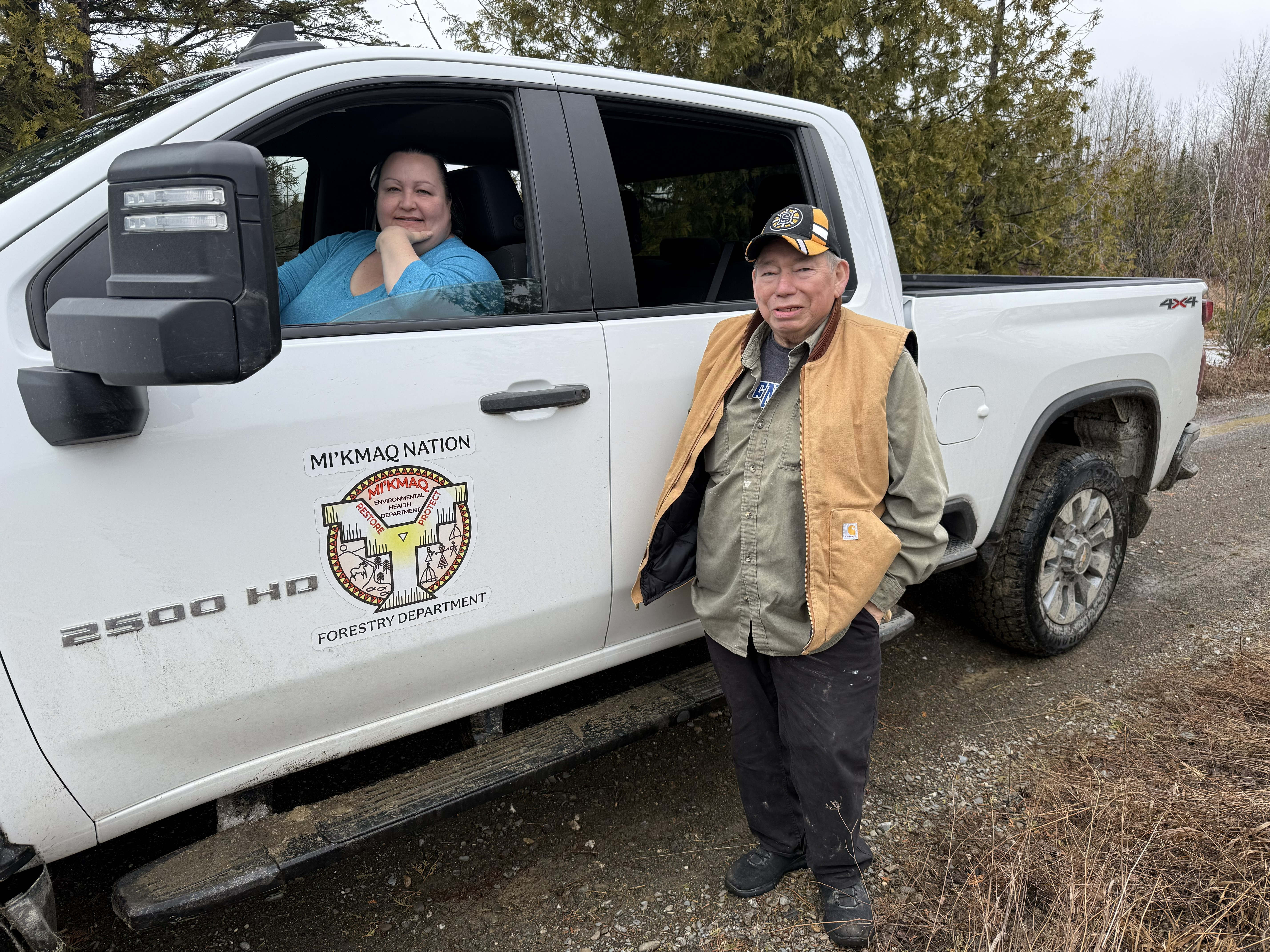
Richard Silliboy, a basket maker and former Mi’kmaq vice chief who sits on the commission, is hopeful the parcel has brown ash for weaving — but expects, at least, “some decent fishing.”
Mesgilg Maqamigew is the sixth to be completed in a series of projects spearheaded by the commission that are collectively known as the tributary land returns. The tributary returns comprise 52,000 acres in 11 discrete projects involving all five tribal governments in Maine at an estimated cost of $52 million.
The Nature Conservancy of Maine, Trust for Public Land, Maine Coast Heritage Trust, The Appalachian Mountain Club, The Forest Society of Maine and The Conservation Fund, all non-native organizations, are all partners in the tributary projects.
“It is so exciting to be part of this land return, and we are so grateful to all those that made this happen,” Hill said in the release. “It is truly amazing there are organizations and non-native individuals out there that care and recognize the importance of these tribal land returns.”
It’s all part of a movement that is gaining momentum to return once-Indigenous land to tribal control.
The successes in Maine are impressive on a national scale, said Darren Ranco, who sits on the commission’s planning team. It’s not just the scale that’s notable, it’s that tribes are pursuing, and receiving, specific lands that are valuable to them.
Last year, for example, the Passamaquoddy Tribe requested the return of a 140-acre waterfront parcel along Patten Pond, abutting its reservation at Motahkomikuk.
This land return comes as the Mi’kmaq Nation grows in other ways.
The tribe recently was granted a non-voting tribal representative’s seat in the Legislature, is logging existing lands and using the timber to build housing for tribal members, is on the verge of opening a tribal court, and in December, will make per-capita payments to members for the first time using sports betting revenue.
Reuben M. Schafir is a Report for America corps member who writes about Indigenous and rural communities for the Portland Press Herald.

Comments are not available on this story. Read more about why we allow commenting on some stories and not on others.
We believe it's important to offer commenting on certain stories as a benefit to our readers. At its best, our comments sections can be a productive platform for readers to engage with our journalism, offer thoughts on coverage and issues, and drive conversation in a respectful, solutions-based way. It's a form of open discourse that can be useful to our community, public officials, journalists and others.
We do not enable comments on everything — exceptions include most crime stories, and coverage involving personal tragedy or sensitive issues that invite personal attacks instead of thoughtful discussion.
You can read more here about our commenting policy and terms of use. More information is also found on our FAQs.
Show less