
Sophie Yindra, 70, of Bridgton said she wouldn’t be able to afford her medications if it wasn’t for Stan Cohen’s help figuring out the Medicare system.
Cohen, 79, decided to help others with the Medicare bureaucracy after he struggled himself to sign up to the program. As a volunteer Medicare advocate for the Southern Maine Agency on Aging, he makes himself available to individuals with questions about Medicare at Bridgton Hospital Tuesday mornings from 8:30-11 a.m.
Yindra, who had a stroke around five years ago and lives alone said, “I needed help desperately because I take so many medications.” Depending financially on Social Security, Yindra said she would have a hard time affording her medications without Medicare.
Cohen also told her about Meals on Wheels and the senior transportation program, and she raves about both. “He works hard until he gets it done,” Yindra said. “I can’t praise Stan enough.”
Cohen is more modest about his efforts, pointing out that he’s not the only Medicare advocate in the area and saying he gets more out of the experience than the people he helps. “It’s very rewarding for me,” Cohen said. “They come to me sometimes literally trembling with anxiety, or even in tears, and by the time they leave me they’re totally relaxed and relieved that it’s taken care of.”
Cohen said some have billing issues while others have a hard time choosing one of many plans offered by private insurance companies. Cohen also helps low income seniors apply for programs that help them pay their premiums and provide other social services.
Ginny Halligan, 72, of Bridgton has also received help from Cohen. “He’s been just wonderful,” Halligan said. “He has the knowledge to understand all this and he’s willing to work with people.”
Halligan, who retired in 2002 from a position as executive secretary at Bridgton Hospital, said she goes back to Cohen every year to re-evaluate the prescription drug plan she chose. “It can be quite overwhelming for people who don’t understand the system,” Halligan said. “He makes it much easier.”
Medicare is available to people who are disabled or 65 years old and over as long as they paid into the system through their payroll taxes. What type of Medicare individuals get, however, is less straightforward.
Over the last several years, the government added a prescription drug plan and Medicare Advantage plan, which lumps together different aspects of traditional Medicare plans. Many people also buy a Medicare supplement program called Medigap. The prescription drug plan, Medicare Advantage, and Medigap are all administered by private insurance companies, which means individuals have many options to choose from.
For example, there are 53 different prescription drug plans available, each of which offer different medications and charge different premiums and co-pays. “It’s too confusing for most people to figure out,” Cohen said, adding that insurance companies are often aggressive in their recruitment of eligible seniors. “People are getting broadsided by these private companies,” Cohen said.
Cohen saw his own private insurance premiums rising a couple of years after he retired as the director of finance at Bridgton Academy in 2000, and he decided to look into switching over to Medicare. He had a hard time choosing the best plan for he and his wife and determining if there would be a penalty for joining late. “I found it quite daunting,” Cohen said. He realized that if he had trouble, even after working as an administrator for most of his life, others would certainly have trouble as well.
When Cohen saw an ad in a newspaper that the Southern Maine Agency on Aging was looking for Medicare advocates, he responded. In May 2004 he started making himself available on a regular basis at the hospital. He also meets individuals by appointment at the Bridgton Community Center and in their homes.
Carol Rancourt, coordinator of the Southern Maine Agency on Aging senior Medicare patrol said they have 30 volunteers in Cumberland and York counties, though only half of those are really active. They just finished training 10 more volunteers and plan to bring on more in August and October. “There’s always room for more,” Rancourt said.
The agency provides three initial full days of training and at least two follow-up days of training per year for volunteer Medicare advocates, as well as online training and e-mail updates. Rancourt said the most challenging part for trainees is the “sheer volume of information.”
“It takes a certain kind of person to be interested in something as detailed as this,” Rancourt said, adding that Cohen is unique due to his leadership ability and versatility.
Cohen estimates he has seen almost 800 people in the past four years. For his work, he recently received the MetLife Foundation Older Volunteers Enrich America award.
This isn’t the only volunteer work Cohen does. He is on the board of directors for Lakes Environmental Association and the Southern Maine Agency on Aging. He used to the on the board of directors for the Bridgton Hospital and the Bridgton Historical Society. He teaches Civil War history at the Bridgton senior college at Bridgton Memorial School and plans to teach a Medicare program for School Administrative District 61 adult education.
Cohen said sometimes it’s hard to convince people to ask for help. “They don’t want handouts,” Cohen said. “But they have paid all their lives for these programs so it isn’t a handout, they’re just getting back what they put in.”
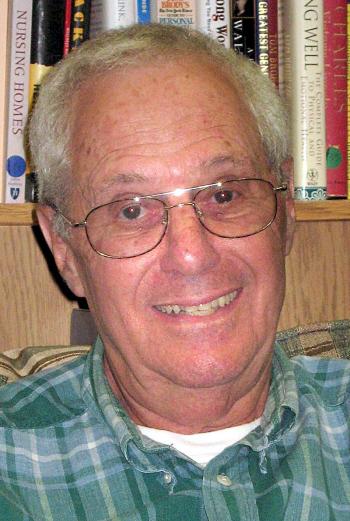 Stan Cohen, a volunteer who helps senior citizens decipher the federal Medicare programs, decided to help others after finding that choosing coveage for himself was daunting.
 Making Medicare manageable
Comments are no longer available on this story