

A University of Maine pilot program aimed at reducing takeout food waste in restaurants and cafes saw slow but steady growth in its first month.
Solo Pane and Pasticceria in Bath was the first of five Maine businesses to sign on for the year-long pilot program, ReuseME, along with Coffee Matter and Cafe This Way in Bar Harbor, and Verbena and Second Rodeo Coffee Shop in South Portland.
“I like the idea of the reusables, and I think it is a clever program to have people borrowing, returning, and being able to use it in multiple locations,” said Solo Pane owner Mercedes Laboa.
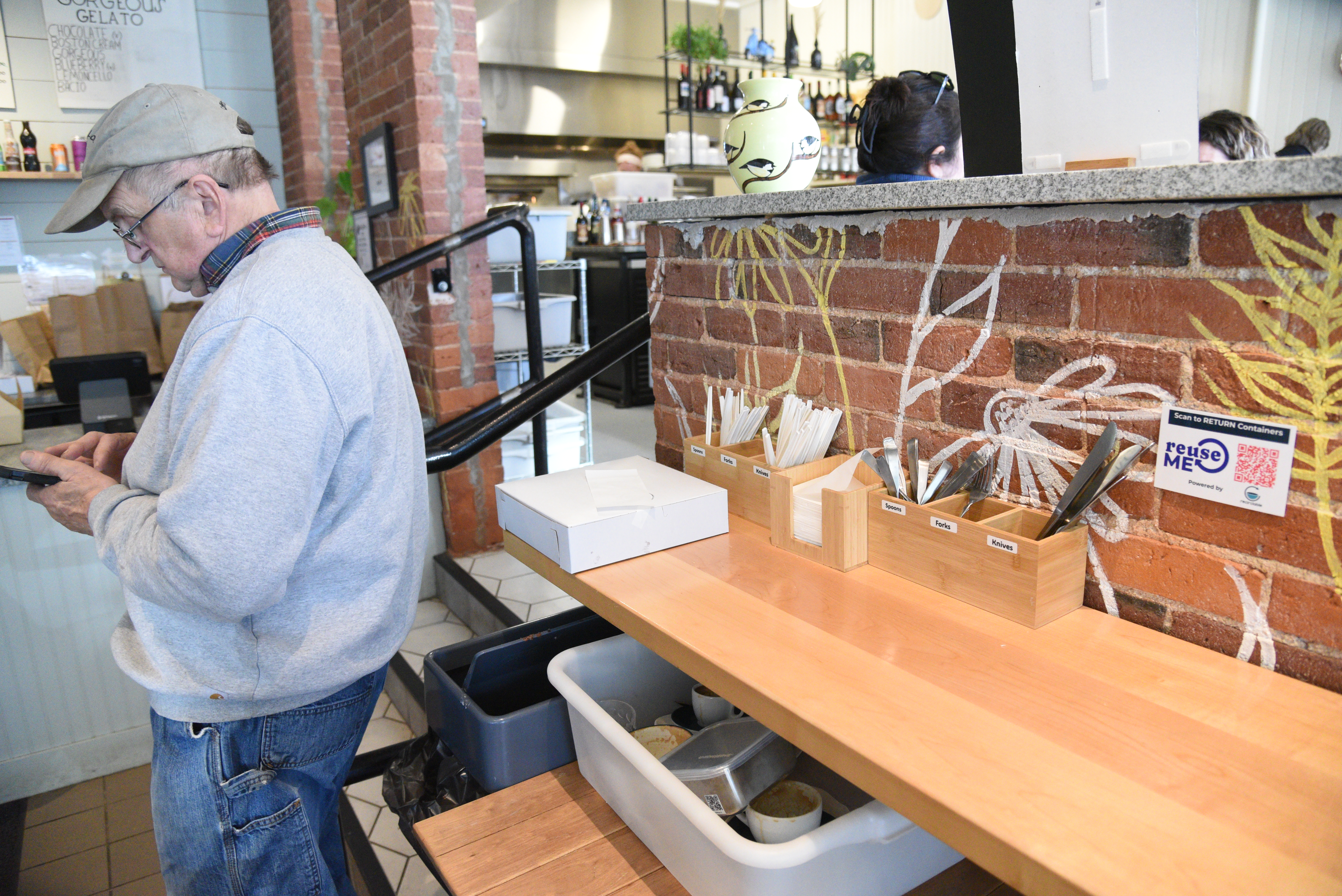
Customers participate in ReuseME by downloading the Recirclable app, said Catherine Segada, UMaine graduate assistant.
After downloading the app, customers can scan a QR code at the register and show the cashier that they are renting the reusable containers. Solo Pane staff do this because the cafe’s current system doesn’t register the aluminum containers, Laboa said. Once customers return the containers, they can scan the code on the ReuseME bin in the cafe and scan each container to return them for cleaning.
There is a learning curve because bringing your own containers into a restaurant isn’t the norm, Laboa said. Adoption has been slow, with mostly Solo Pane regulars using the reusable containers, but customers can also return the ReuseME containers to other locations participating in the pilot program using the app. About 108 customers are members of the app across the restaurants and cafés, with Solo Pane having 24 members, said UMaine professor Cindy Isenhour.
When the pilot ends in December, businesses have the option to purchase the reusable containers to continue using them. Solo Pane plans to keep the containers with a goal of cutting down on the amount of paper goods it uses by half, Laboa said.
ReuseME was founded by Isenhour, who is the principal investigator for the pilot program.
“Disposability poses a major challenge to the environment and waste-reduction efforts,” Segada said. “There are roughly 4.9 million tons of waste from disposable food service ware, and roughly 100,000 marine animals die annually due to plastic debris.”
A UMaine research team conducted a food packaging survey of 54 businesses and found that food providers spend an average of $881 on disposables and an additional $259 on managing the waste, Segada said. Reusable packaging can help reduce solid waste in landfills by up to 86% and carbon dioxide emissions by 60%, while reducing the amount of plastic pollution entering the waterways.

The Times Record Sustaining Sponsor
We believe a community must be informed to thrive. bowdoin.edu

Comments are not available on this story. Read more about why we allow commenting on some stories and not on others.
We believe it's important to offer commenting on certain stories as a benefit to our readers. At its best, our comments sections can be a productive platform for readers to engage with our journalism, offer thoughts on coverage and issues, and drive conversation in a respectful, solutions-based way. It's a form of open discourse that can be useful to our community, public officials, journalists and others.
We do not enable comments on everything — exceptions include most crime stories, and coverage involving personal tragedy or sensitive issues that invite personal attacks instead of thoughtful discussion.
You can read more here about our commenting policy and terms of use. More information is also found on our FAQs.
Show less