

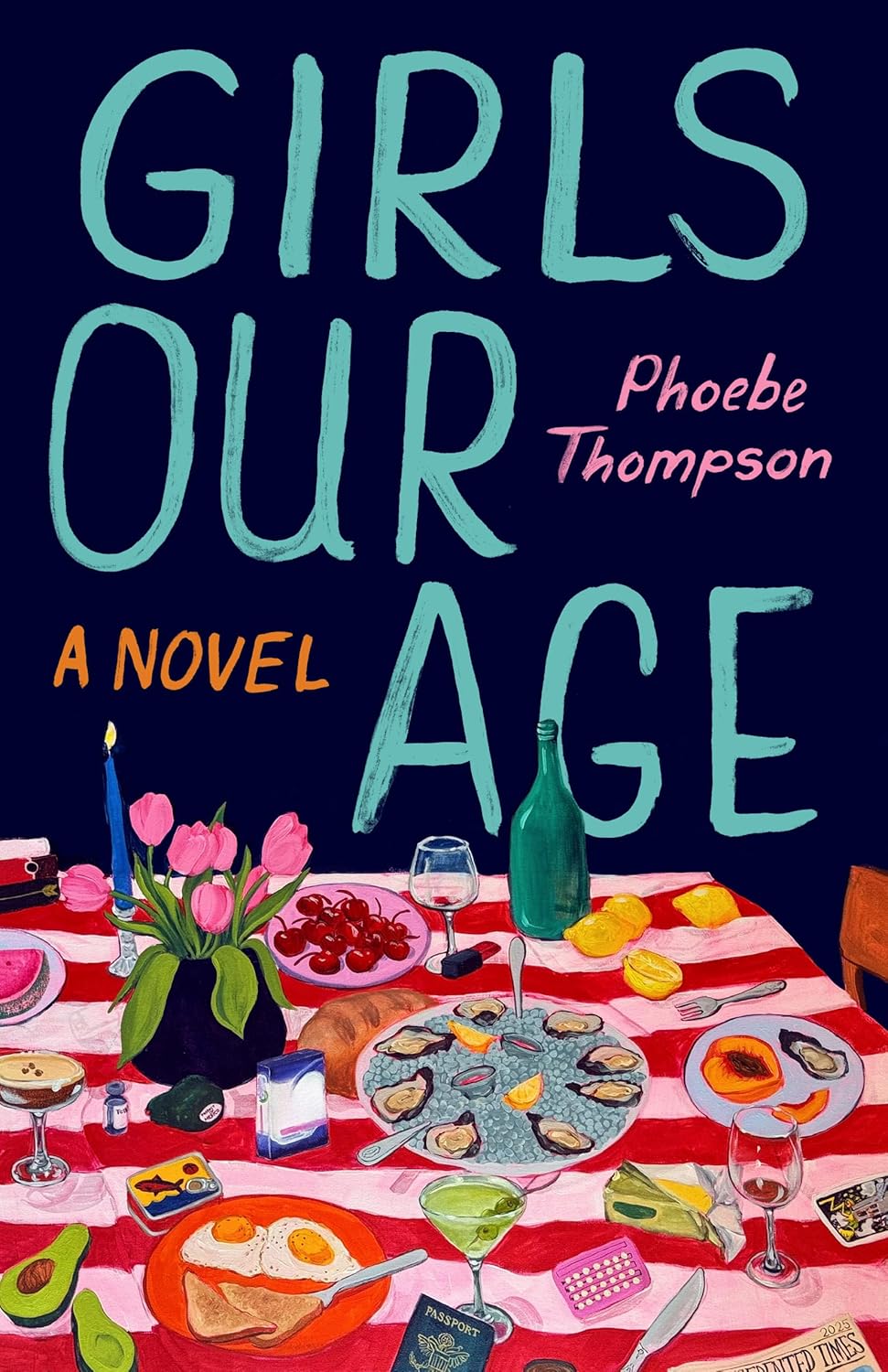
Phoebe Thompson’s debut novel, “Girls Our Age,” is a character-driven novel about female friendships that remain and evolve throughout their late twenties. Former college roommates Lily, Ana and Margot reunite a decade after graduation for Lily’s wedding, each appearing successful and settled in their lives. As the wedding approaches, long-hidden personal struggles and secrets begin to surface, forcing them to confront the truths they’ve kept from one another and themselves.
“Girls Our Age” is Thompson’s debut novel. She spoke with the Portland Press Herald about writing women’s stories, wedding culture and what it means to really know someone.
This novel fits into the genre of work about a woman’s late 20s — portrayals of female friendship that change into adulthood. What works influenced the development of ‘Girls Our Age,’ and what other texts or media were you building off?
Interestingly, the books I’m most inspired by are by middle-aged Jewish women. Some authors, like Meg Wolitzer, have written about women of their ages. Coming into writing this book, I thought it would be deeper or more academic to write about a middle-aged man. I wrote a whole practice book about this guy named Franklin. I hated it. It was so bad. And I was like, “Why don’t I just write about exactly what I’m observing around me?” That’s what all my favorite authors seem to do. I decided as my friends start to get married, we’re seeing each other at these wedding-centric events, and suddenly, men are very central to our friendships in a way they never have been before. I’m really interested in that tension.
I love the bachelorette party scene and the way that tension is unraveling there, because that’s where you find tension in real life — just sitting at a bar and observing a bachelorette party in Miami.
So true. It’s like everyone is all geared up to have so much fun, but everyone’s bringing their outside lives to this high-stakes environment. These big things come up at inopportune times when you’re all supposed to be having fun.
This book is about a bachelorette, a wedding and friendship, but it is also about classism. How do weddings and everything that leads up to them serve as a point of tension?
Something that I’ve noticed in wedding culture is that there are certain expectations within certain groups of people. In college, your lives are a bit more similar. Once you’re an adult, it starts to become super clear whose parents are footing a half a million-dollar wedding and who is paying for their own wedding or choosing not to get married. Suddenly there becomes this set of norms and expectations around weddings that no one really communicated, but somehow a lot of people are on the same page about it. I think that can be really, really alienating.
This book explores life pressures that are common for people in their late 20s, especially women: career, relationships, marriage, identity. How did you decide which milestones to center in the story?
With my first draft, a lot of the feedback I got from my team was that these girls are too similar. I needed to differentiate them. Through iteration and feedback from my team, I parsed out what each of these people is dealing with. I needed to give them extremely different threads so that their struggle and journey really lends itself to differentiation and character.
How did you balance giving each character a unique voice and maintaining this cohesive narrative?
I remember in an early draft when I was in my MFA, there was one scene where the girls disagreed with each other over something. I remember getting the feedback: we need more of this. We need more showing where they disagree. I wanted to make sure that each of these people were not good or bad. They’re each just struggling with the stuff they struggle with. I think what I love the most about fiction is when a line or a scene changes your mind about somebody, and how impactful that can be.
There’s a real sense of relatability in all of the characters. Was that something you consciously aimed for while writing this?
100% — the closer that you know somebody, the more you really understand their core flaws. Demonstrating people who are so smart and multifaceted and interesting and love their friends and are trying to do their best — but each have core flaws — is how I interpret knowing someone. Being able to know someone close enough to really understand what it is that’s never going to change about them, or things that you don’t necessarily always like, is a hallmark of closeness and an empathy developer. We don’t get a lot of those kinds of friendships in a lifetime.
Very true. These characters are learning how to define themselves by their interior life — their hopes, dreams and values — rather than exterior image or status.
I think that in general, we tend to write off certain literature and media that is for girls and women, because it’s easy to describe it as vapid or materialistic. But some of these things are just symbols, and symbols exist in every single subculture. It’s the same thing with wedding culture. It’s easier to say, “Where did you get your dress?” than it is to say, “Are you still going to love me as much as you did before you were married?”
Though the main character’s lives are all different, they’re unified by the experience of going to a small liberal arts college in Maine, and they’re reunited in Maine at the end. In what ways does Maine serve as a starting point and a touchstone for the ending of the narrative?
For these three specific women in my book, Maine is a neutral ground where none of them are from and prior to college, none of them had been there. It’s a place that allows them to be their whole selves, without any of the pretense of their backstory. And that is where they end up returning together in the end in an active ceremony.
Kaylie Saidin is a writer based in Wilmington, N.C.
We invite you to add your comments. We encourage a thoughtful exchange of ideas and information on this website. By joining the conversation, you are agreeing to our commenting policy and terms of use. More information is found on our FAQs. You can update your screen name on the member's center.
Comments are managed by our staff during regular business hours Monday through Friday as well as limited hours on Saturday and Sunday. Comments held for moderation outside of those hours may take longer to approve.
Join the Conversation
Please sign into your Press Herald account to participate in conversations below. If you do not have an account, you can subscribe here. Questions? Please see our FAQs.