


AUGUSTA — The teenager accused of killing two men who had taken him into their home had an upbringing full of adults who failed him at every turn.
That’s according to the boy’s lawyer, who said his client remains a child in need of help. The lawyer, Kurt Peterson, made the statements Wednesday at a court hearing to determine whether the teen, who is charged with two counts of murder, will be tried as an adult or as a juvenile.
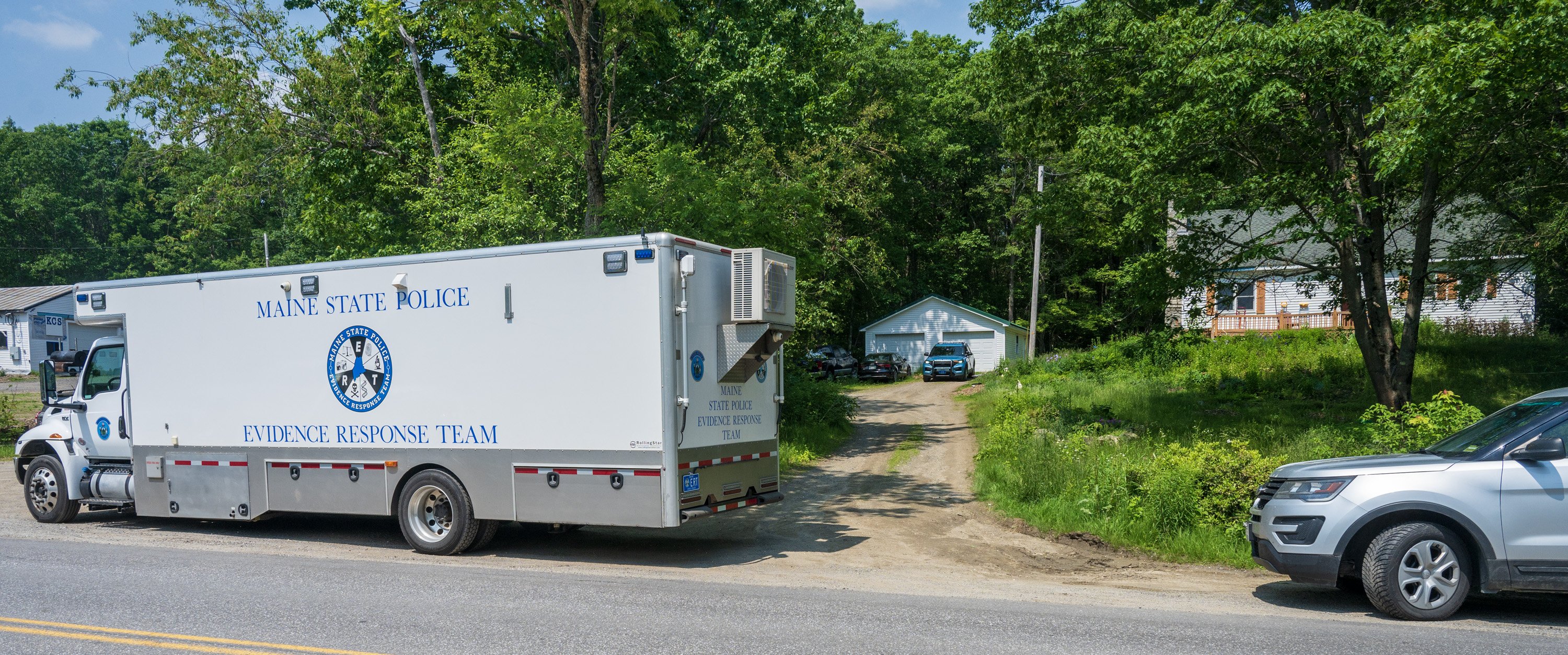
The now-17-year-old is accused of killing of his foster father, Christopher Hunnewell, 43, and Hunnewell’s adopted son, Ty Carter Hunnewell, 22, in Chelsea in June 2025. The suspect was 16 when the killings happened.
The Kennebec Journal is not yet naming the suspect, pending a court determination of whether he’ll be charged as an adult.
Wednesday was the first day in a bind-over hearing, a juvenile court process used to determine whether to “bind over” the defendant and charge him as an adult.
Peterson said the teen is still a child, one who, he said, many of the adults responsible for his well-being “failed to take care of; failed him at every turn.” Starting with his now-deceased mother, who had a blood-alcohol content of 0.20% when she gave birth to him.
Peterson said by the time the teen was 16, he’d had 17 different placements in foster homes and other settings while he was primarily in the custody of the state Department of Health and Human Services. He had been abandoned by his mother, had his father sent to prison for sexual assault of another child, saw an uncle he loved who had custody of him for a time sent to prison for drug trafficking, and never had any stability in his life.
But Peterson said the teen is not a lost cause, and has engaged in mental health treatment while awaiting action on his case. Treatment that could continue if he is sentenced as a juvenile and is allowed to remain in the juvenile, not adult, justice system.
Katie Sibley, an assistant attorney general, countered that many juveniles have had terrible childhoods or parents who failed them, and did not kill anyone, as the boy is alleged to have done. She added that murder is the most serious offense that can be committed against a person, and the teen, she said, is charged with intentionally killing not one, but two people. And he did so violently and with some level of premeditation.
“In the interest of public safety, and not diminishing the gravity of these offenses, it’s appropriate that (the teen) be held and tried as an adult,” Sibley said.
Bind-over hearings generally start with the judge determining whether there is enough evidence to find there was probable cause that the juvenile committed a serious crime. However, in this case the boy’s attorneys agreed that probable cause does exist, according to District Court Judge Charles Dow.
That left the focus of the hearing, which is expected to continue through Thursday and into Friday, to decide whether the juvenile should be tried as an adult.
It’s a high-stakes decision. If the teen remains in the juvenile system, he could be sentenced to Long Creek Youth Development Center in South Portland and released at age 21. If he’s found guilty of murder as an adult, he could be sentenced to 25 years to life in prison.
Several people at Wednesday’s hearing at the Capital Judicial Center wore blue and green T-shirts bearing a photograph of the two victims together and the words “Justice for CJ and Ty.”
The teen was arrested and charged with murder on June 11, 2025, at a Windsor Road home in Chelsea. However, authorities at the time declined to release his identity, because he is a juvenile, and his court case files were sealed. The files were unsealed in March.
Steven Carey, an attorney who served as a guardian ad litem for the teen, said things went well initially when the teen was placed at Christopher Hunnewell’s home. However, family members told Carey the teen was out of control and not attending school. Following an April 2025 visit, he recommended the state Department of Health and Human Services remove the teen from the home and find a new placement.
Carey believes it would be in the teen’s best interests to remain at Long Creek, where he is engaging in treatment and rehabilitation.
A lawyer for the state Department of Health and Human Services, at the start of the trial, sought to have testimony and documents from DHHS workers involved in the case restricted, saying the material involved was highly confidential and the department was looking to protect the information, and the teen.
But Dow, the judge, rejected that effort, saying the officials would be ordered to testify and there were exceptions to confidentiality rules to allow such testimony in juvenile cases.
“It seems like his secrets are out, the only interest in making records confidential would be to protect the confidentiality of the department (of Health and Human Services), and that doesn’t seem to serve the overall cause of justice,” Dow said.

Comments are not available on this story. Read more about why we allow commenting on some stories and not on others.
We believe it's important to offer commenting on certain stories as a benefit to our readers. At its best, our comments sections can be a productive platform for readers to engage with our journalism, offer thoughts on coverage and issues, and drive conversation in a respectful, solutions-based way. It's a form of open discourse that can be useful to our community, public officials, journalists and others.
We do not enable comments on everything — exceptions include most crime stories, and coverage involving personal tragedy or sensitive issues that invite personal attacks instead of thoughtful discussion.
You can read more here about our commenting policy and terms of use. More information is also found on our FAQs.
Show less