
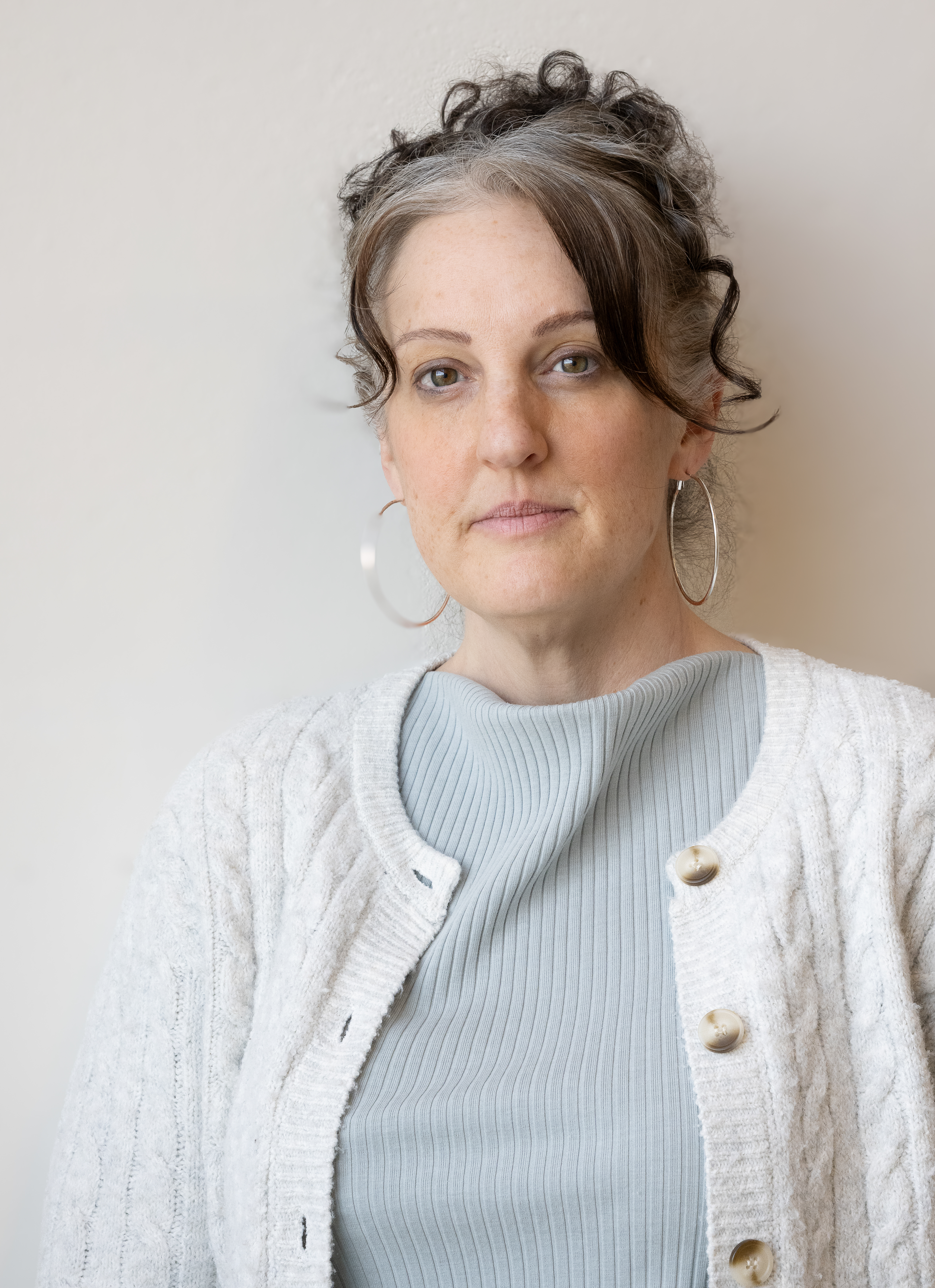
You can almost smell the salty beach air in Jennifer Braunfels’ debut novel, “Everything You Love Ends Up in a Yard Sale.” When the protagonist, Grace, relocates to a fictional coastal town near Popham Beach, life as she knows it begins to unravel and transform in unexpected ways. Braunfels guides the reader through a year that is tumultuous, as those in early adulthood tend to be. While romantic relationships play a central role, it is friendship that anchors the novel emotionally. Braunfels spoke with the Portland Press Herald about chosen family, the magic of Maine and how she finds humor in the heaviest of times.
The idea of chosen family is central to the novel. How did you explore this theme, especially through the lens of female friendship?
Female friendships are the ones that save us as often as family or love. In adulthood especially, female friendships are so powerful to me personally, so I wanted to explore that here. We have a lot of literature where the romantic relationship saves everything in the end, and I just think that friendships are what carry people through things. Grace’s friends challenge her and the decisions she makes, but they also remind her of who she is and who she could be.
Maine feels almost like a character in its own right. How did the coastal setting shape the story, its tone and the lives of your characters?

I was born here, I was raised here and I’ve chosen to stay here in Maine. It’s the place where everybody wants to go to get away from it all. We’ve got this beautiful coastline running along our state, and it’s such a draw because people come here and feel they can let go of everything back home. Here in Maine, we have this gift right in our backyard all the time. I thought it was the perfect place to put Grace, in this beautiful spot, because she has a lot to figure out.
And you used the themes of Maine — the shifting weather, the flora and fauna — to aid Grace through the different seasons of her life.
That’s right. Grace is going through so many significant changes — different seasons, so to speak — of her life. So to have Maine as a backdrop for all of that felt perfect because that’s exactly what we live with here — constantly changing seasons.
Did a particular town or region in Maine inspire the setting, or is it a combination of places?
I have spent so much time around Popham Beach, so the setting became this imaginary town somewhere along the coastline between Portland, Brunswick and Popham Beach. It’s not a Hampton Beach or an Old Orchard Beach — it’s quieter. It’s where you go to actually be in nature rather than just near it. It just felt right.
Can you share the inspiration behind Annie’s character? She felt so unique but also so real and so full of life — she jumps off the page.
She is a compilation of all of the strong women in my life. My mom was one of 13 children and she had seven sisters who have been in my life forever. They are strong, opinionated women and I have always admired that about them. That’s not generally my personality at all. Annie, who is Grace’s next-door neighbor, comes from all of the women in my life who say it like it is. In part, I strive to be more like Annie. She will tell you the truth even if it hurts. I think the world needs more women like Annie.
Without giving too much away, the novel portrays miscarriage with striking realism, particularly the lingering physical and emotional effects. What was your approach to writing about this often underrepresented experience?
I talked to a lot of women who had been through this. Some people see it as something you can quickly move on from — you can try to have another child — but there’s really so much more to it than that. There’s the physical reality but there’s also the emotional aftershock — the loss, the what-ifs. I thought it was important to explore all of that. It isn’t something that happens and then you bounce back and everything is fine. It takes time and a lot of work to get through both the physical and emotional changes.
Even with all of this heaviness in the novel, you emphasize a lightness. What inspired that?
Humor is an important thread in this story and that’s on purpose — humor is what gets me through the heartbreak and the heartache and the loss and all of that. I think it’s really important that in the midst of all of this chaos, Grace is still able to find humor.
Samara Brass is a writer and editor based in Somerville, Mass.
We invite you to add your comments. We encourage a thoughtful exchange of ideas and information on this website. By joining the conversation, you are agreeing to our commenting policy and terms of use. More information is found on our FAQs. You can update your screen name on the member's center.
Comments are managed by our staff during regular business hours Monday through Friday as well as limited hours on Saturday and Sunday. Comments held for moderation outside of those hours may take longer to approve.
Join the Conversation
Please sign into your Press Herald account to participate in conversations below. If you do not have an account, you can subscribe here. Questions? Please see our FAQs.