


Dozens of wooden boxes have suddenly appeared in the mudflats of Cumberland, Falmouth, Yarmouth and Freeport. Sitting in a row amid the muck, the unassuming rectangles may raise questions from residents.
Here’s what those boxes are, and how they’re helping marine ecologists answer larger questions about the struggle for life within Maine’s coastal mud.
WHAT ARE THE BOXES?
The boxes are part of the Downeast Institute’s Clam Recruitment Monitoring Network. The project from the marine research and education institute studies how softshell clams survive and grow in the mudflats of Maine — something the clams have been struggling to do for the past four decades.
Clamming has long been economically and culturally important in Maine’s coastal communities. However, since the 1980s, softshell clam landings have decreased by 75%. Investigating this crash, Downeast Institute researchers found it is caused by an increase in predators of the softshell clam, particularly invasive green crabs, which thrive in the warming ocean temperatures caused by climate change.
Brian Beal, a professor of marine ecology at the University of Maine at Machias, started the Clam Recruitment Monitoring Network in 2020 to bring awareness to this dramatic drop in softshell clams, its causes, and its cultural and economic impacts.
“There aren’t many people that know that the clamming industry is in a crisis mode,” said Beal, who has been studying softshell clams for over 40 years. “If this weren’t clams, but lobsters instead, boy there would be an outcry.”
The boxes, placed in mudflats where softshell clams have historically grown in Maine, illuminate how clams would grow in that environment if they did not face any predators, compared to how many make it in the open mud. This shows the impact of predators on clam survival — and how dire their decline is.
HOW DO THEY WORK?
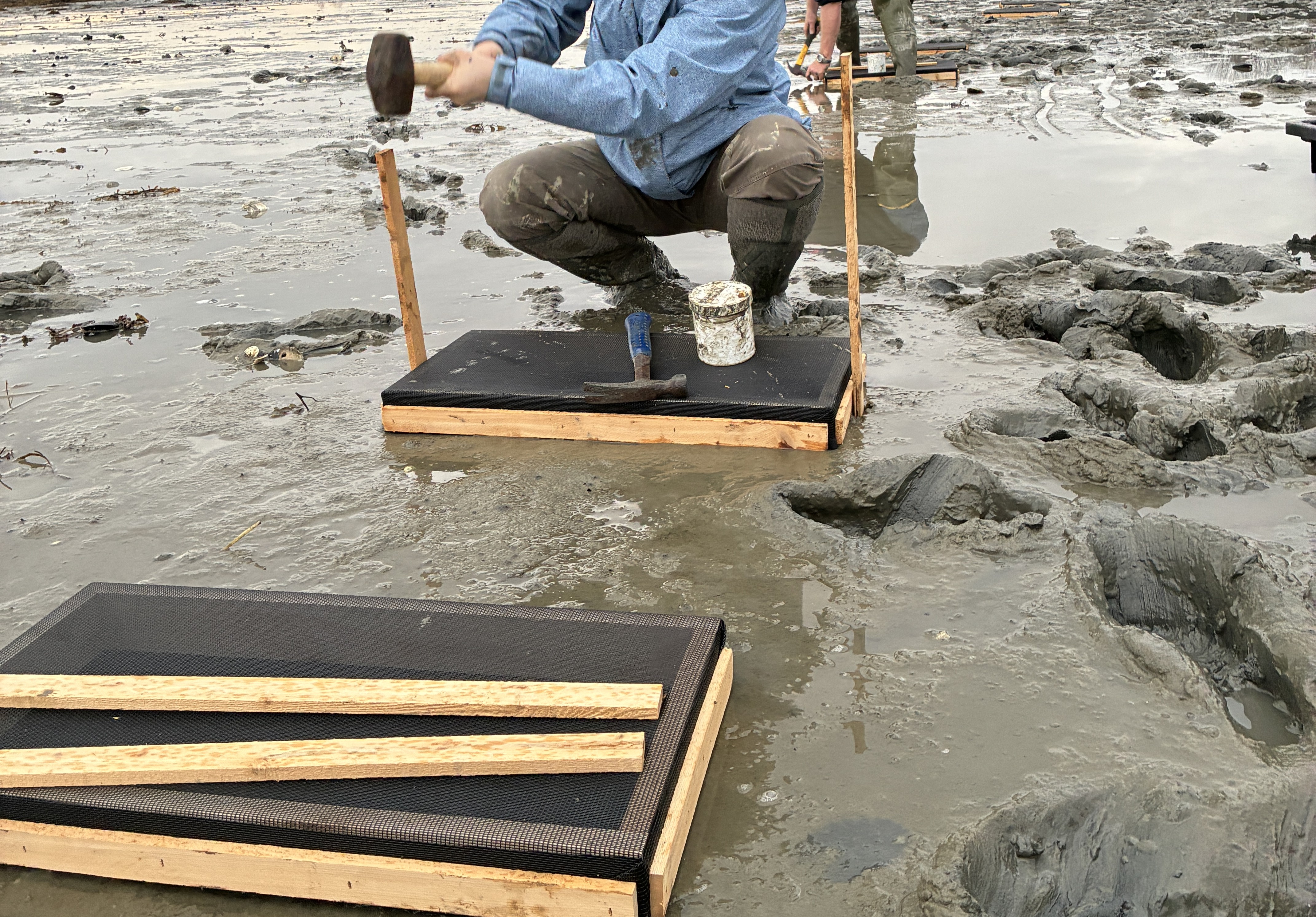
Softshell clams begin their lifecycles as larvae, floating in the ocean’s current. The little swimmers, about a quarter of a millimeter in size, eventually land in mudflats, where they quickly turn into small and growing clams. The clam larvae that settle in the mud are known to scientists as “recruits.” How many recruits settle, and eventually make it to adulthood, determines the size of future clam populations.
The Clam Recruitment Monitoring Network’s “recruitment boxes” — also called Beal boxes, after the professor who invented them — are placed in the mudflats every April, when the swimming juvenile clams start landing. The 1-by-2-foot wooden frames have a piece of fine mesh covering the top and plastic garden weed barrier on the bottom, and as the larvae settle, some make their way through the mesh and land within the box, where they can grow in the mud protected from predators who can’t fit inside. Meanwhile, other clam recruits land outside the boxes, where they face hungry green crabs.
Each November, Downeast Institute researchers collect the boxes and count the number of clams that settled and grew inside. Simultaneously, they take samples of the mud surrounding the boxes, seeing how many clams make it in the unprotected environment.
“It gives us an idea of what could be,” said Tessa Houston, a research assistant at the Downeast Institute who coordinates the study.
WHERE ARE THEY?
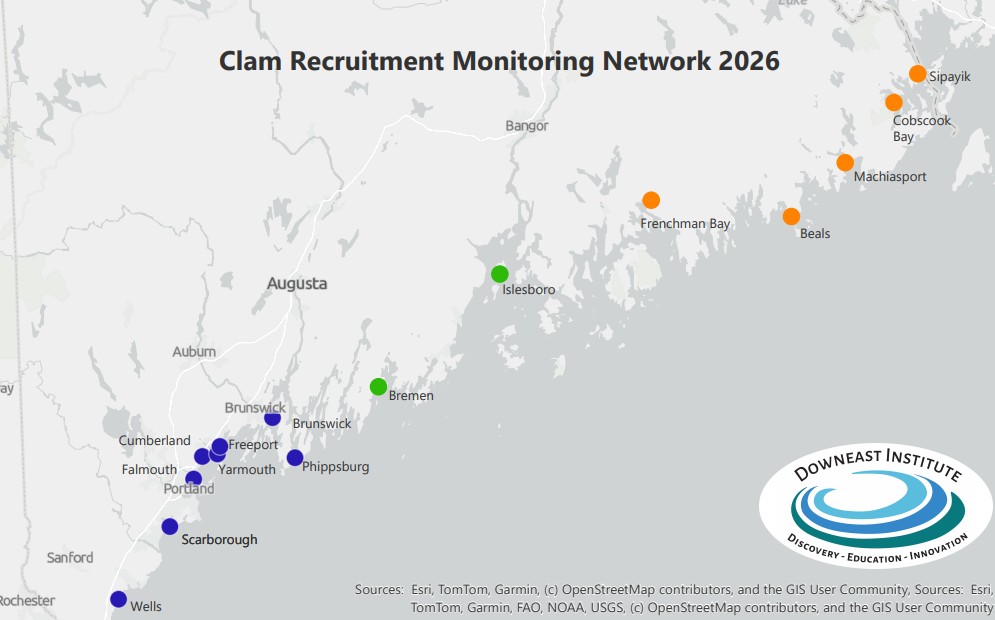
In 2026, the Downeast Institute deployed recruitment boxes in 15 communities along Maine’s coast, from Sipayik to Wells. There are two study sites in each participating community, with 12 boxes lined up in a row per site.
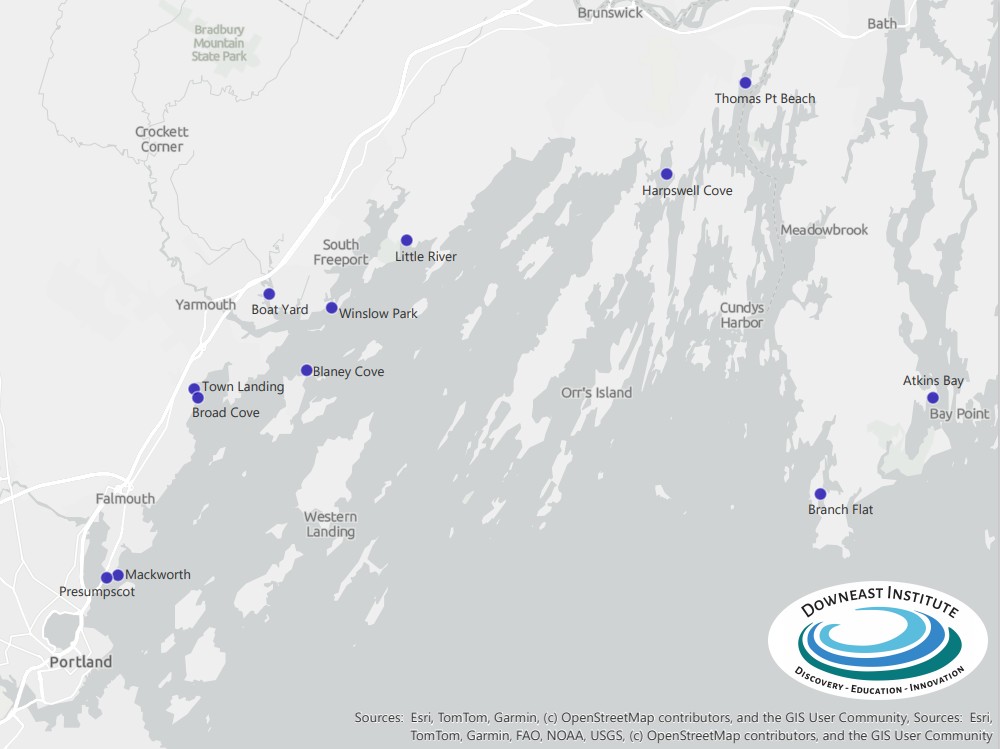
With a grant from Casco Bay Estuary Partnership, the Clam Recruitment Monitoring Network was able to add Cumberland, Falmouth, Yarmouth and Freeport as participating communities this year. Previously, the other sites in the greater Portland region were in Scarborough and Brunswick. Through these new boxes, the researchers are excited to connect the two ends of Casco Bay.
Collecting data from many locations makes the findings of the study stronger. A wider geographic range allows the researchers to more confidently generalize their findings for the cause of this decline, said Beal.
“The state of Maine is a huge, huge place, and what may be happening in Falmouth may not be related to what’s happening in Beals or Machiasport,” he said.
CAN I TOUCH THEM?
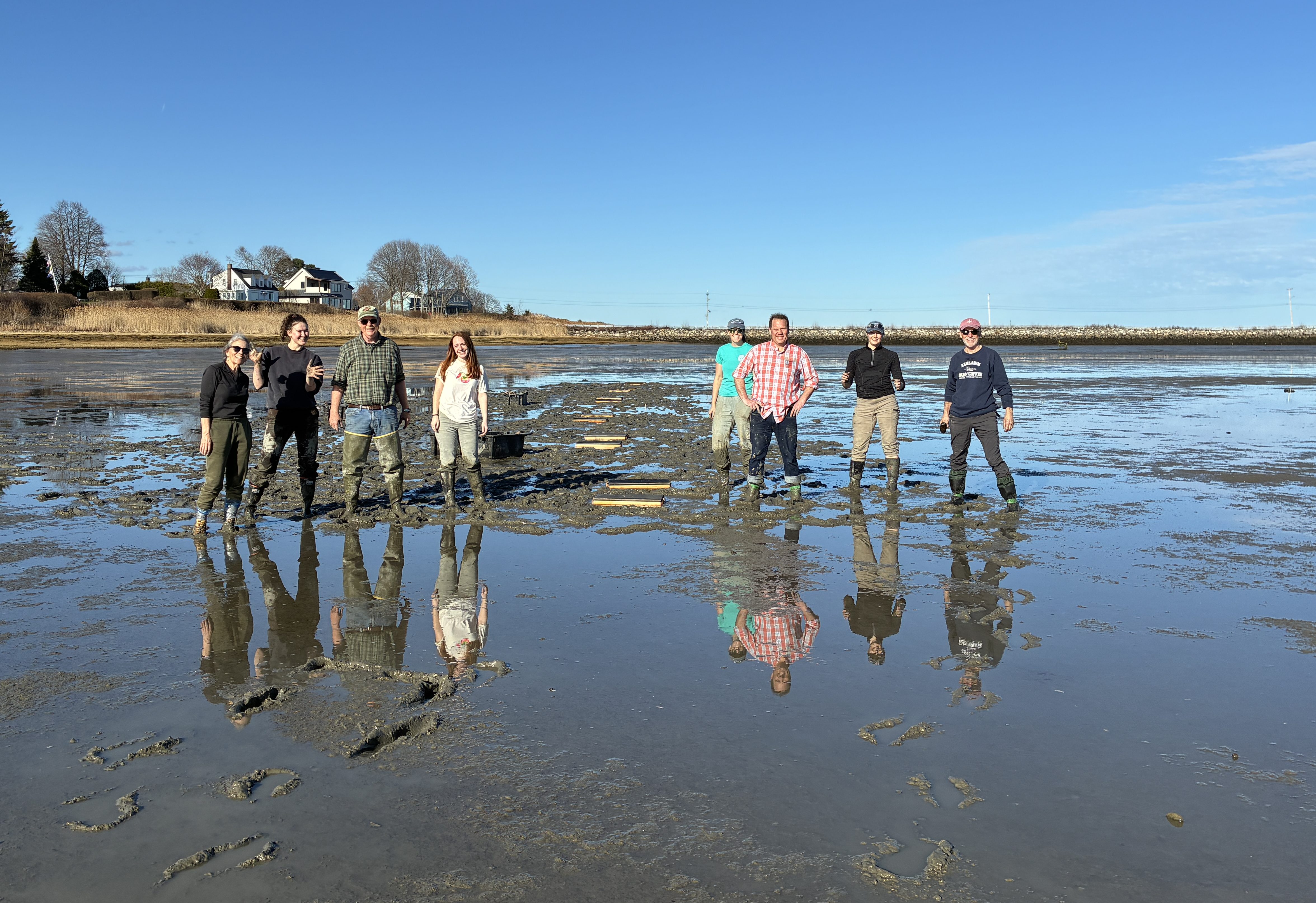
No, researchers ask that you leave the boxes alone. Unless you want to help out in the fall, that is.
Beal and Houston rely on the communities where they deploy boxes to help haul them back from the mudflats. The boxes, which are a few pounds by themselves, can weigh up to 40 pounds when they are collected because they fill with mud, as well as clams.
If you have some rain boots and are prepared to get messy, you can email Houston at [email protected] to learn when they will be collecting the boxes in your community. The exact date and time depends on the tides.
Additionally, the researchers can use help processing the boxes’ contents when they get to shore before they take the samples back to the Downeast Institute.
“I think it’s really important to expose people to that ecosystem and environment that people are working in every day of their lives,” said Houston.

The Times Record Sustaining Sponsor
We believe a community must be informed to thrive. bowdoin.edu

We invite you to add your comments. We encourage a thoughtful exchange of ideas and information on this website. By joining the conversation, you are agreeing to our commenting policy and terms of use. More information is found on our FAQs. You can update your screen name on the member's center.
Comments are managed by our staff during regular business hours Monday through Friday as well as limited hours on Saturday and Sunday. Comments held for moderation outside of those hours may take longer to approve.
Join the Conversation
Please sign into your Press Herald account to participate in conversations below. If you do not have an account, you can subscribe here. Questions? Please see our FAQs.