
Candice J. Dale of Portland is a retired humanities teacher.
As the Israeli and American bombs began to fall hard on Iran the final day of February, I called my big brother, Peter, out in California. I knew his voice, still crackling and harsh from throat cancer treatment, would steady me, help me find a broader perspective.
I have long been aware of the evils of the Iranian Revolutionary Guard and the anguish of the Iranian people crying out loudly for the simple freedoms they used to enjoy. I knew of the threat of Iranian nuclear build-up and the 40 years of shouts of death to America, but I also remembered a different period of time, in the mid-1950s, when Iran and the United States worked together with the American-aligned Mohammad Reza Pahlavi, the last Shah of Iran.
My father, with his fluent Farsi skills and knowledge of Iranian culture and history, was stationed at the U.S. Embassy in Tehran for two and half years when I was young. Our family lived a few miles from the city center in a large brick house fully surrounded by a stone wall.
I remember a black sheep, a little white dog, a flower garden, an old swimming pool where we swam on rafts wearing orange life jackets. An Armenian Christian young man cooked and helped my mother navigate food shopping for her three children while my father was away for weeks at a time mapping the desert in pre-satellite days. We had no house phone, no personal car, no internet.
My mother took care of my sister and me, 4 and 5 years old when we first arrived, and my
brother, 12 years old, who helped to support us all. I remember my first pistachio nuts, the delicious brown rice with a crunchy crust on the bottom of the pot (“tahdig”), the roasted lamb, the outdoor markets with rich fabrics and brass pots. I recall (or maybe this family story was repeated so often it became my memory) the night our dog Cindy barked loudly, and my brother yelled out to us all that robbers were breaking in through our front door.
My father shouted for him to grab his Sears & Roebuck BB gun. Peter did but yelled out that it was not loaded. It didn’t matter, for as soon as the robbers saw my father brandishing the BB gun, they fled instantly off the front porch and ran straight to the outer wall to climb back over the ladder to the street again.
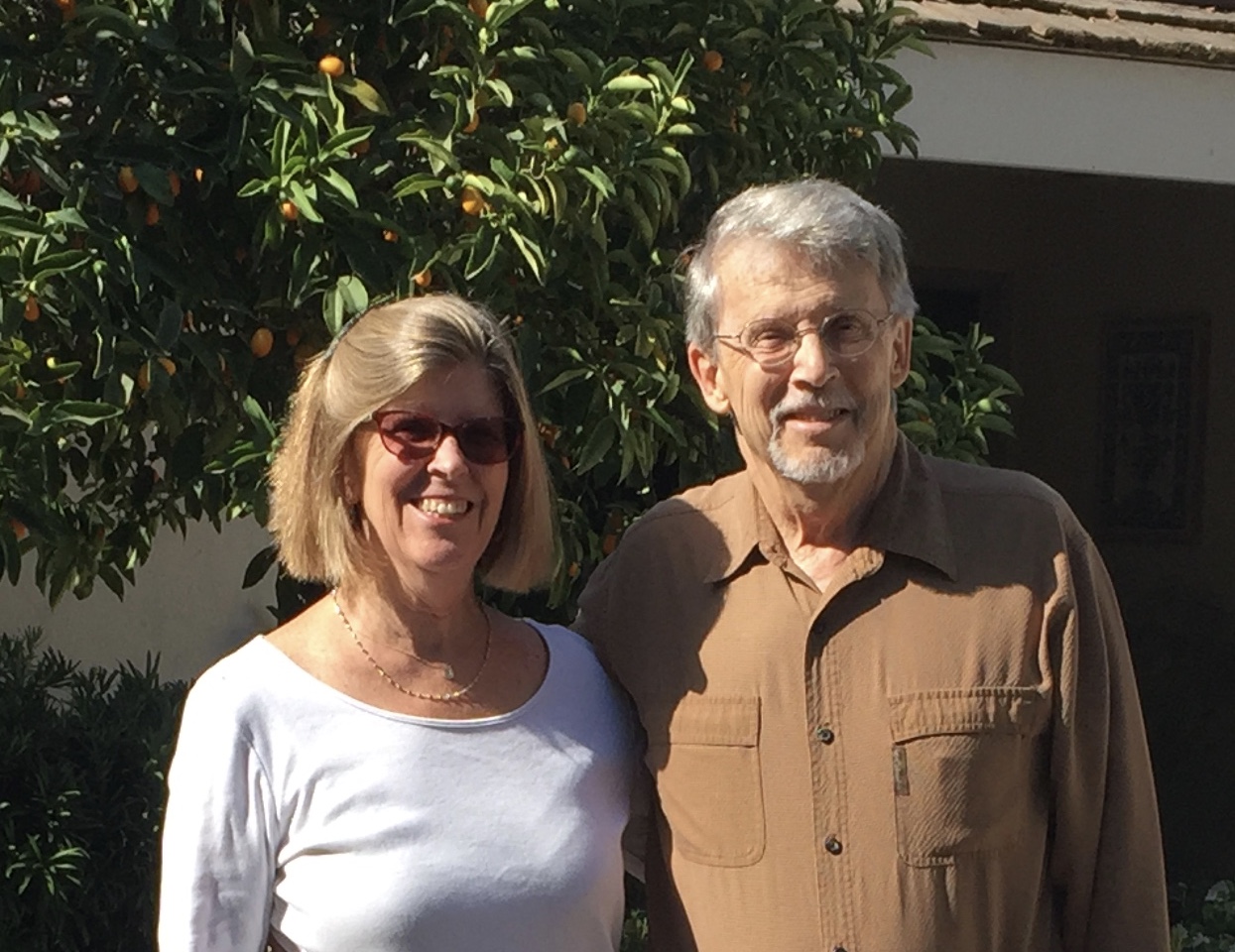
Throughout my growing up, my brother protected and guided me. He seemed proud to have two little sisters, even though it took us time to grow up enough to play with him. He was a voracious reader, so aggressive a participant in elementary school apparently that sometimes his teacher sent him to the principal’s office so other children would have space to talk.
As a little girl, I was inspired with his wide reading of history and mystery books. Sometimes I’d borrow one of his Landmark history books and read the book cover flaps to earn an extra star for a book report, never having read the book at all.
Our family of five moved back and forth from the Middle East to the Washington, D.C., area throughout my father’s long military career. The last overseas assignment in which my brother was still part of our family was 1960 in Cairo, Egypt.
My sister, Peter and I attended Cairo American College, an international K-12 school outside the city in an old King Farouk summer palace. I remember the marble bathrooms with gold faucets, the indoor courtyard where we performed school plays, the outer lawn where palm trees served as bases for our kickball games.
Peter enjoyed a successful senior year there, graduating with 12 classmates. As a friendly newcomer in a small school, he became the student council president and a star athlete on the basketball court and track field. He was smart, funny and ever a challenge to my parents.
While our family stayed another year in Cairo, Peter left Egypt to begin his studies at Dartmouth with an ROTC scholarship. He served in Army military intelligence for four years following college and then continued on with years of graduate studies, eventually earning a doctorate in English literature from the University of Cambridge in England.
When I graduated from college in 1973, I wanted to read more literature and thought I should follow in my brother’s footsteps to pursue a Ph.D. as well. Peter wisely guided me away from this idea, suggesting that a rewarding M.A. program at the University of Kent in Canterbury, England, might help me to explore my interests before I made such a serious commitment to tedious and demanding research.
I have fond memories of sharing time with Peter, his wife and my 5-year old niece in England during my graduate school days. He introduced me to old cemeteries, high tea with scones, clotted cream and jam, dusty used book stores and the rolling English countryside.
One Christmas break with them, I studied daily in the Cambridge University library, moving every hour from a room with good light to another one with decent heat. During the 1973-74 oil crisis in England, we had to make choices between heat and light. I remember sleeping at night in Peter’s home with a hot water bottle at my feet.
When I returned to the U.S., I was anxious to teach but had trouble finding my way into public schools with an M.A. degree but no public teaching credential. By the time I turned 40 with two little boys of my own, however, I was ready to give that dream a chance. I changed careers from city grant writing and administration to teaching humanities in a high school classroom.
Peter helped me at that time to figure out my role as a new teacher in an independent boarding school in New Hampshire. He showed me how to find joy in poetry and how to manage drama with high school students. He taught me how to listen closely to young people as well as to my teaching colleagues. He showed me how to walk away with dignity when relationships ended, never judging me but always offering sensitive, encouraging advice.
And whenever this tumultuous world grew too much for me, I would call him in California; he would calm me down, remind me of the world’s long history, and then share a funny story to get me to laugh.
Peter was the historian of our family. He knew the various backgrounds of our ancestors who had immigrated from Ireland during the potato famine to Milwaukee, then Chicago and eventually to San Diego. Family portraits of our parents, grandparents and great-grandparents line the walls of one long hallway in his California home.
Peter and I last caught up on the phone from Maine to California at the end of January. Since his chemo and radiation treatment over the past year had made talking difficult for him, I suggested that he and I start a more regular email exchange with one another to talk about the books we were each reading, the chaos of the current American government that worried us both, and the exciting adventures of our respective grandchildren who lived in San Francisco and Tahoe City, California.
I had just finished reading “The Correspondent” by Virginia Evans and wanted to maintain my rich relationship with my brother, 82, even if through email. It would keep us connected across the 3,000 miles until my planned visit with him in June.
Peter liked the email exchange idea and wrote his first email response to me on Feb. 1, talking about his reading of Salman Rushdie’s new book, “The Eleventh Hour,” which, as he suggested, addressed the question of “Do we spend our eleventh hour in serenity or rage?”
In the middle of March, Peter fell on his way to the bathroom at night, breaking his hip and injuring a few ribs. Following his hip surgery, pneumonia set in unexpectedly, and then all too rapidly a feeding tube and a breathing ventilator followed. On March 31, as his organs gradually began to shut down, Peter let go of this world. His wife and son were with him in the hospital, his daughter on the phone from Vermont, and even his dog, Duchess, was invited in to crawl up on his lap in the hospital bed.
Peter and I did not have the chance to write anymore email exchanges about the books we were reading or the world in which we lived where war and hatred seem pervasive. We never said goodbye.
In the past three weeks, as spring has emerged in Maine, I have let my memories unfold. I’ve scrolled through old photos on my phone trying to find glimpses of him and reread the memoir he wrote about his early family life. I’ve also gone to the basement to dig out old albums with black-and-white photographs neatly pasted to the page with black corner mounts. I do not want to let him go.
I keep thinking of his wonderful storytelling ability and even his forgetfulness when he would retell a tale he’d shared several times before. In one of our last telephone conversations, he asked if I had yet retired from teaching and whether I was in California. I had retired over eight years ago and settled in Maine. He quickly remembered.
While I can no longer pick his brain about a particular cousin in Berkeley or our grandparents’ early days in San Diego or the small house our father built once in Monterey, I can still see his wry smile, hear his soft voice, feel his calm presence. I will remember the grace and wisdom with which Peter lived. His light and love will help me to find peace.
We invite you to add your comments. We encourage a thoughtful exchange of ideas and information on this website. By joining the conversation, you are agreeing to our commenting policy and terms of use. More information is found on our FAQs. You can update your screen name on the member's center.
Comments are managed by our staff during regular business hours Monday through Friday as well as limited hours on Saturday and Sunday. Comments held for moderation outside of those hours may take longer to approve.
Join the Conversation
Please sign into your Press Herald account to participate in conversations below. If you do not have an account, you can subscribe here. Questions? Please see our FAQs.