

Probably the busiest time of the year for my outdoor club, the Penobscot Paddle & Chowder Society (PPCS), is in the middle of April. As a result of melting snow and frequent April showers, that’s when the whitewater rivers and streams of Maine and New Hampshire usually flow at their highest levels. That was true again this year.
Since we have approximately 300 members, it shouldn’t come as a surprise that PPCS Chowderheads have different preferences on what rivers they want to paddle. On the weekend of April 18, a Class IV trip was organized on the Swift River in the White Mountains of New Hampshire, Class II trips were scheduled on the Sandy and Ossipee Rivers in Maine, and several members were participating in the Kenduskeag Stream Canoe Race.
For many years, I coordinated a popular April club trip on the Class III-plus Webb River in Carthage, sometimes adding a short, exciting paddle on the nearby Swift River in Roxbury. Despite the availability of several paddling options, there was a demand for the traditional Webb and Swift trip since the water levels were ideal. I naturally volunteered to organize the outing.
A large group of eager Chowderheads turned out for a rousing trip on Webb River on a glorious, sunny morning. We met at the takeout next to a rapid on Route 142 just north of the southern Carthage town line. Leaving a shuttle vehicle behind, we drove a few miles north to a trail leading to the put-in.
Once our boats were carried down an overgrown path for about 150 yards, we launched into a steep, feisty rapid. This was just the beginning of about 5 miles of excitement.
Class II/III rapids were almost continuous for the first mile. Standing rollers in twisting descents provided numerous opportunities to catch eddies to surf waves. After crossing under a Route 142 bridge, the whitewater mellowed to Class II for a short time. At the end of a long, easy rapid, a downed tree presented a serious hazard. We carefully boat scouted downriver until we located a tiny channel on the right that allowed for safe passage through a maze of alders.
The rapids soon increased in difficulty and frequency and continued for about 2 miles. Just below a youth camp on the right, the river makes an abrupt right turn. This marks the beginning of four steep, boulder-strewn, closely connected falls collectively called Schoolhouse Rapid.
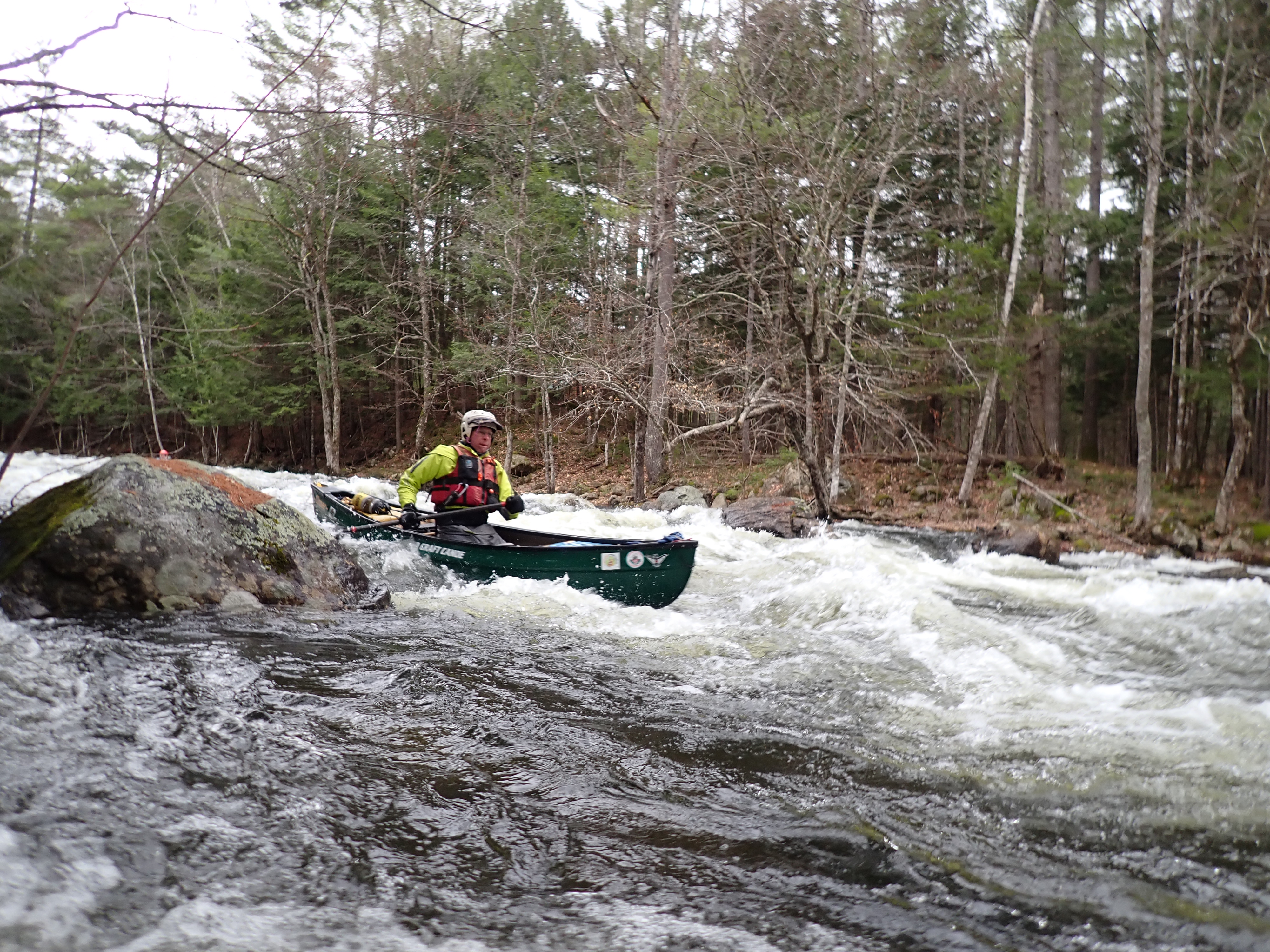
The first and third falls are fairly straightforward rock dodging descents, but the second and fourth require precise maneuvering through narrow passages between boulders while also avoiding pour-overs and sticky holes.
Although we left some boat paint on the rocks, everyone successfully navigated the first three falls. However, difficulties developed on the fourth. Midway through, a canoeist collided with a submerged boulder and capsized. Unable to roll in the shallow, fast-moving water, he was able to self-rescue by dragging his boat and paddle ashore, a herculean achievement.
Once everyone was safely gathered at the bottom of Schoolhouse Rapid, we progressed through a series of somewhat easier whitewater followed by a stretch of quick water to the final rapid, another steep, boulder-strewn descent. Everyone successfully mastered the challenging falls and teamwork was required to haul our boats up a precipitous embankment at the takeout.
After completing the shuttle, six paddlers wanted more action. A 30-minute drive to Roxbury brought us to what I call the Walker Brook section of the Swift River, a rollicking 1-mile stretch of continuous Class III/IV whitewater.
Once our boats were lowered down a steep embankment, we encountered instant excitement. Maneuvering around a sharp left turn, we negotiated through a rock garden into a narrow gorge perhaps 25 feet wide. All of the water constricts into that tiny entrance and forms huge waves that tumble through the chasm. Fortunately, everyone remained upright.
Continuous Class III rapids ensued for almost a mile. Near the end, a kayaker flipped in a hole and couldn’t roll in the rock-infested water below. Chowderheads immediately converged to help, and he was quickly reunited with his boat. Our exhilarating whitewater day ended when we took out just above an unnavigable waterfall.
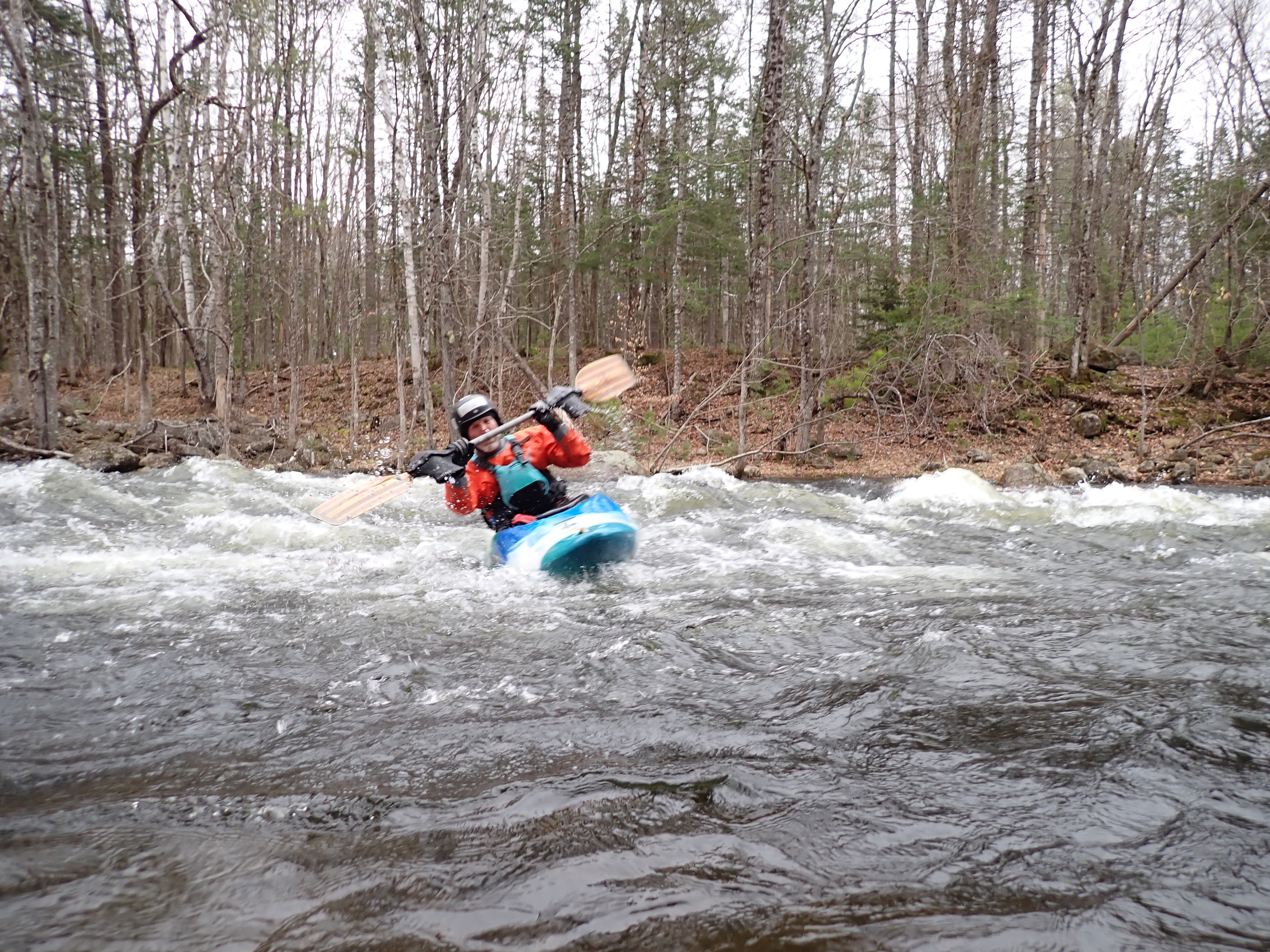
My book, “Maine Al Fresco: The Fifty Finest Outdoor Adventures in Maine,” narrates many more exciting whitewater exploits, including April trips down Orbeton Stream and Ducktrap River.
The author of “The Great Mars Hill Bank Robbery” and “Mountains for Mortals – New England,” Ron Chase resides in Topsham. His latest book, “Maine Al Fresco: The Fifty Finest Outdoor Adventures in Maine,” is available at North Country Press and through online retailers. Visit his website at ronchaseoutdoors.com or he can be reached at [email protected].

The Times Record Sustaining Sponsor
We believe a community must be informed to thrive. bowdoin.edu
Comments are not available on this story. Read more about why we allow commenting on some stories and not on others.
We believe it's important to offer commenting on certain stories as a benefit to our readers. At its best, our comments sections can be a productive platform for readers to engage with our journalism, offer thoughts on coverage and issues, and drive conversation in a respectful, solutions-based way. It's a form of open discourse that can be useful to our community, public officials, journalists and others.
We do not enable comments on everything — exceptions include most crime stories, and coverage involving personal tragedy or sensitive issues that invite personal attacks instead of thoughtful discussion.
You can read more here about our commenting policy and terms of use. More information is also found on our FAQs.
Show less