


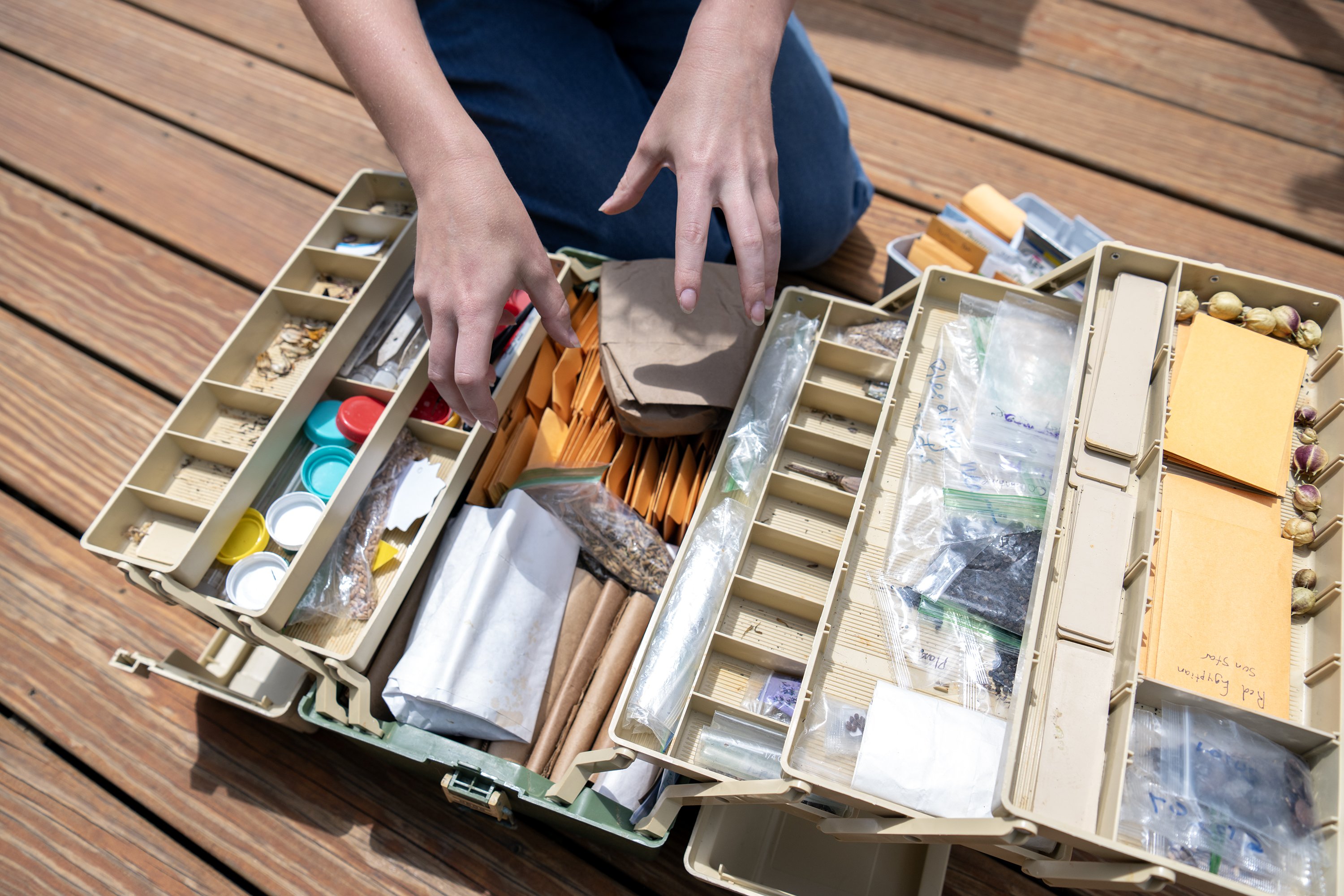
Isabella Phipps thumbed through her plastic toolbox.
“Do you have valerian?” asked a man carrying a dirty, orange Home Depot bucket.
“Let me check.” Phipps rifled through dozens of tiny manila envelopes organized alphabetically, the varieties handwritten in parentheses.
He pocketed the packet she handed him.
Phipps, 24, was a hit at the gardening swap, held in May at the South Portland Community Center, where she shared seeds and gardening wisdom.
When a woman asked for wisteria seeds, Phipps said she didn’t recommend growing it outside. “It’s super invasive,” she said.
She has foraged, befriended gardeners and even ordered seeds from a free website to build her seed collection over the past few years. Now, she has more than 200 different kinds.
And she’s tried to grow each variety at least once. Like a rose, for example, which she cultivated this winter, from seed to thorny plant.
Most of her attempts are unsuccessful, she said, but she keeps trying.
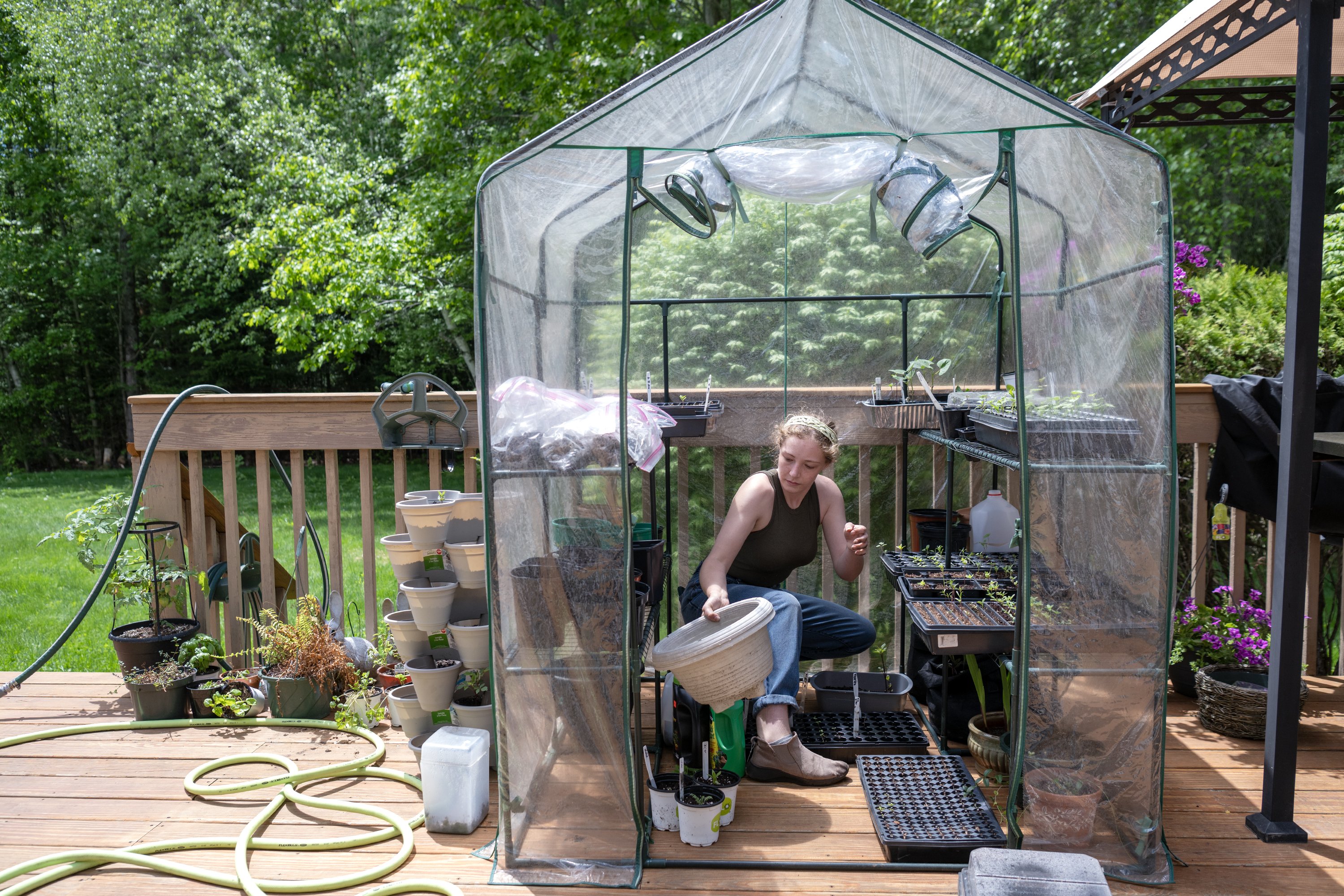
Phipps keeps pallets of seeds and soil in a portable greenhouse on her back deck next to a grill. Some sprouts poked out of the dirt; others remained dormant in late May. She started some of her plantings in January and February, the rest in March and April.
“A lot of the time it’s crossing my fingers and hoping for the best,” she said.
She keeps detailed notes about each plant in a spreadsheet: how much sun it likes, what kind of soil it needs, how tall it’s expected to grow and the ideal time to plant. The document is color coded, and there’s a column for miscellaneous notes.
Every plant is different. It’s a lesson she first learned when she was in fifth grade. She cared for a cactus for a school project, watering it each day. When it died, she was devastated. And she learned that succulents crave drier conditions.
Seeds are the same way.
They have different germination periods. Marigolds open within a few days, whereas foxglove takes months to bloom, with seeds that look like dust, she said. You can jumpstart the germination process for seeds that are bigger than a pencil head by placing them in a plastic bag with a damp paper towel for a couple of days.
She’s learned many of her gardening techniques from trial and error.
Don’t bury your seeds, she advises. Instead, sprinkle them on the surface of the soil and press them down slightly. Cover the seeds with a plastic dome, so they have access to plenty of moisture. Every couple of days, take the cover off so they don’t mold. Water the seeds from the bottom to encourage the roots to grow down.
Sometimes, she experiments.
She sprinkles random wildflower seeds into a container on her back deck.
“I see what I get,” she said. Last year, Norwegian poppies took off. Baby blue eyes refused to grow.
Phipps is always on the lookout for more seeds.
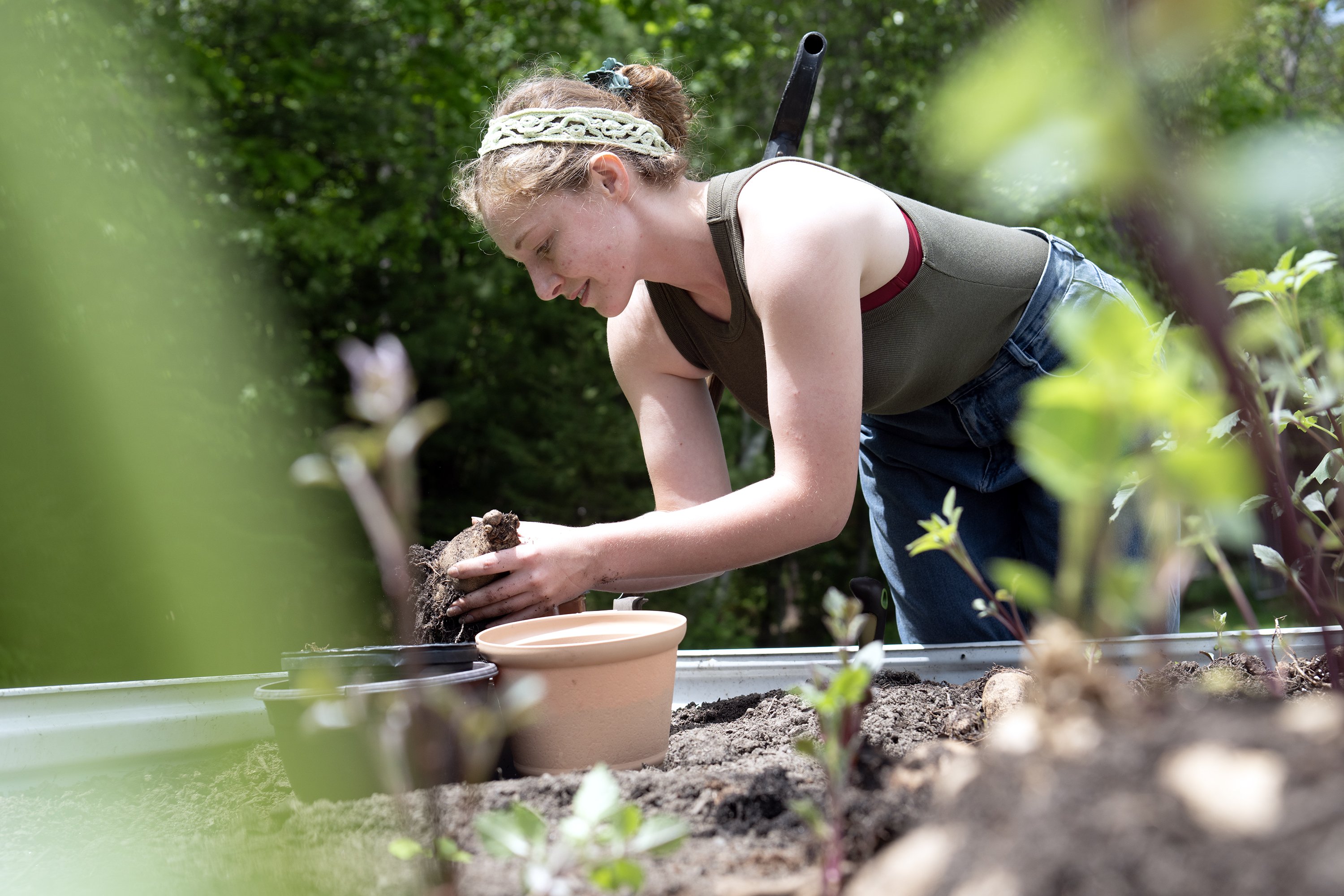
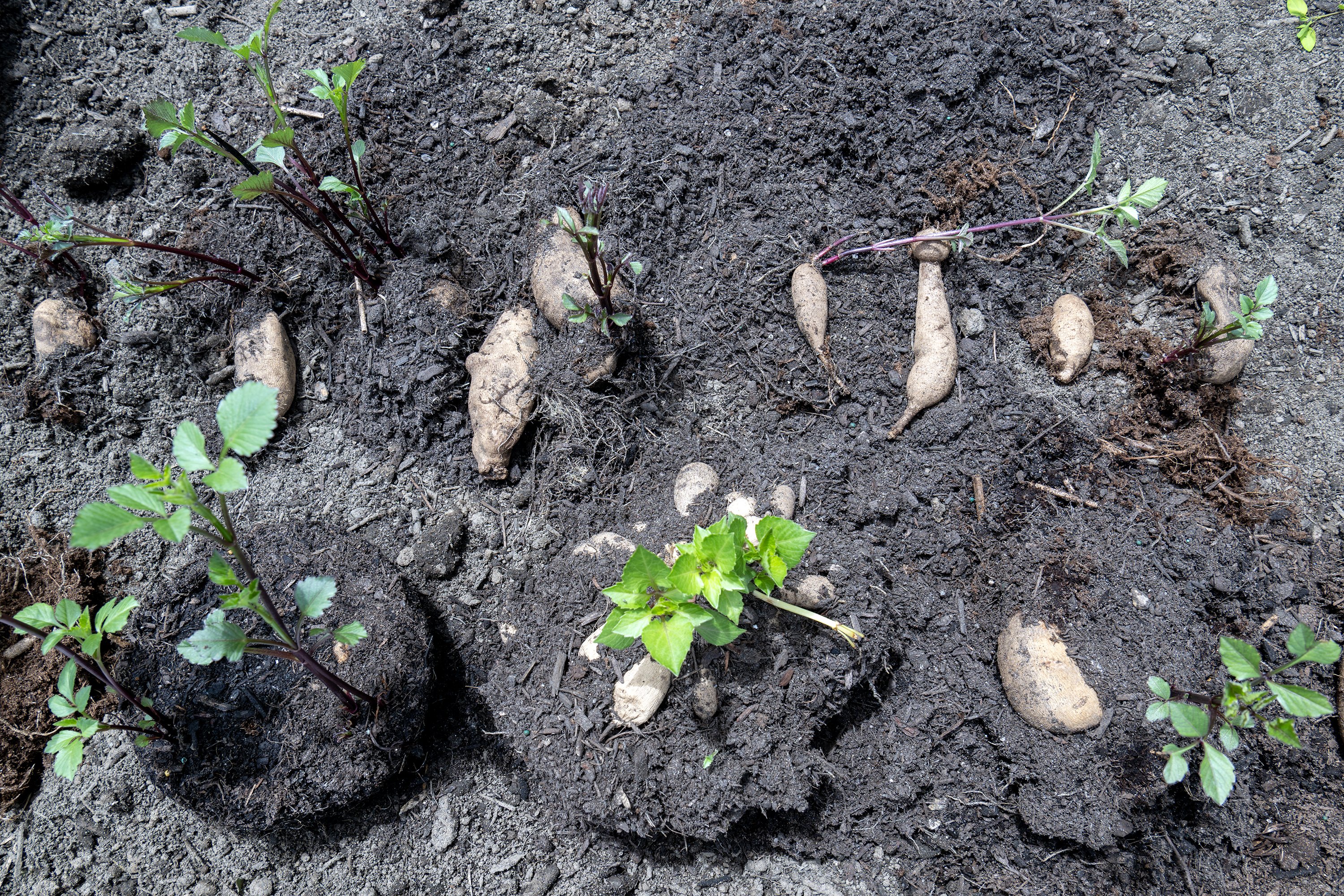
She frequents her neighbors’ gardens — with permission — and spots around the city. Mill Creek Park and the library are some of her favorite places to forage. She saved 50 dahlia bulbs from a compost pile at the dump. Phipps has even pocketed the slimy seeds from a particularly delicious tomato she had at a restaurant.
She’s always been drawn to green things. And her grandmother nurtured her love of plants.
“She grew tomatoes the size of pumpkins,” Phipps remembered. African violets were always blooming on the windowsill. And she always planted morning glories. So does Phipps.
Phipps dreams of one day having a yard full of flowers. Now, she tends to five gardening beds, an assortment of pots and a corner of her house devoted to indoor plants. There’s a table in her kitchen devoted to propagation. She snags wilting branches from the damaged plants in the gardening section of Costco, where she works. Salvaged sprigs of green float in vases of water.
She’s an animator by trade, working on a short film with her friends from college. And gardening is a nice way to be outside after she’s been “shrimping out” in front of a computer for hours.
Phipps still considers herself a newbie when it comes to gardening. She started with easy flowers, like morning glories and marigolds. She’s merely followed her curiosity.
“I never thought seriously about collecting seeds until suddenly I was doing it,” she said.

We invite you to add your comments. We encourage a thoughtful exchange of ideas and information on this website. By joining the conversation, you are agreeing to our commenting policy and terms of use. More information is found on our FAQs. You can update your screen name on the member's center.
Comments are managed by our staff during regular business hours Monday through Friday as well as limited hours on Saturday and Sunday. Comments held for moderation outside of those hours may take longer to approve.
Join the Conversation
Please sign into your Press Herald account to participate in conversations below. If you do not have an account, you can subscribe here. Questions? Please see our FAQs.