
A year after Nadia Jimenez is reported missing from her small town in Maine, her car is pulled out of the water with her body perfectly entombed from the pressure of the underwater microclimate of her car. Fingerprint analyst Shaw Connolly is given the impossible task to find a lead.
Separated from her husband after spending years tormented by her last big case — the disappearance and murder of her sister — Shaw puts her foot in her mouth over and over — with her colleagues, with the boys bullying her son, with her father and eventually with the monster of her past, her sister’s murderer. As all that has been locked up is released, Shaw’s role in her broken and breaking family is once again tested — and another family stands to land in the very same position if she can’t find a break in the case.
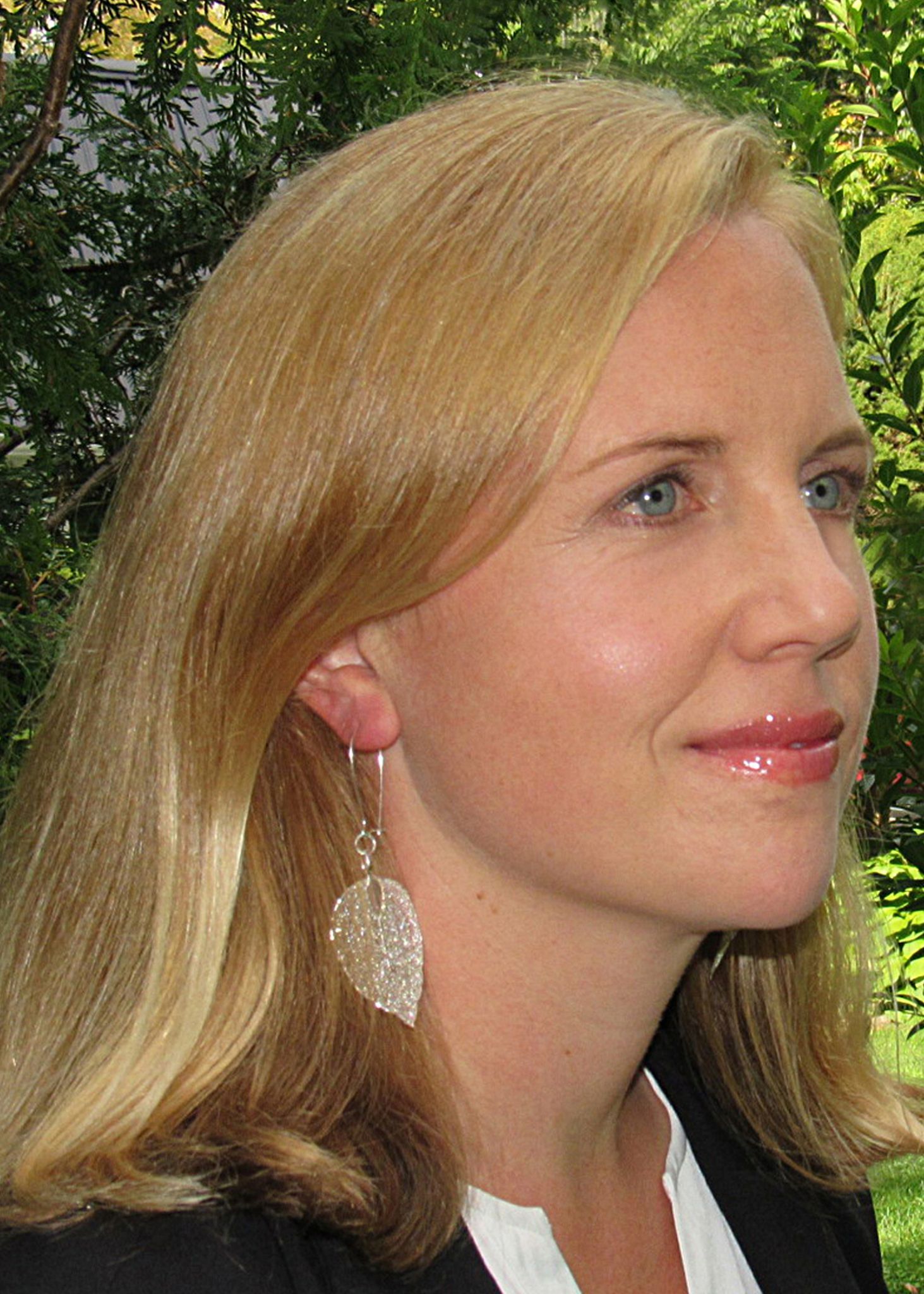
In “Restless Bones,” the follow-up to her novel, “Shaw Connolly Lives to Tell,” Hermon writer Gillian French takes readers through twists and turns that arise not from the bombast of narrative, but rather the intimate study of character and her ability to do her job.
What is your attachment to Maine? What do you think it is about the state that makes it ripe for thrillers?

I’m a Maine native. Both sides of my family go all the way back. So it’s been right here the whole time. I am drawn to rural towns, rural settings. It’s a naturally darker tone here. The winters are long, it’s cold and there’s a lot of hunkering down and getting through things. The setting alone is so conducive to that thriller atmosphere and plotting along those lines.
Shaw Connolly is a fingerprint specialist, which introduces readers to new ways of thinking about a crime scene. How did you conceive of Shaw as a fingerprint specialist? Where did you start with her as a character?
I was looking for something that was a little bit different, a little bit of a hook, to get into the mystery world, which is so rife with investigators — whether police officers, the sheriff’s department or forensics — it’s all been done. But when I looked around, I could not find any book with fingerprints analysts as the protagonist. And so I decided, there we go. I can sink my teeth into that. It’s something to hang my hat on.
That was the forensics angle. The other half was that I wanted her to be a flawed, relatable Maine woman — a mom, a wife and a daughter. I wanted her to have all the aspects that make her put her foot in it over and over again with people, and she shoots her mouth off a little too much. I love reading flawed characters who mean well and are trying their best but keep screwing up.
One of Shaw’s superpowers and biggest flaws is that she has solved the case of her sister’s murder, and yet, as you said, she puts her foot in her mouth as she goes tit-for-tat with her coworkers and family. I found myself laughing out loud in surprising moments. How do you approach tone?
Going from writing for teens to writing for adults, I felt like I was able to kind of be freer with humor. I knew with Shaw that this was going to be grim and bleak. I enjoy that to an extent, but I certainly have a threshold, so I thought, “I’m going to have to make her funny.” It’s going to have to be something where the people reading this book can use Shaw as a touchstone to get back to humanity. There are reminders that there is light at the end of the tunnel.
What was your research like around missing and murdered women for this project? One of the questions we must ask of this genre and our consumption of it is can or should we let these people and stories rest?
Part of it was consumption over the years of all of these mysteries, suspense and thriller novels that I sucked up because I love the genre. All of those elements are in there — the missing, the lost and how the families deal with it. How does the media deal with it? How does law enforcement deal with it? When I was embarking upon writing the first book in the series, I went largely to college forensics textbooks. I did contact some actual labs, and I didn’t hear back — you know, those people are busy — it’s life or death with them.
I also listened to true crime podcasts nonstop. I had to cut myself off from them. At a certain point, it gets back to what we were just talking about: can we let these people rest? There are professionals who are investigating these cold cases. That’s their job and expertise, and maybe the armchair detectives need to step back. By the end of it, I was losing my own peace of mind, because I was filling my brain with these cases. It was helpful to get a perspective when they have actual family members of the murdered and the missing talk about their experiences dealing with this. The answer does seem to be a definitive “no” for a lot of people. No, I cannot let my loved one, my daughter, my son, whoever rest or be gone. It is all-consuming. It takes over their lives. At the same time, there are other family members who do move on. I tried to do that with Shaw’s other living sister — that all she’s wanted is to live her life without this shadow cast over everything, and it’s been almost impossible. The true crime podcasts were helpful and informative. I won’t go back there again.
Lisa Hiton is a writer living in Brooklyn, N.Y. She is the author of the poetry collection “Afterfeast,” and her work has been featured or is forthcoming in the Kenyon Review, The Slowdown, NPR, New South and elsewhere.
We invite you to add your comments. We encourage a thoughtful exchange of ideas and information on this website. By joining the conversation, you are agreeing to our commenting policy and terms of use. More information is found on our FAQs. You can update your screen name on the member's center.
Comments are managed by our staff during regular business hours Monday through Friday as well as limited hours on Saturday and Sunday. Comments held for moderation outside of those hours may take longer to approve.
Join the Conversation
Please sign into your Press Herald account to participate in conversations below. If you do not have an account, you can subscribe here. Questions? Please see our FAQs.