

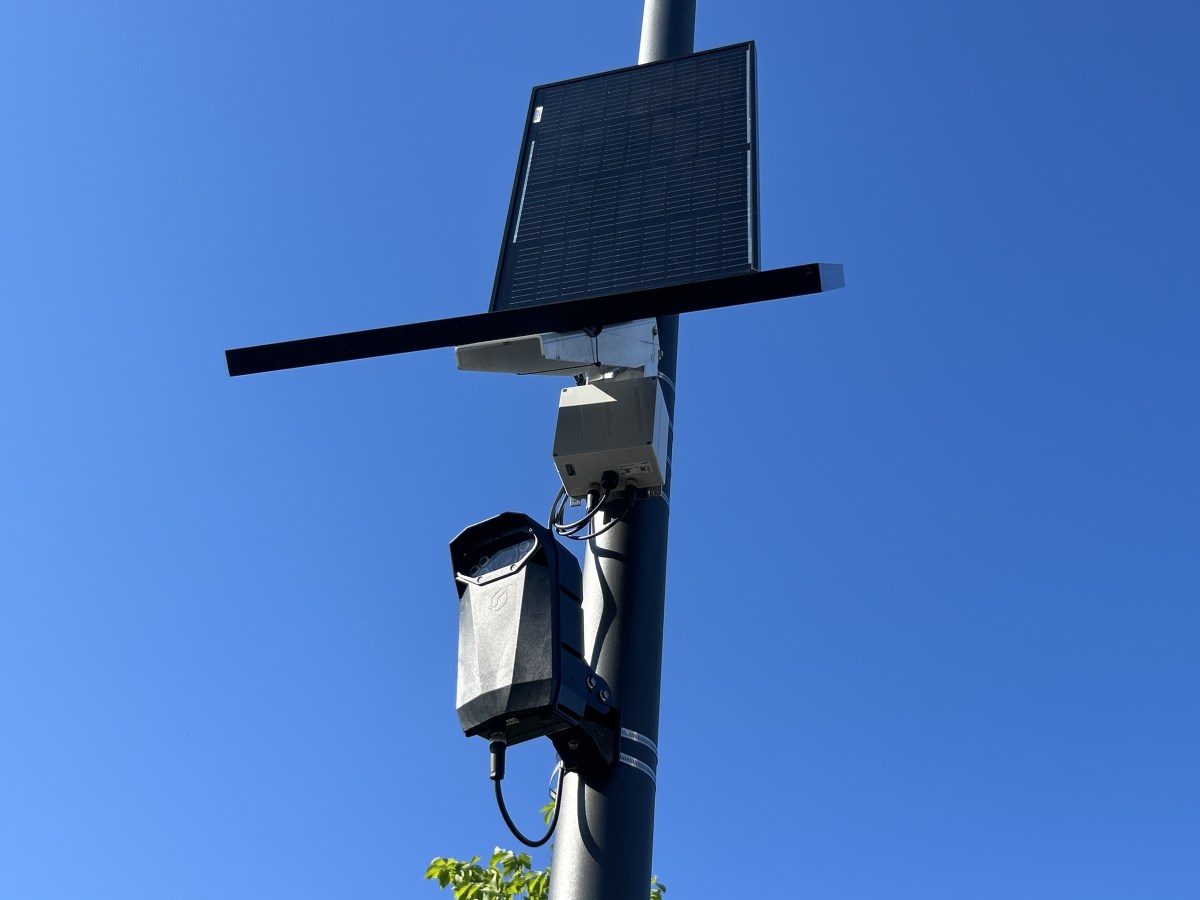
Idexx Laboratories, the Westbrook-based veterinary medicine company, appears to have eight cameras equipped with automatic license plate readers on its properties in Scarborough and Westbrook — a violation of state law if they’re in use.
Local officials and law enforcement in both communities say they were not aware of the cameras, which can use artificial intelligence to capture and analyze images of license plates and share that data with other entities. Officials at Idexx did not respond to questions, including whether the cameras are being used to monitor license plates.
According to Maine law, the use of these kinds of cameras is prohibited, except by the Department of Transportation, the Department of Public Safety, and state, county or municipal law enforcement agencies for public safety purposes. The Portland Press Herald reached out to each of them, and all said they were not responsible for the cameras and didn’t know they were installed.
Maine is one of three states that does not allow private entities to use this technology. Those that do could be committing a Class E misdemeanor, according to Alicia Rea, a policy fellow for American Civil Liberties Union of Maine who has been researching their use.
Citizens have criticized the controversial cameras out of concern over who can access the data and how it’s used, without their consent or knowledge.
Idexx did not respond to repeated requests for comment by phone and email, asking why the cameras were installed or how they are used.
WHERE AND WHAT ARE THE CAMERAS
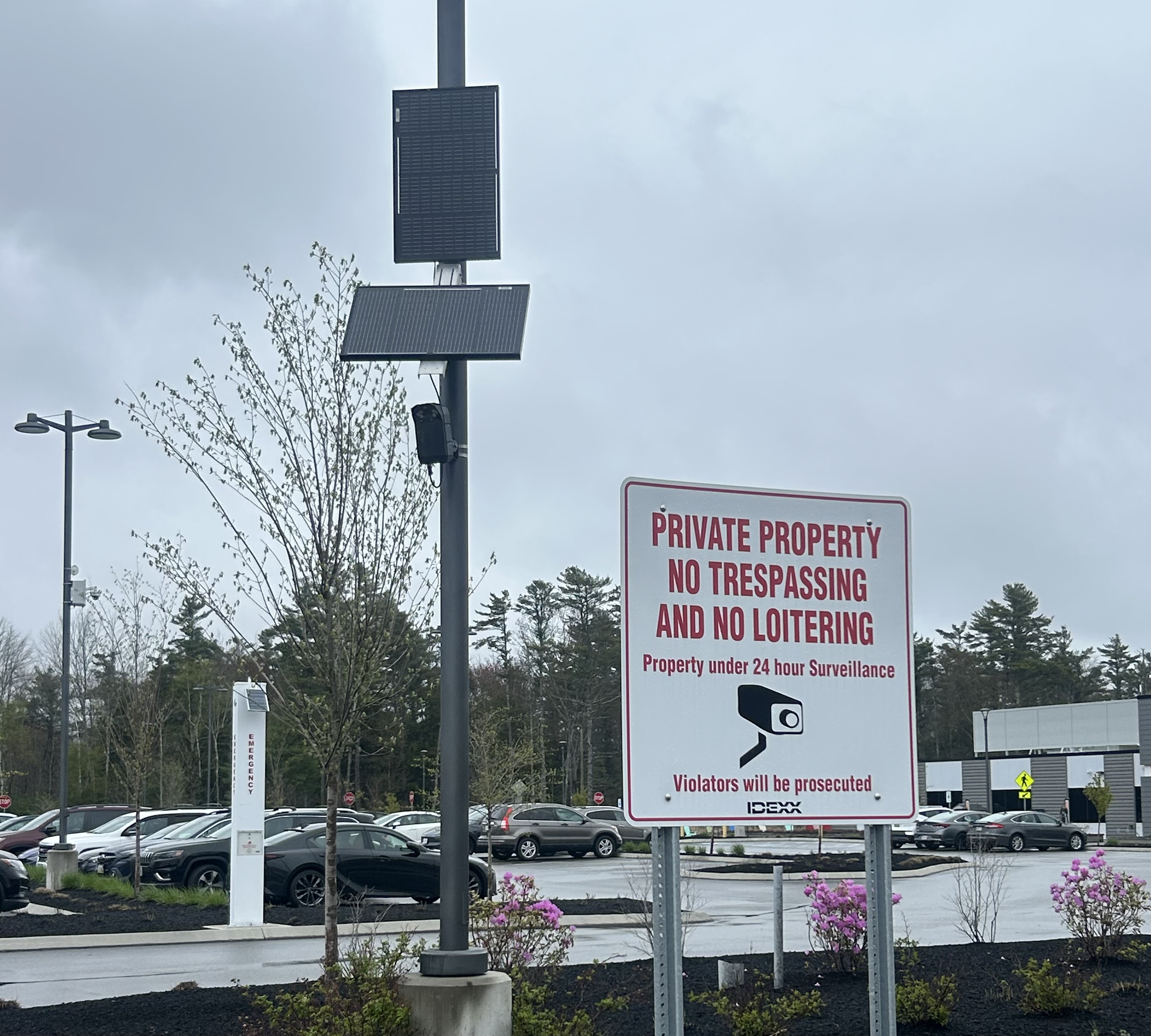
In Scarborough, one camera is located at the corner of Idexx Horizon Center’s parking lot, facing a public street. It is at the end of dead-end street — Innovation Way — at The Downs and across the road from an apartment building, The Lofts @ 225.
In Westbrook, at least seven cameras are located in or near the parking lots of Idexx corporate headquarters. Most are facing public streets.
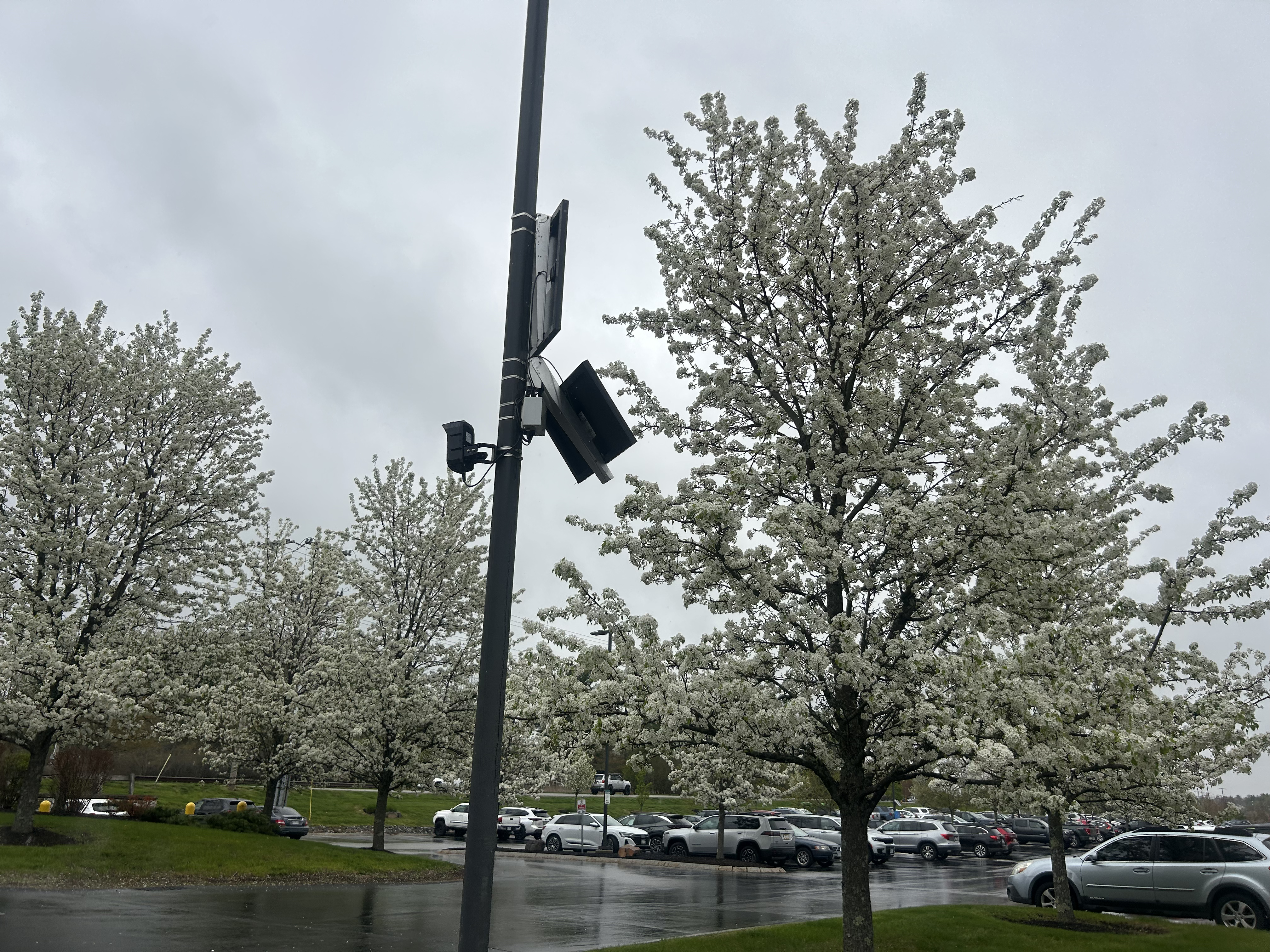
The eight cameras appear on DeFlock, an open-source project mapping automatic license plate readers, or ALPRs. DeFlock’s goal is to raise awareness about the threats these cameras pose to privacy and empower people to stand up against the surveillance systems, according to its website.
Westbrook Mayor David Morse and Scarborough Town Manager Tom Hall both said they were unaware that these cameras were installed in their respective communities.
The Westbrook and Scarborough police departments and the Cumberland County Sheriff’s Office were also unaware. Maine Department of Public Safety spokesperson Shannon Moss said the cameras were not installed by state police, and Andrew Gobeil, communications director for Maine DOT, said the cameras were not installed by the DOT.
The Press Herald took photos of the cameras and shared them with the ACLU’s Rea, who confirmed that they are Genetec Cloudrunners, which function similarly to Flock cameras, she said.
Flock Safety has received pushback from citizens and civil rights groups in Maine and throughout the country. It is the most recognized ALPR vendor, but other companies, like Genetec, sell cameras with similar technology. Genetec, a physical security software company headquartered in Montreal, launched the Cloudrunner in 2022.
“It combines an intuitive, cloud-based solution with purpose-built cameras to collect rich vehicle-based evidence in all conditions,” Genetec’s website states. “Easily filter and locate vehicles of interest based on testimonials and suspicious behaviours. Cloudrunner even notifies you when a vehicle on a watchlist is detected, helping you take immediate action.”
In addition to license plate information, Genetec Cloudrunners capture vehicle characteristics like color, make and model, according to Genetec’s website. The data is then uploaded into a searchable database, where users can filter and flag vehicles and receive an alert if that vehicle is detected.
Idexx did not respond to emails asking the company to confirm if the cameras are Genetec Cloudrunners and what their purpose is. It’s also unclear if the cameras are in use, or merely installed on the poles.
WHY THEY’RE CONTROVERSIAL
Adam Wandt, an associate professor at John Jay College of Criminal Justice in New York, said these types of cameras are becoming more popular among public and private entities.
In other states where private entities can use this technology, companies like Home Depot and Simon Property shopping malls use Flock cameras. The private use of ALPRs is allowed in most states, except Maine, Arkansas and New Hampshire.
Technology can be abused, Wandt said, but many companies, like Flock, have checks and balances in place to reduce that risk. Transparency is one method, but private companies aren’t subject to public records laws.
ALPRs are also used for law enforcement trying to solve crimes or track down suspects, he said. His office even has one.
Still, he said, these systems can come with substantial downsides: There’s a risk of breaches if companies are hacked, and governments or individuals could misuse the data the cameras collect to infringe on people’s civil rights.
“They provide a great deal of safety and security, but also a great potential for abuse,” Wandt said.
In addition to the risks of security breaches and misuse, companies are also vulnerable to federal warrants and subpoenas, said Rea, from the ACLU. While the public is focusing on Flock, she said other ALPR companies like Genetec are just as dangerous.
“They still track everyone’s movements, whether you’re innocent or not, and they still are collecting data,” she said.
The ACLU of Maine is concerned about automated mass surveillance and the threats ALPRs pose to people’s constitutional right to privacy, Rea said.
In South Portland, residents have shared similar concerns after the city requested funding for an eighth Flock camera. After withdrawing the request and holding a workshop about the cameras, South Portland is still undecided about how it should use them.
Falmouth recently ended its contract with Flock Safety and approved a 10-year contract with Axon, which will supply the town with mounted traffic cameras that include automated license plate reading software.
“In these politically charged times, when you’re collecting all of that information, we really have to think critically about, do you want your friends to have that?” Rea said. “Do you want your political enemies to have that?”
Editor’s note: This story was updated on June 9 to update the number of cameras placed around Idexx’s properties.

We invite you to add your comments. We encourage a thoughtful exchange of ideas and information on this website. By joining the conversation, you are agreeing to our commenting policy and terms of use. More information is found on our FAQs. You can update your screen name on the member's center.
Comments are managed by our staff during regular business hours Monday through Friday as well as limited hours on Saturday and Sunday. Comments held for moderation outside of those hours may take longer to approve.
Join the Conversation
Please sign into your Press Herald account to participate in conversations below. If you do not have an account, you can subscribe here. Questions? Please see our FAQs.