

Virginia Hume returns to Haven Point in her new novel, “Liberty Island,” rewinding the clock to the coastal community’s earlier days. She explores a family whose story unfolds alongside a children’s book that challenges the expectations of girls in the early 1900s. Inspired by the history of juvenile fiction and the stark divide between books written for girls and boys, Hume explores motherhood, ambition and the stories that shape generations. She spoke with the Portland Press Herald about misunderstood mothers, female ambition and why there’s no place quite like the coast of Maine.
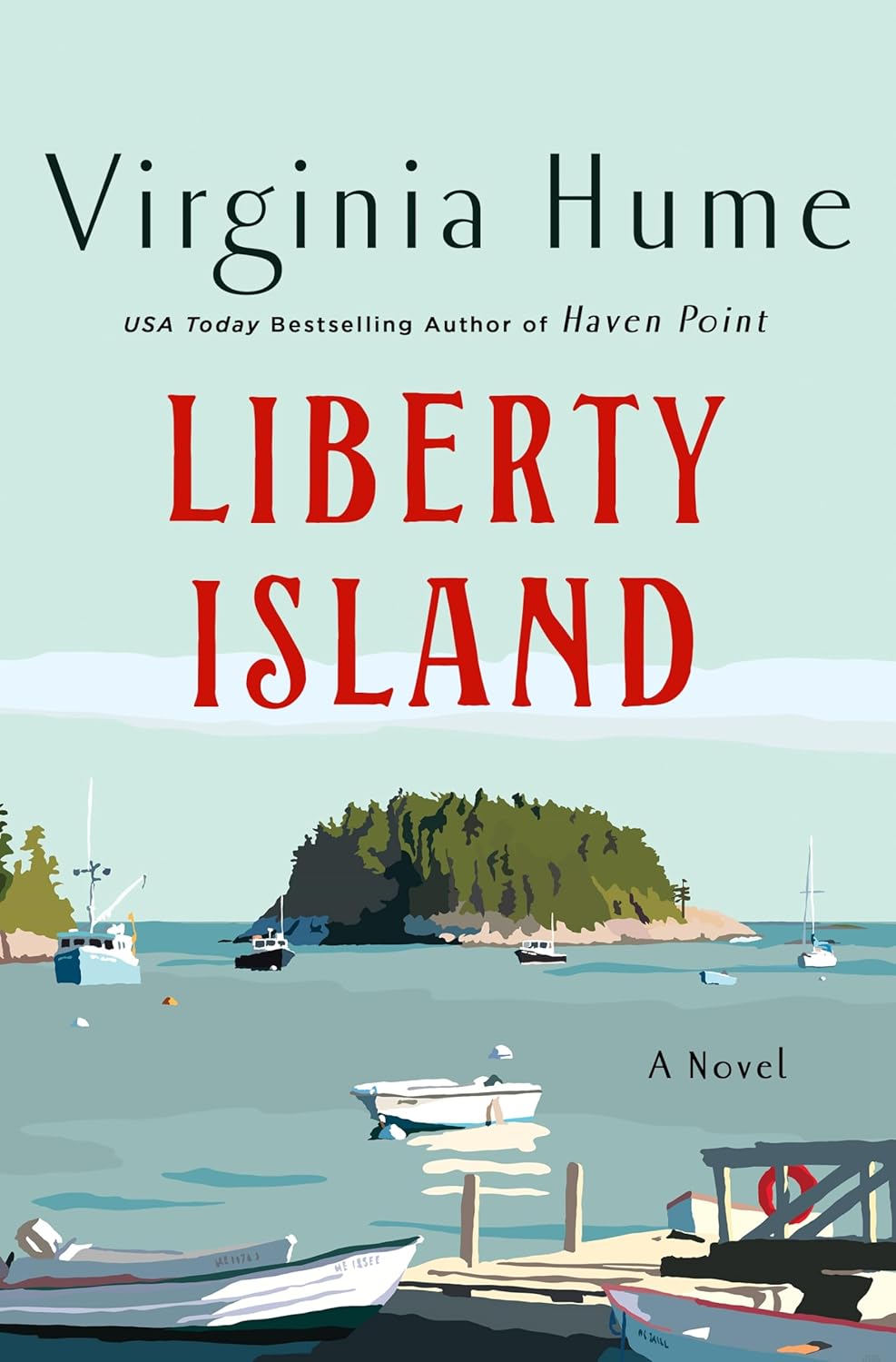
‘Liberty Island’ opens at the turn of the 20th century, going back even further in history than ‘Haven Point.’ What drew you to that earlier era?
Once I’d created the world of Haven Point, I thought it would be interesting to dial back the clock to its origins. Once the railroads were established, the men often traveled back and forth to Boston to work, leaving the women to set the tone. I wanted to explore how many of these old summer colonies tended to be matriarchal.
The fictional children’s book at the heart of the novel –– also called ‘Liberty Island’ –– almost takes on a life of its own. Where did the idea of building a story around a hidden-author narrative come from?
In the initial version of this novel, a woman was writing a book she feared would be controversial, and she was afraid of being unmasked as the author. But originally the book she wrote was on a completely different subject. My editor suggested centering it more around the place, and she was absolutely right. So I thought, “What if it was a children’s book?”
That sent me on a deep dive into the history of juvenile fiction and into the distinction between girls’ books and boys’ books. It wound up being unbelievably rich territory because there was almost a moral panic. There were fairly explicit, albeit unwritten, rules: girls’ fiction encouraged them to be domestic, docile, pious and pure, while boys’ books encouraged adventure, strength and courage. I thought that was absolutely fascinating. Once the subject of Anna’s book came together, and the fact that her niece had inspired it, it made for a vastly more compelling story.
The Maine coastal setting feels like far more than a backdrop. How much did the landscape shape the story?
I cannot imagine a better setting for a multigenerational family saga than that rugged, rocky coast. In “Liberty Island” you see a distinction between members of the summer community who were from northern New England and those who came from Boston –– and I think the people from Maine influenced the character of the place. The coastline itself is so rugged that even with the railroads, it was a little remote.
As for the geography itself, in my head Haven Point sits on a peninsula jutting south into Casco Bay, looking east to the ocean and also south and west into the islands of the bay –– almost torn away from the mainland, with a tenuous connection at high tide.
I love the coast of Maine, but I have this particular affection for Casco Bay. I don’t think there’s another place quite like it on Earth –– everything from the geography to the geology to the history –– it really is rich territory. It’s a privilege to know it well enough that I can write a novel set there.
You have described this book as an ode to mothers and daughters. How did your own experience as a mother to daughters inform your writing?
Something I’ve observed lately –– and I’m sure it’s always been true, but it feels very pronounced right now –– is the fraying of family relationships across generations. And sometimes that’s the healthiest thing someone can do, especially in the case of real abuse. But I also think people are influenced by voices encouraging estrangement, and I wanted to write about intergenerational grace and conflict. I keep writing about misunderstood mothers, which is funny, because I don’t particularly misunderstand my own mother, and I don’t think my daughters misunderstand me. But I can imagine how they could. There are a lot of different ways to be a woman in this world. I’m a product of girls’ school, girls’ sleepaway camp and a sorority –– so I have always had “girl power” in my veins.
Anna’s ‘Liberty Island’ books give girls permission to imagine themselves as pirates and rum runners – free from the domestic sphere – which was a radical act in 1900, yet the hunger for those stories clearly resonates across generations. What drew you to exploring that particular strand of female freedom?
I was a voracious reader as a child, mimicking the habits of my parents, who read books of all genres. I grew up in an age when books for girls universally encouraged them to imagine any kind of future. In researching the history of girls’ literature, I tried to imagine what it would have been like to be that age with more of your world proscribed –– and how that would have shaped me. I think I got more out of reading stories about girls who traveled, dared and tried new things than anything I read for school. And that felt worth exploring.
Samara Brass is a writer and editor based in Somerville, Mass.
We invite you to add your comments. We encourage a thoughtful exchange of ideas and information on this website. By joining the conversation, you are agreeing to our commenting policy and terms of use. More information is found on our FAQs. You can update your screen name on the member's center.
Comments are managed by our staff during regular business hours Monday through Friday as well as limited hours on Saturday and Sunday. Comments held for moderation outside of those hours may take longer to approve.
Join the Conversation
Please sign into your Press Herald account to participate in conversations below. If you do not have an account, you can subscribe here. Questions? Please see our FAQs.