


I’m a little late to the Franciska party.
In December, the New York Times named the dulce de leche flan at this Argentine wine bar in the Old Port one of the 14 best desserts they’d tried across the country last year. This spring, I learned that acclaimed local chef Masa Miyake loved the Mi’kmaq trout at Franciska. When Miyake raves about your fish, clearly you’re doing something very, very right.
As I dined here with a friend in early June, the woman at the table next to us was gushing about her previous meal at Franciska. (This is an intimate restaurant — you will overhear your neighbors.) “I have been so excited to come back. I’ve been telling everybody,” she said. She gets it.
Now I do, too. Some wine bars limit their food offerings to snacky, tapas-style dishes, charcuterie and cheese. Franciska offers a concise, but full, dinner menu. “Anyone who takes their wine seriously is also going to take food seriously,” owner Alex Marchesini said. Likewise, you should take Franciska’s fare seriously, much as it will make you smile.
Marchesini launched Franciska just over a year ago in this tiny, 20-seat Middle Street space that previously housed Cabana, Piccolo and Bresca. He wanted to introduce people to the high-quality, small production wines coming out of his home country, and South America more broadly. The food is inspired by traditional bodegón-style cuisine that showcases Argentina’s Spanish and Italian influences.
Marchesini is an industry veteran who previously owned wine bars like Varro in Los Angeles and Arden in the other Portland. He was also wine director at lauded Boston chef Lydia Shire’s Scampo and the former Eveleigh in Los Angeles, and wine consultant at Camden Harbour Inn. Chef de Cuisine Rudi Schnetzer came most recently from Family Meal at Blue Hill and the Michelin-starred Crown Shy, both in Manhattan. Like the food and wine at this modern bodegón, Marchesini and Schnetzer work great together.
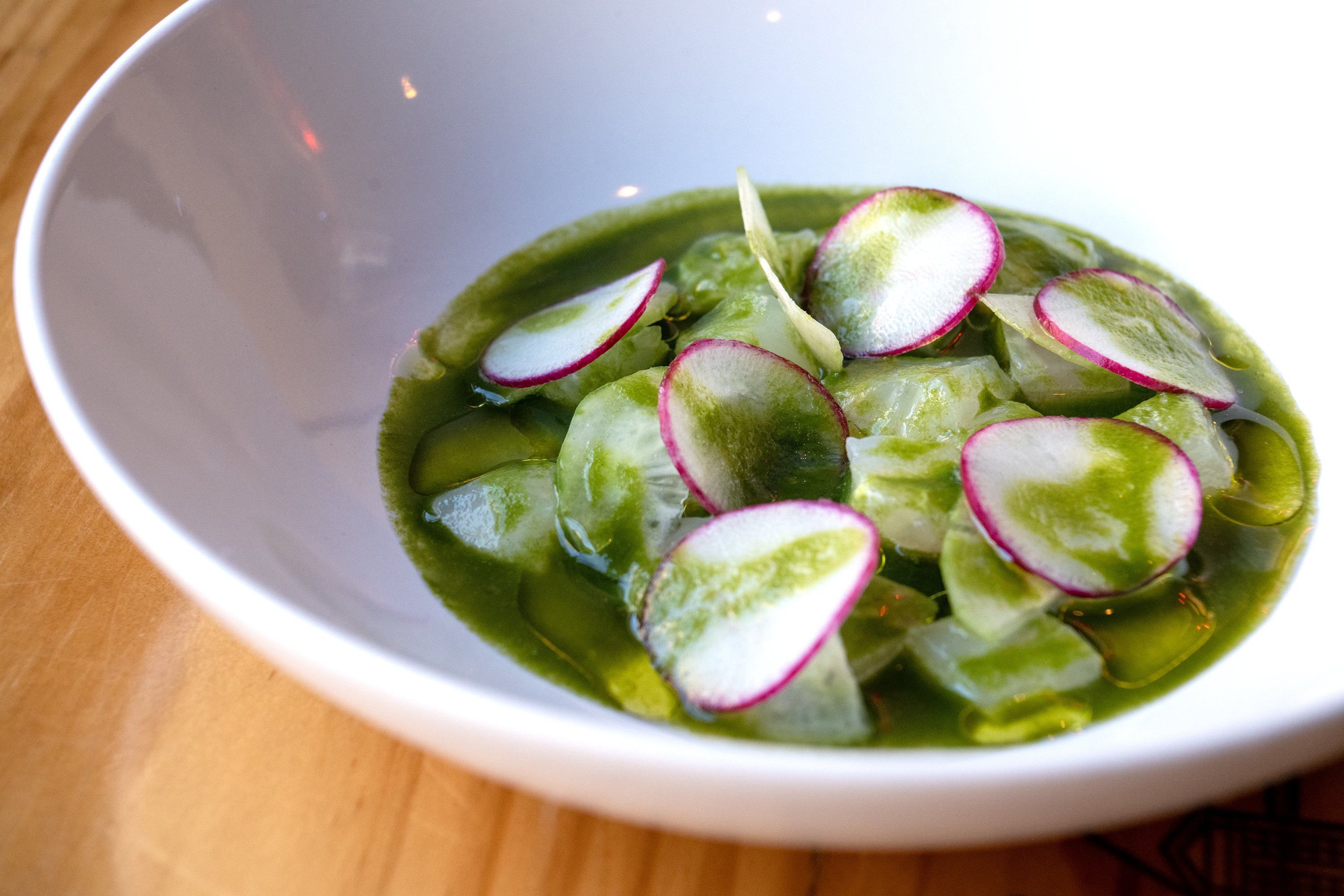
Franciska’s bottle list includes more than 40 Old World and American wines ($48-$358), but we wanted to explore the dozen or so Argentine and South American wines by the glass. Our server was happy to oblige, steering us toward a crisp Munay torrontés ($12/glass; wines by the glass are also available in 2-ounce tastes, half- and full bottles) to try with our Maine fluke crudo ($19). Torrontés is perhaps the signature white of Argentina, dry with a lushly floral nose, and its vibrant acidity played well with the tender crudo’s aguachile-style marinade, electric with tart lime, fresh cilantro and subtle serrano heat.
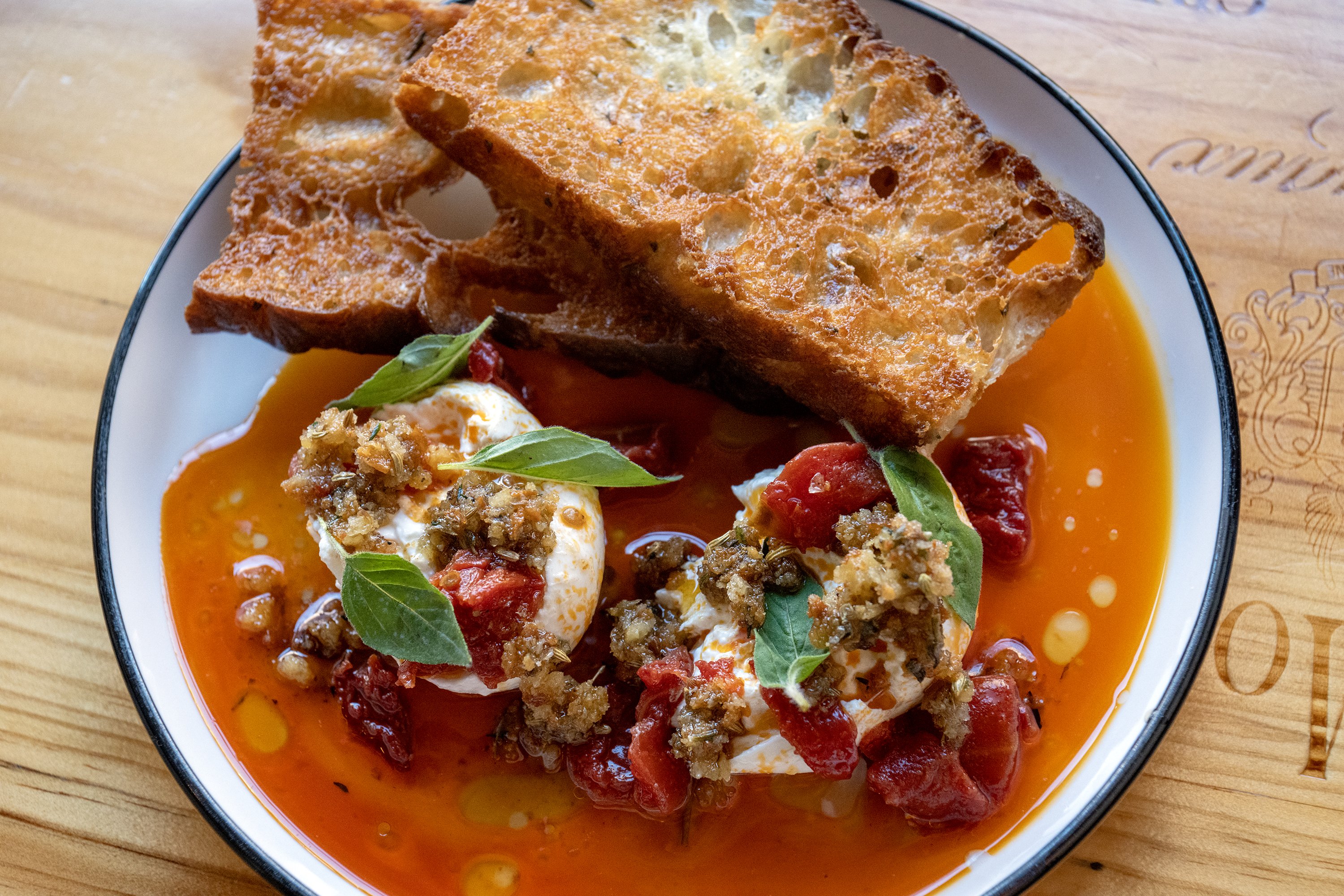
The “Faaa!” albariño from the Juanicó region of Uruguay ($14/glass), minerally and full of stone fruit and honeysuckle, was lovely on its own, though it didn’t add anything to the burrata & tomato conserva ($18). Turns out, the outstanding dish doesn’t need any help.
Schnetzer marinates peeled, seeded Italian tomatoes in sherry vinegar and herbs overnight, then dehydrates them to intensify their flavor. He rehydrates them with smoked paprika oil and more vinegar before setting the supple tomatoes over creamy burrata chunks with fresh oregano leaves and breadcrumbs, all served with toasted slices of 72-hour, cold-fermented sourdough focaccia. Though the menu changes often, this dish has become a staple, and thank goodness for that.
Franciska tends to avoid big, jammy, over-oaked wines in favor of leaner, lighter offerings. “We’re also not the type of restaurant that wants to do pairings,” Marchesini said. “We’re not fine dining. We’re not trying to do perfect pairings for every dish. We certainly know what wine is going to make you happy with a dish.”
The Stella Crinita petit verdot ($18/glass) made us just about giddy with the 16-ounce prime ribeye a la plancha ($72). My French-born friend found herself absolutely tickled by the Argentine expression of this Bordeaux grape. Tannic and redolent of dark fruit, tobacco and leather, it fully harmonized with the grass-fed, grain-finished beef from DemKota Ranch in South Dakota, accompanied by chimichurri that sang brightly with herbs, acid and fried chilies.
But the best part of the dish might be Schnetzer’s paprika- and cumin-seasoned papas bravas, made from Green Thumb Farms potatoes, triple-cooked for remarkable crunchiness. They’re served fetchingly in a mini cast-iron skillet, and topped with plenty of aji amarillo aioli, itself punched up with both preserved and fresh lemon. It’s an irresistible side that demands equal billing.
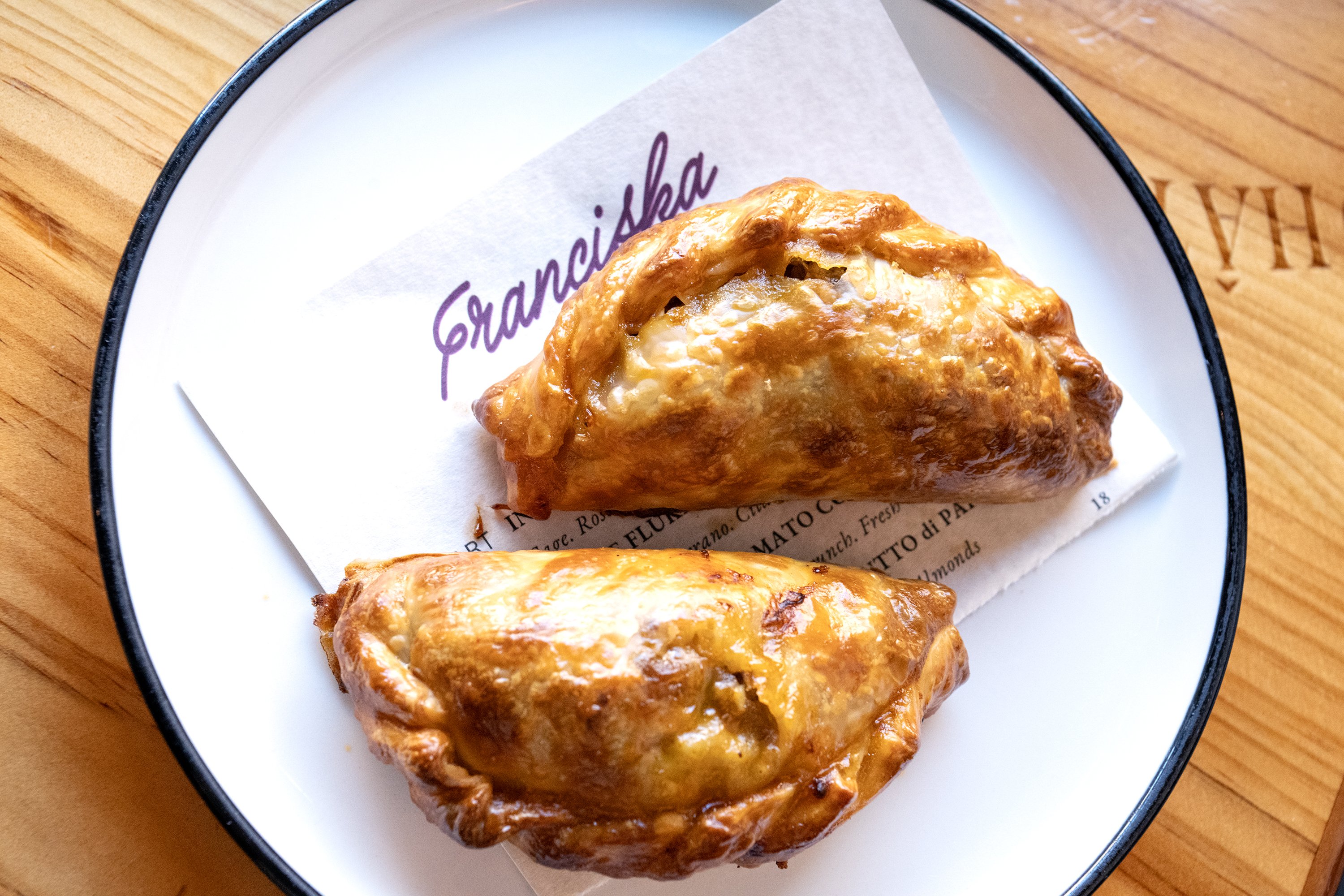
Schnetzer braises bone-in short ribs and ribeye trim for 12 hours for Franciska’s empanadas ($16), another must-order staple. Plenty of onion gives the intensely beefy filling a little natural sweetness, while chopped hard-boiled eggs and green Spanish olives boost umami. The lard-laced dough, sourced from Argentina, bakes into a glossy, deeply bronzed crust so thin and flaky it practically crackles like the sugar shell on crème brûlée. Juicy, medium-bodied Ver Sacrum monastrell from Argentina’s Uco Valley ($16/glass) put a bow on the pretty packages.
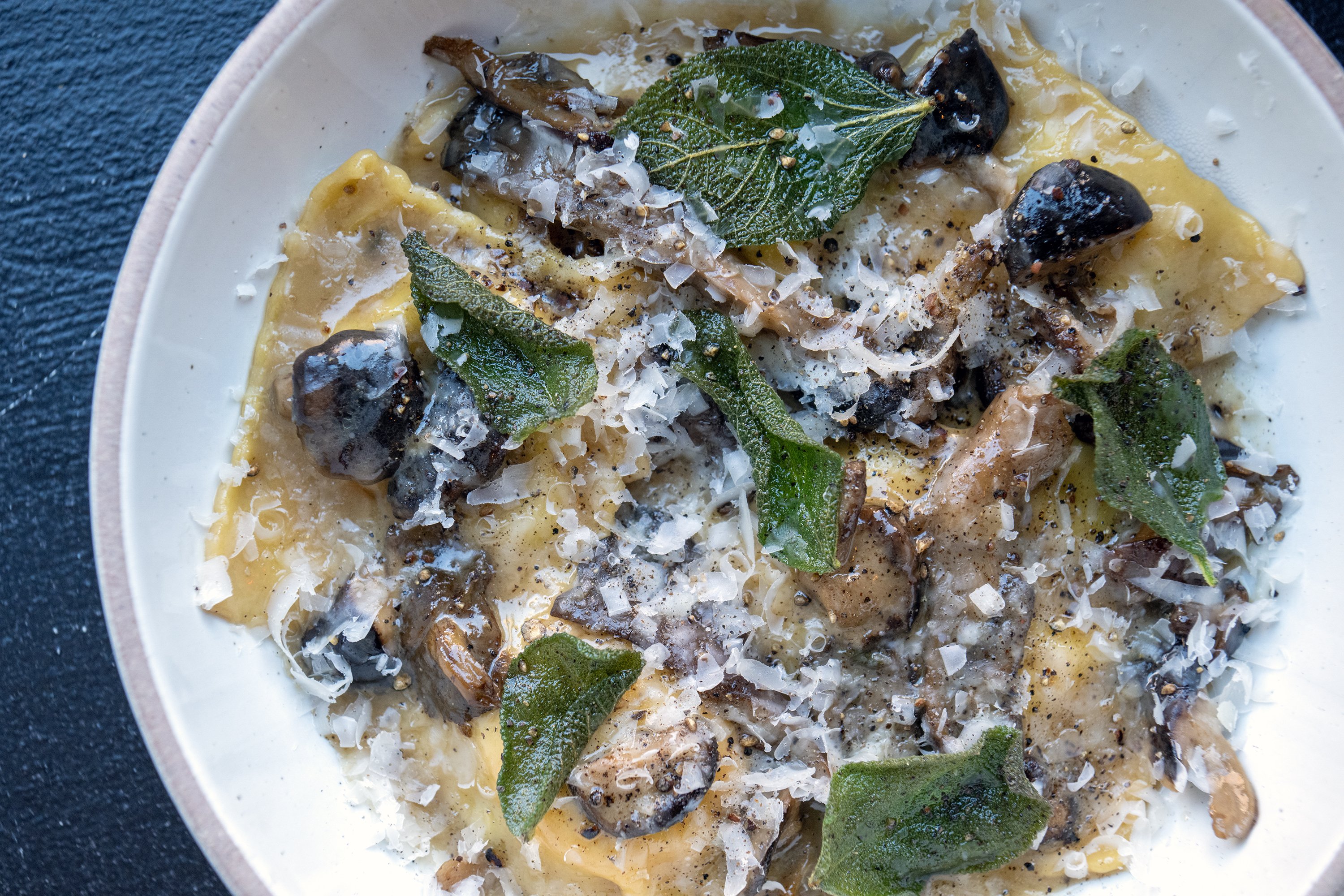
We swiped the ricotta-stuffed agnolotti ($31) through Schnetzer’s almost impossibly meaty mushroom brodo — finished with plenty of butter — then speared fried sage leaves and bits of oyster, lion’s mane, shiitake and pioppino mushrooms from Wild Fruitings in Augusta to build perfect bites.
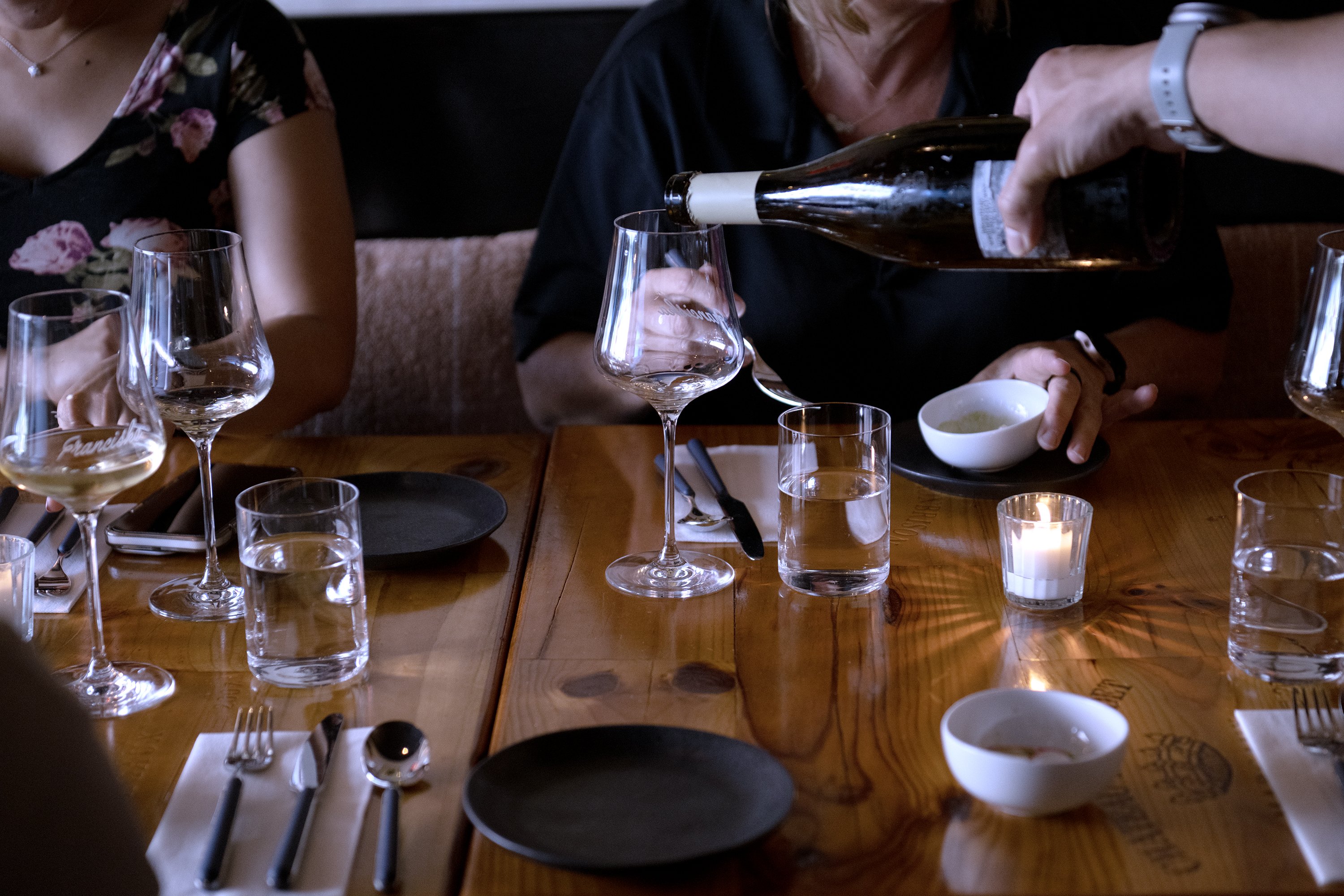
Service was attentive and friendly, if a little hurried at times. Franciska bustles, and our server had his hands full (often quite literally) as Marchesini had to work in the kitchen, temporarily filling in for a recently departed staffer. The dining room is decorated simply, like the casual neighborhood spot it strives to be, with vintage bistro posters and tabletops made from wine crates. Tables and the four-seat bar fill up fast, particularly on weekends — Marchesini strongly recommends reservations.
The famed flan ($16) was good, but didn’t quite live up to the hype. In Argentina, flan is often served with a dollop of dulce de leche; Franciska’s twist is to cook dulce de leche into the rich custard, which had toasty, nutty notes and the kind of restrained sweetness I usually like. But instead of the thin, bittersweet caramel that normally tops flan, it was paired with a quenelle of under-sweetened whipped cream.
It hardly put a damper on our Franciska experience. Like the woman at the next table, I’m already looking forward to another evening of tasty wines and good modern bodegón cuisine. Seriously good.
RATING: ****
WHERE: 111 Middle St., Portland, franciskawinebar.com.
SERVING: 5-10 p.m. Wednesday through Sunday
PRICE RANGE: Small sharing plates $8-$28, large plates $38-$90 ($90 for 24-ounce prime ribeye)
NOISE LEVEL: Medium-high
VEGETARIAN: Some dishes
GLUTEN-FREE: Some dishes
RESERVATIONS: Yes, and strongly recommended
BAR: Wine
WHEELCHAIR ACCESS: No
BOTTOM LINE: Wine and restaurant industry veteran Alex Marchesini opened his Argentine wine bar in the Old Port a little over a year ago. He has plenty of Old World and American wines on the bottle list, but part of the fun at this lively bodegón-style bistro is trying some of the high-quality Argentinian and South American wines from small producers that stretch your experience of the region far beyond the familiar malbec. The other part of the fun is sipping your torrontés, monastrell or Uco Valley petit verdot alongside some of the truly excellent food coming out of Chef de Cuisine Rudi Schnetzer’s kitchen. Shareable plates like Maine fluke crudo and burrata & tomato conserva perk up your taste buds as much as the invigorating wines. The seasonal menu changes frequently, but the braised short-rib empanadas with crisp, flaky crust are a perennial offering, and a must. Schnetzer wrings every last drop of umami from Wild Fruitings fungi in his local mushroom agnolotti. And as delicious as the seared ribeye is with its zingy chimichurri, the well-seasoned side of triple-cooked potatoes with aji amarillo aioli is even better. Dulce de leche flan, celebrated in the New York Times, wasn’t as scrumptious as I’d hoped. But the dish has a following, and followers might strongly disagree. The tiny space fills up fast, though Marchesini is offering special programs you’ll want to take advantage of at less busy times: five-course themed wine dinners on Wednesdays, and their three-course Maine Restaurant Week menu for $58 on Sundays.
Ratings follow this scale and take into consideration food, atmosphere, service and value and type of restaurant (a casual bistro will be judged as a casual bistro, an expensive upscale restaurant as such):
* Poor
** Fair
** Good
**** Excellent
***** Extraordinary
The Maine Sunday Telegram visits each restaurant once; if the first meal was unsatisfactory, the reviewer returns for a second. The reviewer never accepts free food or drink.

We invite you to add your comments. We encourage a thoughtful exchange of ideas and information on this website. By joining the conversation, you are agreeing to our commenting policy and terms of use. More information is found on our FAQs. You can update your screen name on the member's center.
Comments are managed by our staff during regular business hours Monday through Friday as well as limited hours on Saturday and Sunday. Comments held for moderation outside of those hours may take longer to approve.
Join the Conversation
Please sign into your Press Herald account to participate in conversations below. If you do not have an account, you can subscribe here. Questions? Please see our FAQs.