


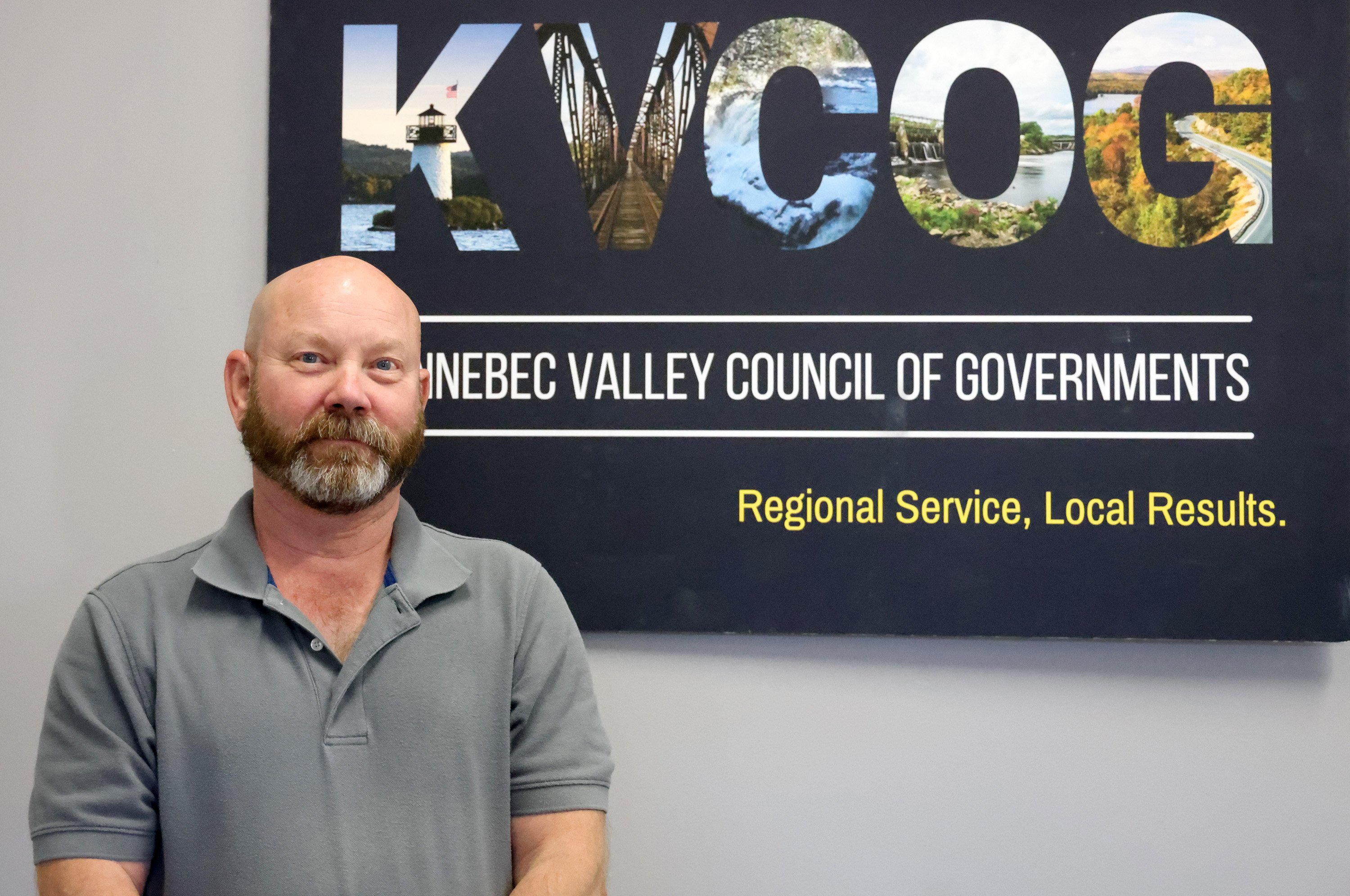
Jeff Drew clocked in as the Anson code enforcement officer on a recent weekday morning, his schedule fully packed.
He inspected a foundation, swung by the new wastewater treatment facility to check out a septic system, then temporarily put on his “health officer” hat to deal with a complaint and handle a Department of Environmental Protection violation.
That afternoon, he was in New Portland, where he’s also the code enforcement officer. He visited the new service station, signed off on another foundation pour, handled four more complaints and finished some paperwork.
It’s a typical schedule for Drew, who on any given day, might go back and forth between Anson, New Portland, Solon, Newport or any number of the 10 communities that rely on his services.
At night, he’ll often head back for a planning board meeting.
Drew is the regional code enforcement officer for a large swath of Somerset County (plus one small corner of Kennebec County), filling what state and municipal officials say is a growing and increasingly dire need for code officials as longtime employees in Maine’s small rural towns, many pulling double or triple-duty across multiple communities, finally retire.
His position, funded by the Kennebec Valley Council of Governments, has quickly become a model for code enforcement regionalization statewide as communities, newly tasked with building more houses and updating their zoning ordinances, find themselves without anyone to enforce them.
By law, every municipality must employ a code officer to enforce state and local ordinances on shoreland zoning, land use, plumbing, waste disposal and building codes. They’re responsible for reviewing permits, conducting inspections, investigating complaints and making sure construction meets safety standards. Developments can be delayed for months if a town has no one to sign off on a project.
The role is critical for both municipalities and the state, according to Samantha Horn, director of the Maine Office of Community Affairs, which oversees statewide code enforcement.
“Code enforcement is where the rubber meets the road on many of the important policies and regulations that are really important to our state and how our state is going to move forward,” she said.
Like so many industries, though, code enforcement is facing a mass exodus of workers as baby boomers retire.
Nearly 39% of code officials in the northeast expect to retire between 2024 and 2029, and another 18% between 2030 and 2034, according to a 2025 study by Northeast Energy Efficiency Partnership.
Drew admits he’s part of a “dying breed” in Maine. At 63, he’s “the young one” among his peers. He has colleagues in their 80s, still covering multiple towns and holding off retirement in fear of leaving their communities in the lurch.
“We really need to bring new people into the field,” he said.
A REGIONAL APPROACH
That’s easier said than done.
After decades of society prioritizing college over the trades, there aren’t enough skilled workers ready to take their places.
Even if there were, for small communities with no need for a full-time officer, it can be hard to attract qualified candidates. Having to make a living on multiple part-time contracts in small towns — with no benefits, no vacation time and no training opportunities — isn’t an appealing proposition.
That’s where regionalization comes in.
“The most obvious solution to this was for us to employ somebody and then contract with these small towns,” said Jessie Cyr, community and economic development director for the Kennebec Valley Council of Governments, a nonprofit that provides planning and economic development services in Kennebec, Somerset and western Waldo County.
The program has been an unmitigated success, Cyr said. Work is running more smoothly. Inspections are more timely.
The council plans to bring on two more officers to join Drew within the coming months. For now, they’re targeting people already working in the trades, while they try to build up training programs.
“Our job posting for this position would be: Are you in the trade industry and sick of the heat and freezing cold? Well, we’ve got a job for you,” Cyr said.
The model will soon be replicated across the state as part of a three-year pilot program, thanks to a $2 million grant from the Federal Emergency Management Agency.
The Mills administration also earmarked $1 million for a regionalization pilot, but Horn, at the state office of community affairs, said the money will now be used to complement the FEMA-supported effort.
“(The state will) try out as many different configurations as we can to understand what models work well in what circumstances,” she said.
Some communities, for example, are more interested in having someone available for emergency coverage, rather than full reliance on regional code enforcement.
A GROWING WORKLOAD
In Aroostook and Washington counties, it’s not unheard of for a single code enforcement officer to cover up to a dozen communities, said Jay Kamm, senior planner for the Northern Maine Development Commission.
“It’s problematic,” he said. “They are spread very thin.”
Kamm is excited about the regionalization effort, which could ease some of the burden for the counties’ existing officers. It should also help standardize and streamline the work with new tools like online permitting, Kamm said.
Efficiency is an important piece of the equation as the need is only going to grow.
While the state’s northernmost counties aren’t growing as fast as some towns in, say, Greater Portland, there’s still been significant development pressure, he said.
In small communities, code enforcement officers often serve as staff support for planning boards and need to help rewrite ordinances and comprehensive plans. And as more towns take a look at their rules, thanks to new state mandates that were part of recent pieces of legislation designed to boost production, it has become “burdensome,” he said.
“Now, all of a sudden, we’re seeing more activity within communities, and … These code officers and planning boards really are scrambling to try to (figure out) ‘how do we review these in a timely fashion?'” Kamm said.
Increased development pressure spurred North Yarmouth to hire its own part-time code enforcement officer last month after more than two years sharing one with Gray.
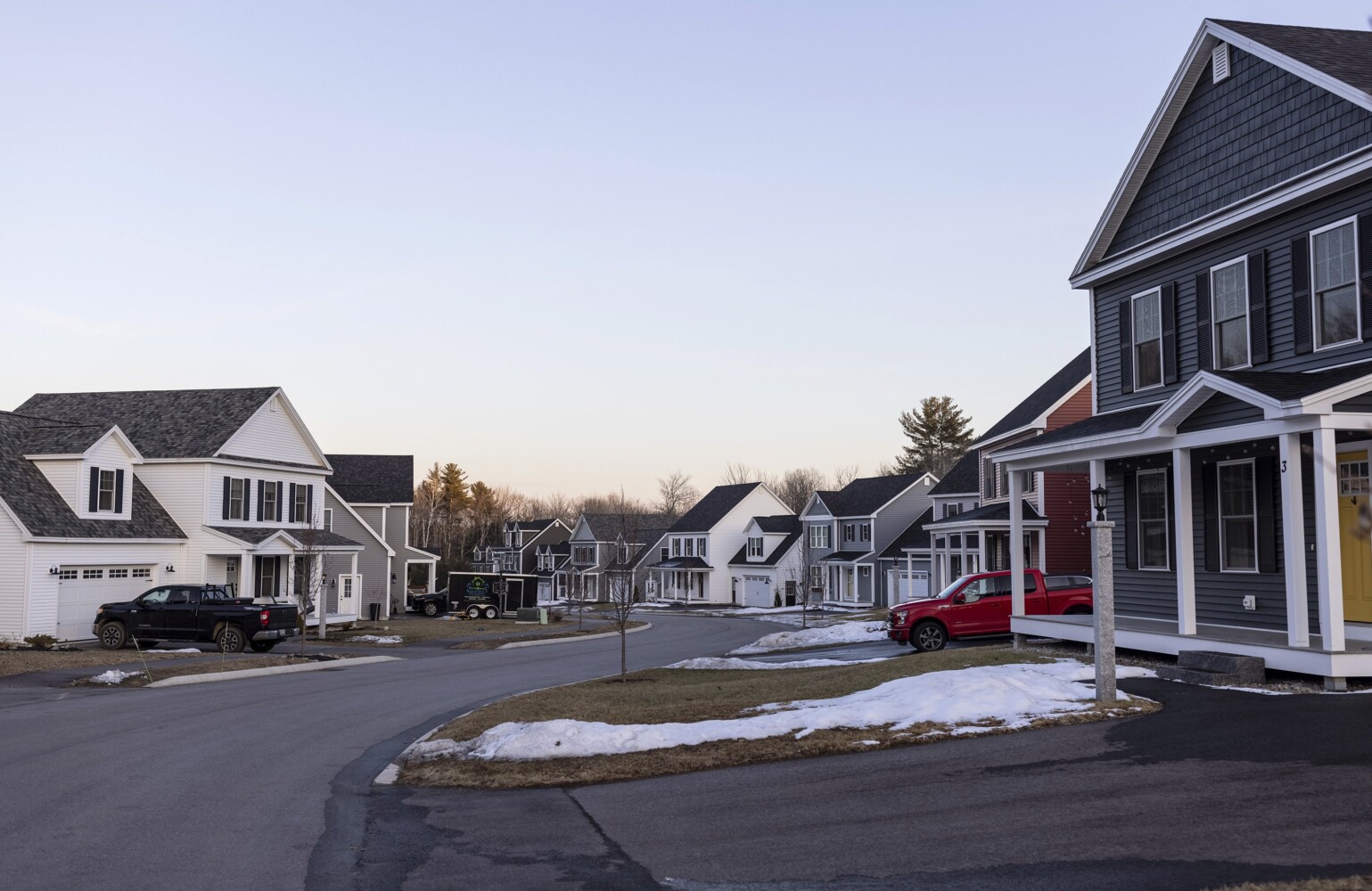
“The shared service arrangement worked well; however, the growing volume and complexity of work made it increasingly difficult for the CEO to effectively serve both communities,” Diane Barnes, North Yarmouth’s town manager said in an email.
The town’s latest budget includes funding for the part-time position, but the need for a full-time officer should be evaluated before the 2028 budget is passed, she said, especially as North Yarmouth readies to comply with a new state law next summer that loosens zoning statewide in an effort to promote more building at greater densities.
A SCARCE RESOURCE
For towns with one or only a part-time officer, it doesn’t take much before they’re suddenly without code enforcement. And then what?
Tony Plante, director of municipal collaboration for the Greater Portland Council of Governments, is hearing more often that communities are struggling to fill openings.
“It is increasingly a scarce resource as people age out of the workforce or have simply had enough,” Plante said. “Generally speaking they’re good paying jobs, there just isn’t that much interest right now.”
Evan Goodkowsky, Phippsburg town administrator, has been bracing for Lee Rainey’s retirement for the better part of a year.
Rainey has been with the town for “this entire century so far,” he said, and has just a few weeks left as code enforcement officer.
It’s unclear who will replace him.
Neighboring Woolwich, Arrowsic and Georgetown all share a single code enforcement officer, but Goodkowsky said adding Phippsburg isn’t a viable solution. The town needs someone full time.
“It might be a little sleepy on paper, but every time the summer comes there’s an influx of people,” he said.
The town is offering full-time work with benefits and a competitive wage, but so are many other communities, he said.
“Everybody chases each other,” he said. “I think we’re going to have to work to get more than a small handful of applicants.”
According to the Maine Department of Labor, the state is short between 2,000 to 4,000 workers in the construction and adjacent industries, which includes transportation and material workers, construction laborers, electricians, equipment operators and building inspectors.
Many of those jobs feed directly into code enforcement. Workers, worn down by the years of physical labor, retire from the trades and transfer their institutional knowledge into code enforcement.
It’s less common to snag someone right out of school.
“I don’t want to say it’s an afterthought position,” said Kamm, at the Northern Maine Development Commission, “but it’s just not something that is discussed as a career option.”
He and other municipal and state officials are trying to change that.
TRAINING THE NEXT GENERATION
Central Maine Community College is working with the Office of Community Affairs to launch a code enforcement officer program as part of its Workforce and Professional Development offerings.
Dwayne Conway, dean of workforce development for the college, said the program, which should launch sometime in the fall or early winter, is designed to be “stackable” so that students new to the industry can be trained in all areas they may need, while existing code enforcement officers can get certified for any new tasks they may be asked to take on.
“(The program) gets more in depth because in many Maine municipalities, especially smaller ones, the code enforcement officer will fill many roles,” Conway said.

For any one of the possible tasks squeezed into the title of code enforcement officer, (shoreland zoning, building and plumbing inspections, land use/site plans), the officer needs to be well-versed in building safety and code, public health protection, community standards, local zoning, disaster resilience and legal compliance.
Conway said that each of the five training modules should take about two weeks to complete and students can then sit for their required state certification exams.
While the college works to stand up its program, Drew at KVCOG has been doing outreach at area high schools and career technical education centers.
“It’s an option for high school kids that aren’t necessarily collegebound,” he said. “Some people are hands-on and this is a path for them.”
And while code enforcement isn’t an easy job — Drew often has to deliver news people aren’t happy to hear — he feels the good outweighs the bad. He hopes to teach that to the next generation of code enforcement officers, no matter their age.

We invite you to add your comments. We encourage a thoughtful exchange of ideas and information on this website. By joining the conversation, you are agreeing to our commenting policy and terms of use. More information is found on our FAQs. You can update your screen name on the member's center.
Comments are managed by our staff during regular business hours Monday through Friday as well as limited hours on Saturday and Sunday. Comments held for moderation outside of those hours may take longer to approve.
Join the Conversation
Please sign into your Press Herald account to participate in conversations below. If you do not have an account, you can subscribe here. Questions? Please see our FAQs.