


Read all of our coverage of Maine's 2026 election or stay up to date with the latest developments through the Maine Political Report in your inbox or text messages from politics editor Kirby Wilson.
They are among the most rural and remote states in the country. They both have politicians and voters with independent streaks. And they are the only two states to use ranked-choice voting in certain statewide and federal elections.
Maine and Alaska stand out nationally for utilizing the system, also referred to as RCV, in which voters may rank candidates in order of preference.
Under RCV, if no candidate receives a majority of votes in the first round, the last-place finisher is eliminated and has their supporters’ ranked choices reallocated to the remaining candidates in a runoff. The retabulation continues until one candidate receives at least 50% plus one vote to win the election. (Hawaii started using the system in 2023, but only for special federal races and county-level vacancies, and dozens of cities use it. A few states have used RCV for presidential primaries or with certain military-overseas ballots.)
Maine’s primary elections this month saw both of the gubernatorial races, the 2nd Congressional District primary for Democrats and two State House contests require ranked-choice runoffs.
The wait for final results stretched on for more than a week between Election Day on June 9 and the early morning hours of June 19, when an election official ran prepared ballots through the RCV algorithm and announced the winners.
That also led to renewed gripes and debates over whether Maine’s system could improve in terms of efficiency and timeliness. It is hard to say if Maine officials or voters might tweak the RCV system in future years. But in the meantime, looking to Alaska is a reminder that RCV election results can take even longer to arrive elsewhere.

How long does it usually take to get RCV results?
The amount of waiting for final results in ranked-choice elections has varied over time and between the two states.
Although fresh complaints and groans came from candidates and observers after the June 9 primary because it took the Maine Department of the Secretary of State until the following week to determine the final results and then announced them in the middle of the night, it was not an unusually long wait.
In 2018, for example, the general election occurred Nov. 6, and Jared Golden was declared the winner over Rep. Bruce Poliquin on Nov. 15. Poliquin then unsuccessfully made several legal challenges into December to try to overturn Golden’s victory, further dragging out the process.
The instant runoffs take just seconds with the press of a button to automatically retabulate votes; The waiting comes from the process of standardizing and organizing ballots.
Votes from Maine’s nearly 500 municipalities all must get transported to Augusta, where state election officials ensure everything is accounted for over the course of several days before doing the runoffs. A few spreadsheet, thumb drive and printer-related issues caused hiccups last week.
Election staff in the secretary of state’s office did not work on weekends, and stopped most days around 5 p.m. before making the final late-night push to try to get results out ahead of the Juneteenth holiday.
Maine includes nearly 31,000 square miles of land. Alaska has about 586,000 as the largest state in the U.S.
So it is not a huge surprise that Alaska’s ranked-choice voting contests have seen longer waits of two weeks or more for final results. For example, Nick Begich beat Mary Peltola in the 2024 runoff for the U.S. House seat after the tabulation occurred on Nov. 30, weeks after the general election on Nov. 5.
Although Maine and its islands see periodic mail delivery complaints, Alaska’s mail system is on a different level when it comes to challenges, according to Scott Kendall, an attorney who drafted Alaska’s ranked-choice voting system and defended it in court.
The massive state, which has many remote areas and Indigenous villages, includes “post offices” that may just feature one person who hands a mail-in ballot to a charter pilot, who then might fly somewhere and pass the mail to another charter pilot before it ultimately reaches its desired location, Kendall said.
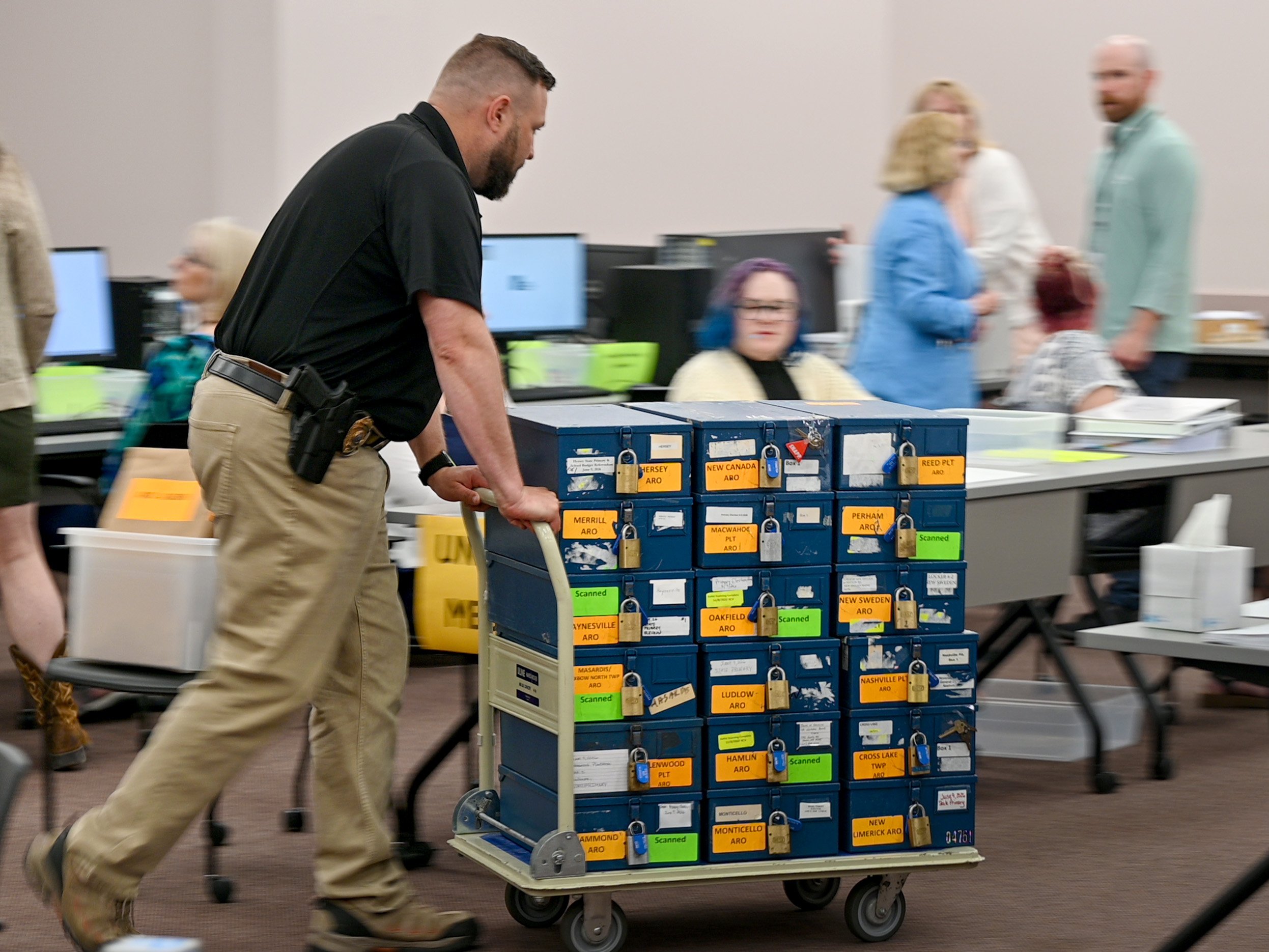
Both Alaska and Maine do not start counting absentee ballots ahead of Election Day, with legislative efforts to change that failing in both states over the years.
Alaska Gov. Mike Dunleavy, a Republican, vetoed a bipartisan election reform bill in April that included changes meant to speed up election result reporting. Alaska accepts postmarked ballots that arrive up to 10 days after Election Day.
Kendall quipped that is “because our mail sucks up here.”
When did Alaska and Maine implement RCV?
Maine became the first state to adopt ranked-choice voting when voters passed a referendum in 2016 by a 52% to 48% margin. (Portland had started using it at the local level in 2011.) The system survived various legal challenges and repeal efforts over the years, but based on Maine Supreme Judicial Court interpretations of the state Constitution, it does not apply to gubernatorial and state legislative races in the November general elections.
Maine first used the system in the 2018 midterms, and it produced drama right away in the 2nd Congressional District race. Golden was about 2,600 votes behind Poliquin, the Republican incumbent, after the initial round before Golden saw reallocated votes from two independents push him past Poliquin to win 50.5% to 49.5%.
Alaska voters followed Maine in 2020 by narrowly approving a referendum to use ranked-choice voting in general elections for all state and federal offices. The initiative passed by about 1%, and it also established a unique “nonpartisan top four” system for Alaska primaries in which the top four vote-getters, regardless of political affiliation advance to the general election. (Alaska does not require primary candidates to join a party to run for office.)
Alaska’s new system took effect in 2022, in time for a special August election to fill a vacant seat after U.S. Rep. Don Young, a Republican, died earlier that year.
Peltola, a Democrat, beat two Republicans, 2008 vice presidential nominee Sarah Palin and now-U.S. Rep. Nick Begich, in the ranked-choice election that saw Peltola lead after the first round, and then beat Palin by a roughly 51.5% to 48.5% margin after Begich was eliminated.
Alaska has also seen Republican victories in high-profile runoffs, including when Begich challenged Peltola again in 2024 and unseated her in a ranked-choice runoff. And in 2022, when U.S. Sen. Lisa Murkowski, a Republican with a moderate record, beat another Republican, Kelly Tshibaka, who was endorsed by President Donald Trump and the Alaska Republican Party.
Do Alaska voters support their RCV system?
A referendum to repeal Alaska’s ranked-choice voting system in 2024 failed by just a few hundred votes. Kendall noted that complaints remain, and that additional repeal efforts may occur until they fail by a “substantial margin.”
However, majorities of Alaskans have also responded to exit polls by saying they either like RCV, or at least find the system “simple” to use.
Ranked-choice voting advocates recommend that election officials release a round-by-round tally of preliminary results on election night, and continue to update those tallies as votes come in to avoid frustration and stop the spread of disinformation. Neither state looks to be ready to enact that recommendation, at least for now.
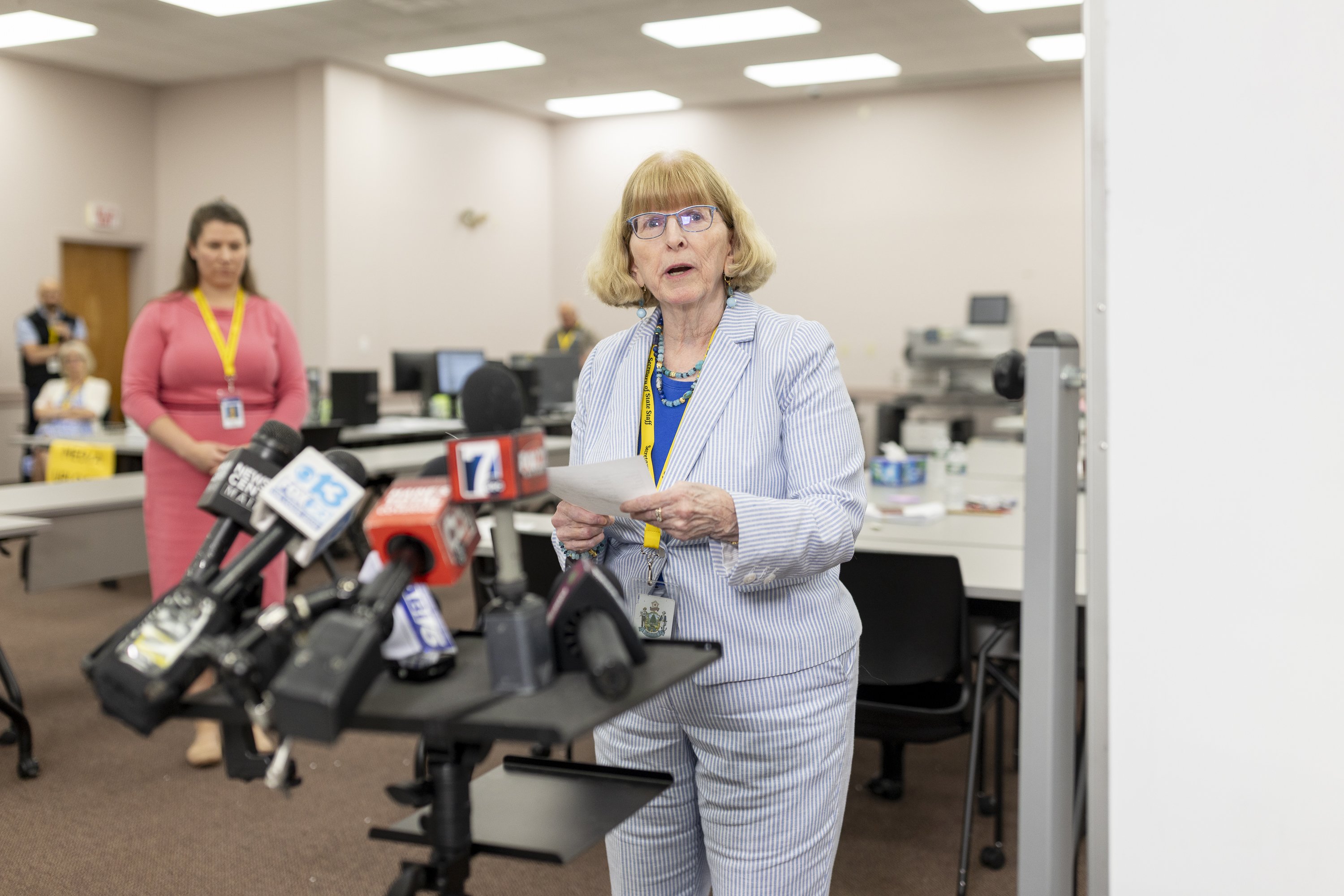
Jana Spaulding, spokesperson for the Maine secretary of state’s office, said the runoff system “processes the complete races at once, meaning it is not possible to release round-by-round results until the final results are available because they all generate at the same time.”
Even with the past repeal attempt, Kendall noted that more than 60% of Alaska voters do not identity with either major party, that rates of “spoiled” ballots marked incorrectly have been lower in the ranked-choice system than in the old system, and that opposition to the system tends to come “at the extremes” on both the left and right in the state.
Candidates of various political ideologies have won Alaska’ ranked-choice elections, added Kendall, an Anchorage resident. And while Maine Republicans have tended to be the chief critics of the system in the Pine Tree State, a growing share of Alaskans have only voted using RCV.
“Young voters vastly, overwhelmingly support the system,” Kendall said. “It cuts along a lot of different, interesting lines.”

We invite you to add your comments. We encourage a thoughtful exchange of ideas and information on this website. By joining the conversation, you are agreeing to our commenting policy and terms of use. More information is found on our FAQs. You can update your screen name on the member's center.
Comments are managed by our staff during regular business hours Monday through Friday as well as limited hours on Saturday and Sunday. Comments held for moderation outside of those hours may take longer to approve.
Join the Conversation
Please sign into your Press Herald account to participate in conversations below. If you do not have an account, you can subscribe here. Questions? Please see our FAQs.