


On a coastal stretch of Route 1 in York, a large house sat for years, dilapidated and crumbling. No one ever lived in it, and no one ever will.
After being vacant and abandoned for the past 15 years, the town finally decided this week to demolish the building. The demolition began Tuesday, and by Friday, all that was left was the foundation and the chimney.
York has owned the 46.2-acre lot and the structure — which many residents called an eyesore — since 2011, when the town purchased them for $1 million from a builder who left it unfinished.
From an attempt to sell the property to a plan to burn the house down, here’s what to know about the home and its history.
Why did York buy the house?
Located at 1045 U.S. Route 1, the home was known as the Blinn House after its builder, Donald Blinn, who died in 2011. About a year prior to Blinn’s death, York sent him a letter expressing interest in purchasing his unfinished home. Officials say they bought it mostly for the land underneath it.
“We bought that land originally to construct the Short Sands Connector Road between York Beach and Route 1 many years ago,” said Town Manager Peter Joseph. “The house just kind of came with it.”
The home sat right along the state highway, but the entire parcel of land stretches along much of what is now Short Sands Road, which acts as a throughway between York Beach and Route 1.
Why did Blinn never finish building?
Denise Nemeth-Greenleaf, a friend of Blinn and his wife, Sara “Sally” Blinn, said online theories that the couple went bankrupt or divorced are simply untrue.
“Sally and Don were very happily married.” she said. “Don had gotten sick. He was failing, and the building was sold.”
Blinn was adamant that he wouldn’t sell the property, but it became inevitable, Nemeth-Greenleaf said. Sally was busy taking care of her husband and the rest of their family and couldn’t take on the responsibility.
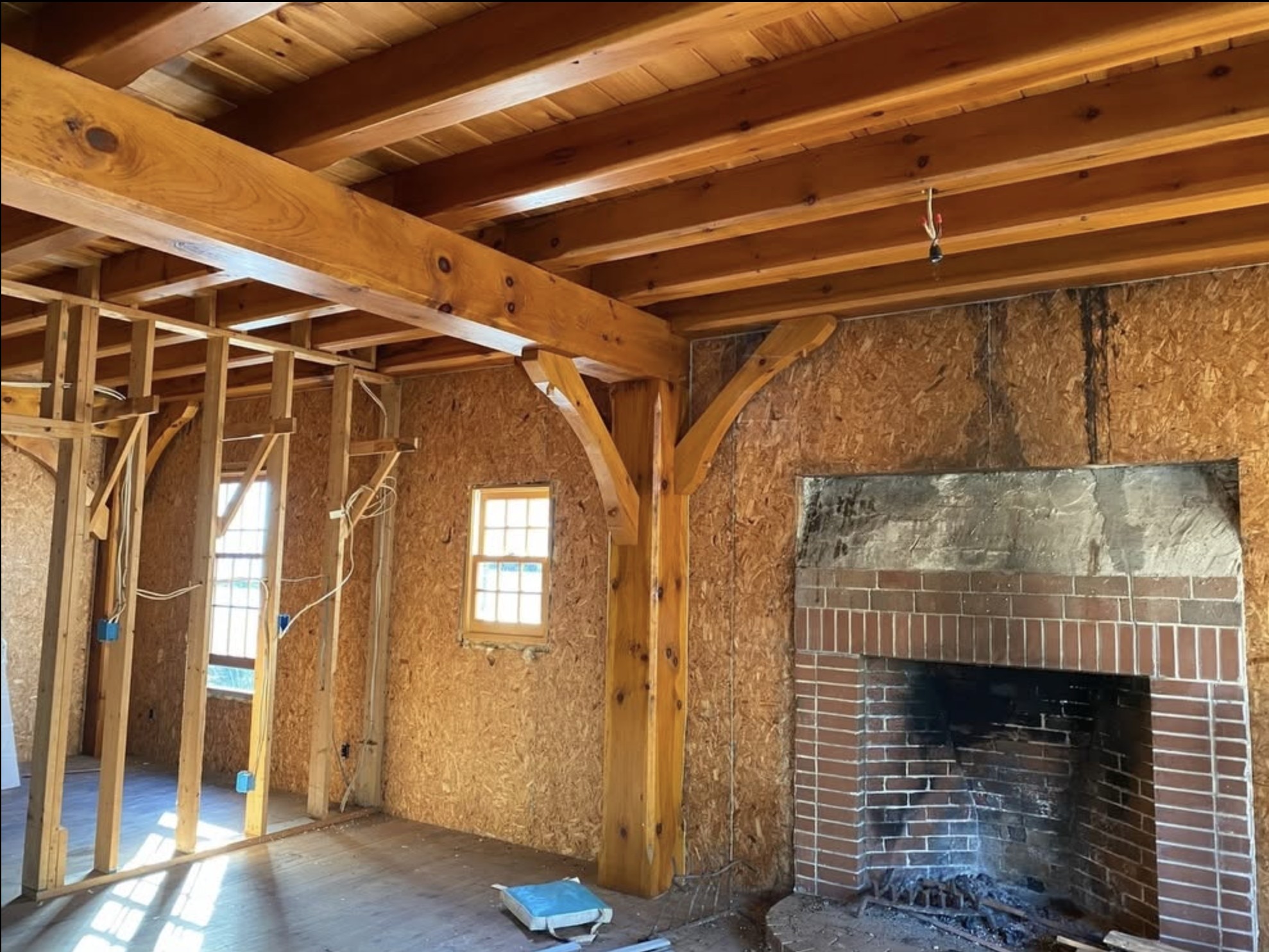
Blinn began building the home over 20 years ago as a post-retirement project. And what locals called an “eyesore,” Blinn called “The Bunker.” He wanted to build a grand home that could withstand any weather, Nemeth-Greenleaf said.
He used a solid wood front door that was 3 inches thick, flooring made from trees he had delivered to the home, large brick fireplaces and strong windows.
It was a large — over 6,000 square feet, according to Nemeth-Greenleaf — and had potential to be a multifamily home. At one point, Blinn asked Nemeth-Greenleaf and her husband to move in, though they never did.
“It was as beautiful as any cathedral, and it was built with love and care. To see it fall into such a state of disrepair throughout the years is just heartbreaking,” Nemeth-Greenleaf said. “I actually cried when I heard the news that they were demolishing.”
What options did the town consider for the house?
At the time the town bought the home in 2011 officials suggested it be converted for municipal use, such as a new police station. But there wasn’t an immediate need for a new police outpost, and Joseph said the home was probably half-finished at that point.
Then, in 2012, the town tried to sell the structure without the land. It wasn’t on the market for long. No one was interested.
Blinn used almost no steel; instead, he used self-made timbers, which meant the home wasn’t attractive to anyone looking to buy it for salvaged materials, or to relocate the building.
Its proximity to the beach and the potential to turn it into a business or multifamily dwelling made it a desirable buy, Joseph said. But rehabbing the structure would have been a long and expensive process.
“There’s not a ton of interest in moving a partially finished structure that’s been partially open to the environment for 15 years onto another piece of property in town,” Joseph said. He thinks people would have been more interested if the home and land had been packaged together.
The town said it was burning the house down. What changed?
After a series of ideas that never panned out, the selectboard decided last year that Blinn House would be set on fire to train town firefighters. Such a training burn would clear out unwanted vegetation and get rid of the structure in a more cost-effective manner than demolition, York Beach Fire Chief Jeff Welch said last fall.
Contractors were ordered to burn the home down within 60 days but decided shortly after to find a different solution.
Welch said in an email this week that the contractors determined the house was too close to surrounding electric utilities to burn. Along Route 1 is a trunk line with fiber-optic cables and other communication wires that could have been damaged.
After the June 22 meeting, the Public Works employees removed vegetation from the site to clear the land for demolition. The town awarded a contractor over $44,000 to complete the project.
Officials could not provide an estimate of a burn cost because they never followed through with a full quote. But much of the cost for the demolition comes from hauling debris off the property. Though not everything in the home is combustible, there would have been far less to transport if the home had been burned.
“Demolition was a last resort,” Joseph said.
What’s next for the property?
Over the years, the town has heard several proposals for what the site could be used for.
“We did get more than a few people saying, ‘Yeah, we’d love to build a great location for a gas station, great location for a convenience store, great location for a shopping development, or something like that,’” Joseph said. “But we weren’t interested.”
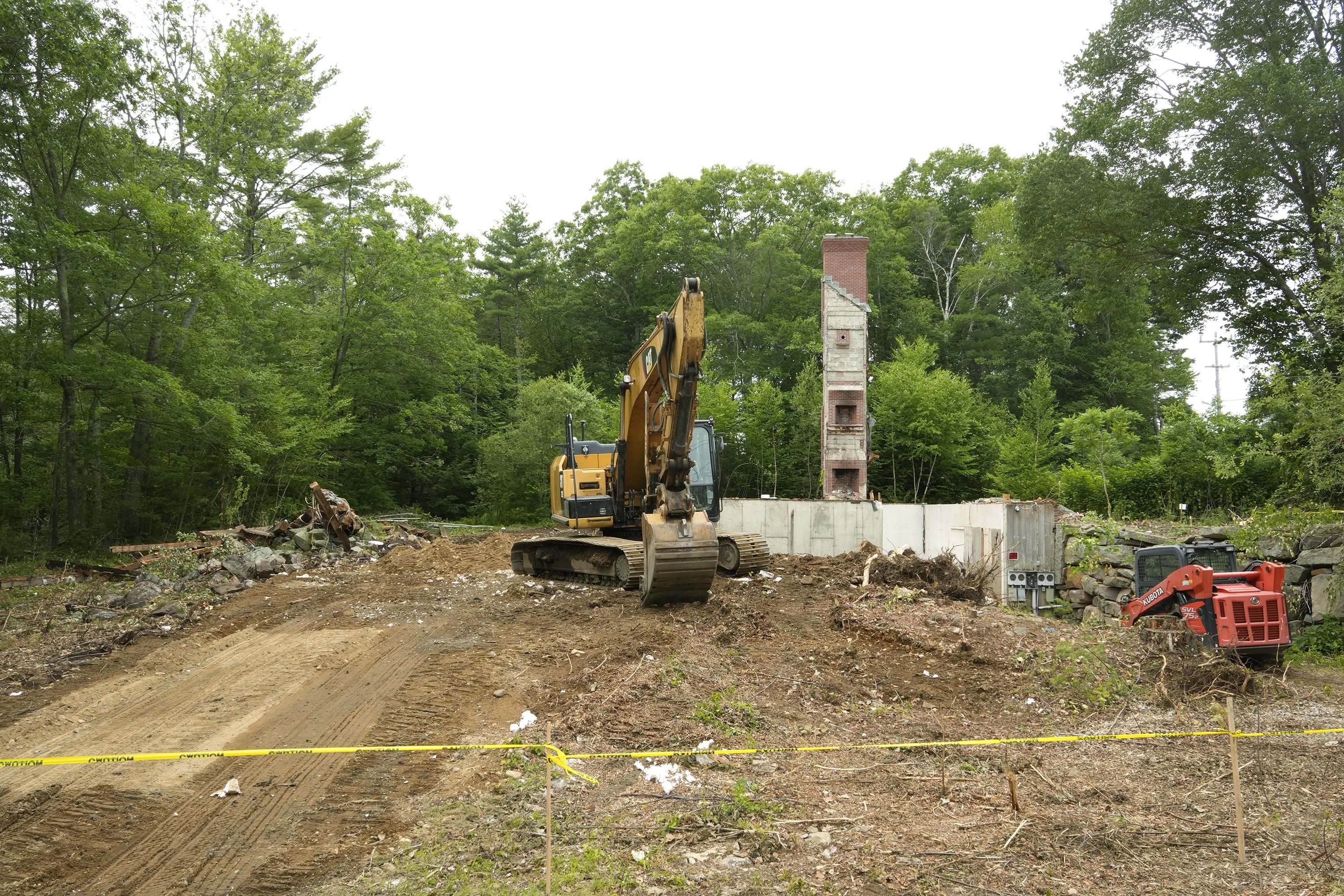
The town’s priority is to retain the land, though officials have no current plans to develop it.
“I think the long-term vision is that — though we don’t have any need right now — if the town needs a facility in the future, that is a fantastic location,” Joseph said.
The most frequent suggestion he has heard among town officials is that it should be considered for a future public safety facility.

We invite you to add your comments. We encourage a thoughtful exchange of ideas and information on this website. By joining the conversation, you are agreeing to our commenting policy and terms of use. More information is found on our FAQs. You can update your screen name on the member's center.
Comments are managed by our staff during regular business hours Monday through Friday as well as limited hours on Saturday and Sunday. Comments held for moderation outside of those hours may take longer to approve.
Join the Conversation
Please sign into your Press Herald account to participate in conversations below. If you do not have an account, you can subscribe here. Questions? Please see our FAQs.