

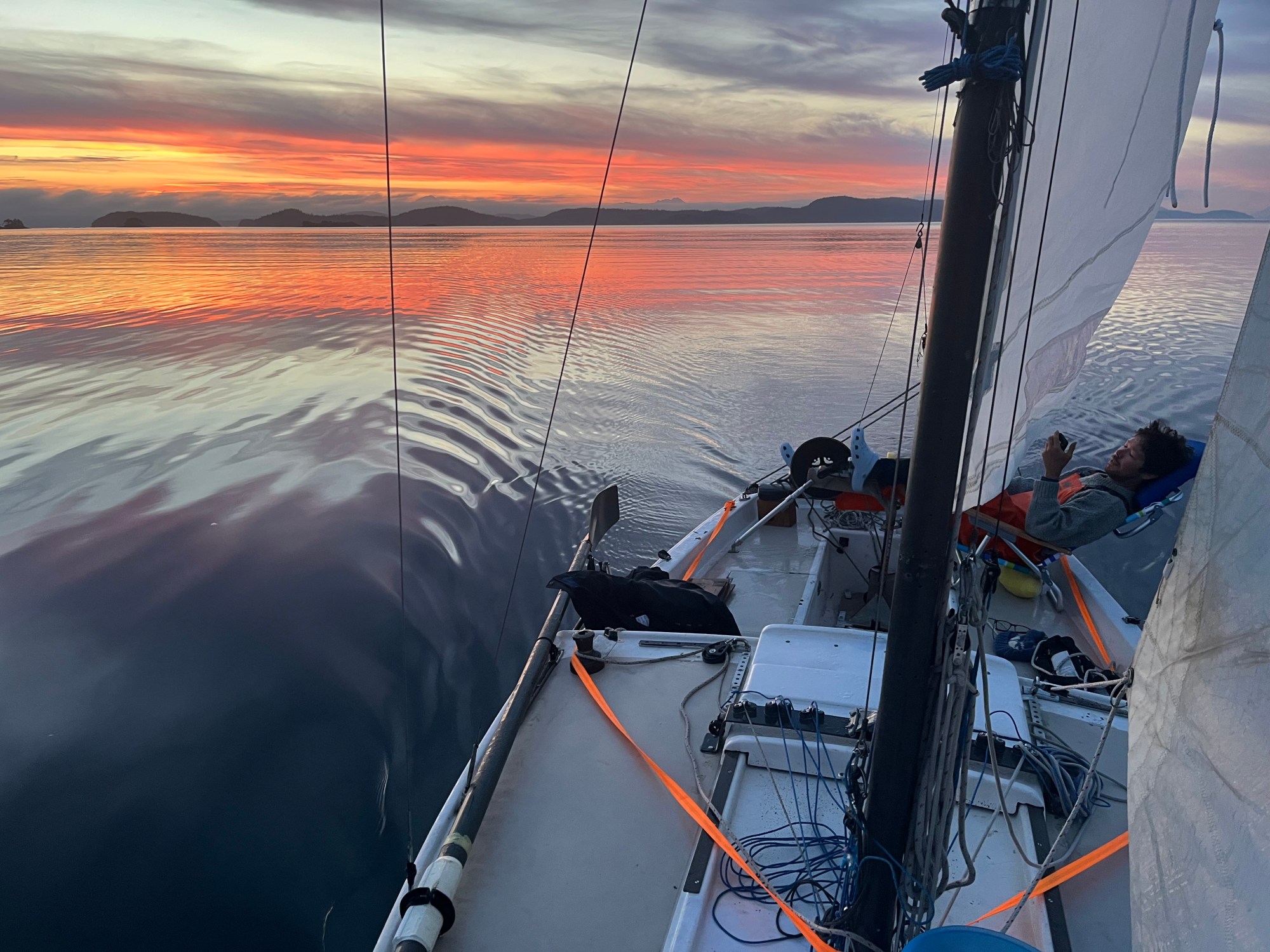
Explain to someone aboard a cruise ship why you’re navigating a small sailboat up Johnstone Strait, off the coast of British Columbia, in 25-knot winds at 3 a.m.
That’s what Russell Melin did last week.
Yes, Melin explained over the radio, he and his two crew members, together known as Team Pelagic Banana Slug, were zigzagging a 20-foot sloop up the narrow channel between Vancouver Island and the Discovery Islands in the wee hours of June 22 to catch the favorable tide.
Yes, Melin confirmed, their craft, The Slug, was out of the cruise ship’s way, as were a handful of other small boats making the same bid through the windy channel.
“Can I ask you something?” said the person aboard the cruise ship. “Are there, like, rowboats out here right now?”
“Yes, there are.”
“Uhh. OK.”
Melin, 31, and his crewmates, Tripp Seaman, 37, and Meghan Haviland, 27, are working sailors in Maine.
Melin and Seaman are skippers, Haviland a mate, aboard the enchanting gaff-rigged schooners of old in Portland and Rockland, leading tours that might seem to accentuate the glamour of the seas.
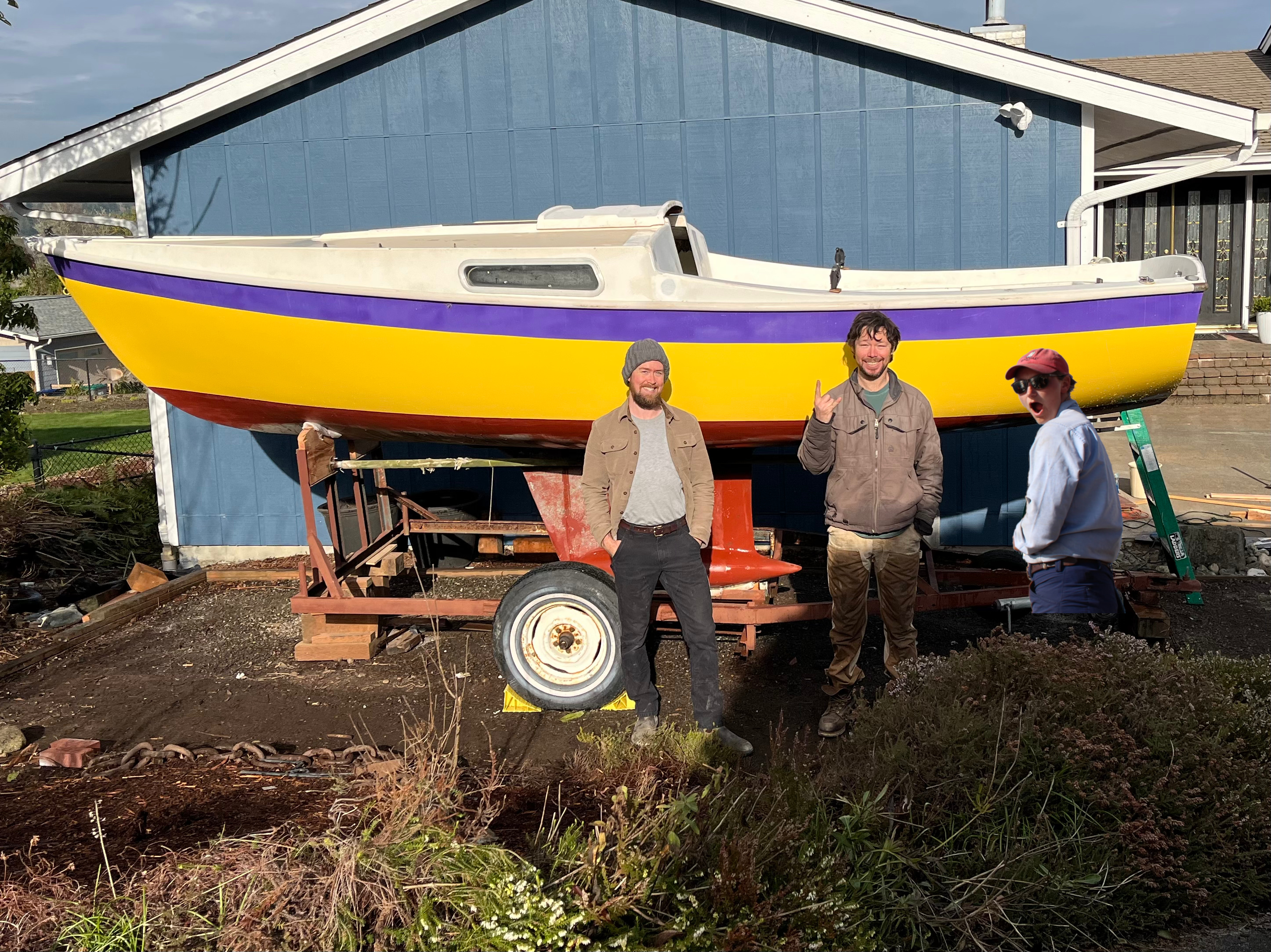
So what possessed them to take leave from their day jobs on the (often) sunny coast of Maine, head for the Pacific Northwest, hop aboard The Slug, a 60-year-old, $300 Facebook Marketplace-find that “looks like a bathtub toy,” according to race organizers, and attempt the 750-mile journey from Port Townsend, Washington, to Ketchikan, Alaska?
“We’re still trying to figure that out,” Pelin said.
The biennial Race To Alaska is equal parts serious and irreverent.
Any boat that moves by human or wind-power can enter — “No motors onboard, at all, even if they’re disabled, not hooked up, filled with cottage cheese,” race rules read. Most sailboats have pedal-powered propellers to keep them moving in windless conditions.
This year, 71 teams left Port Townsend, a rag-tag armada of sailboats, kayaks, rowboats, canoes, and a lone stand-up-paddle board.
The first leg, which crosses the Strait of Juan de Fuca and ends in Victoria, B.C., is “The Proving Ground.” Boats have 36 hours to finish the segment without needing a rescue before the second and far longer leg from Victoria to Ketchikan begins.
R2AK, as it’s known, has no defined course, aside from two mandatory waypoints; by regulation, racers cannot prearrange any support; nearly all of the rules, in essence, direct competitors to stay safe and to operate within the spirit of the race.
The fastest team this year completed the race on June 22, 5 days, 8 hours and 4 minutes after leaving Victoria.
Others are still on the course.
First boat to Ketchikan wins $10,000 nailed to a piece of driftwood. Second prize is a set of steak knives.
“This seemed like a fun, kind of arbitrary challenge and goal to set for ourselves, to go and do this crazy race with a number of like-minded people in a fleet of similarly strange and outlandish craft,” Pelin said.
Pelin and Seaman found The Slug, a 1966 Cal 20, in January and set to work restoring her to something close to seaworthy. They were reattaching hardware right up until midnight before the first leg began, although, Haviland pointed out, “it might not be finished.”
The race seems to place a premium on ingenuity over efficiency, camaraderie over competition.
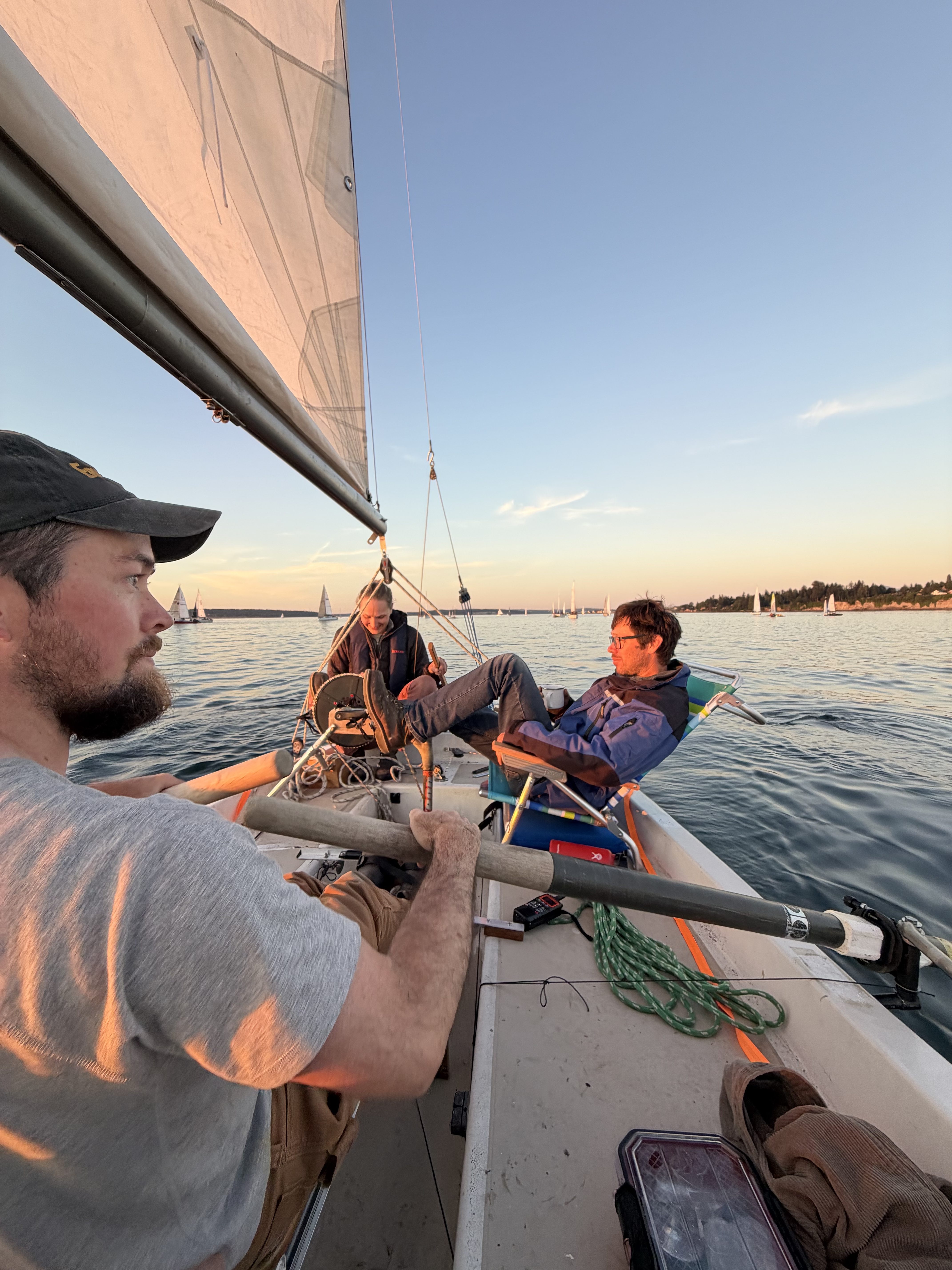
At ports along the way, the sailors found themselves among a fleet of impressed racers as they moved at something faster than a slug’s pace toward southeast Alaska.
They’d dock their tiny yellow sailboat and emerge soaking wet, exhausted and hungry, only to be greeted by impressed, experienced racers who were dry, well-fed and recently napped, Haviland said.
Roughly half the teams don’t finish the race for one reason or another.
For Team Pelagic Banana Slug, it was the passage of time that did them in. Alternating lulled winds, sucking tides and weltering seas prevented 24-hour progress, fatally restraining the vessel’s northward campaign.
The Maine-based team was not going to make it to Alaska before they were due back aboard the windjammers.
The team called it quits in Port Hardy on June 25, having sailed eight days and some 338 nautical miles to the northern end of Vancouver Island.
“It’s obviously a disappointment not to finish the race, especially for a reason as arbitrary and silly as we didn’t take enough time off of work,” Pelin said.
Despite their “did not finish” result, the team is still a serious contender for the Dirtbag Award, an all-prestige, no-cash prize for the team that puts the least money into the race.
Sleepless nights, running out of sunscreen, confounding weather — none of that has taken the wind out of The Slugs’ sails, at least metaphorically speaking.
“I don’t think any of us are very good at not accomplishing the thing that we set out to do,” Haviland said.
That means they plan to return to R2AK in 2028. And they will not be upgrading to a bigger boat.
Reuben M. Schafir is a Report for America corps member who writes about Indigenous and rural communities for the Portland Press Herald.

We invite you to add your comments. We encourage a thoughtful exchange of ideas and information on this website. By joining the conversation, you are agreeing to our commenting policy and terms of use. More information is found on our FAQs. You can update your screen name on the member's center.
Comments are managed by our staff during regular business hours Monday through Friday as well as limited hours on Saturday and Sunday. Comments held for moderation outside of those hours may take longer to approve.
Join the Conversation
Please sign into your Press Herald account to participate in conversations below. If you do not have an account, you can subscribe here. Questions? Please see our FAQs.