


A group of school board members, education leaders and parents in Westbrook started meeting last year to explore a new student policy on cellphones.
They were gearing up to begin a series of public forums, to figure out how the community — students, teachers, parents — would feel about banning personal electronic devices for the full school day.
“We didn’t get very far,” said Patrick Colgan, the assistant principal of Westbrook High School and a leader of that committee. “Just as we were feeling pressure to start nailing it down, the tailwind of the state process came and took some of the weight off our shoulders.”
A state law passed this spring requires every one of Maine’s 261 school districts to adopt a phone ban by the end of July.
Some had already passed bans in the years before the mandate, and some expressed reluctance. But in districts that have adopted bell-to-bell bans in the months since the state mandate, some board members say the law allowed them to embrace a measure that might have otherwise elicited pushback from community members or students.
“We were always working towards the proposal of a bell-to-bell ban,” Westbrook school committee Member Erin Cavallaro said. “But I will say, the mandate from the state made that a bit easier.”
Many schools have long had some sort of phone policy, but the new law requires school boards to adopt a strict bell-to-bell ban, which prevents student use of all personal electronic devices from the starting bell to the dismissal bell. Proponents say it’s an important step to reduce distractions during instructional time, and improve student socialization.
School boards didn’t have much time. Gov. Janet Mills introduced the ban as part of her supplemental budget and signed it into law April 10, leaving school boards just under four months during a typically sleepy time of year.
Districts have held workshops and conducted surveys to gauge community sentiment, and relied on model language provided by the state and the Maine School Management Association. Some forewent a traditional second reading of the policy to comply with the timeline.
Lawmakers in Maine have generally been reluctant to impose statewide mandates. In fact, in 2025, the Legislature abandoned language to create a bell-to-bell ban over concerns about infringing local control. Mills, however, announced her full-throated support less than a year later.

“It’s time to get cellphones out of our classrooms,” she said to bipartisan cheers during her State of the State address in January.
Maine joins 21 other states with bell-to-bell bans, and many more with a statewide ban on phones in classrooms.
EARLY ADOPTERS
Bath-based Regional School Unit 1 was one of the first districts in the state to embrace a bell-to-bell cellphone ban, which it did in June 2024. Leaders there have described the impact on learning, behavior and teacher morale as extremely positive. The following year, at least half a dozen districts — in South Berwick, Farmington, Topsham, Jay, Brewer and Portland — joined in.
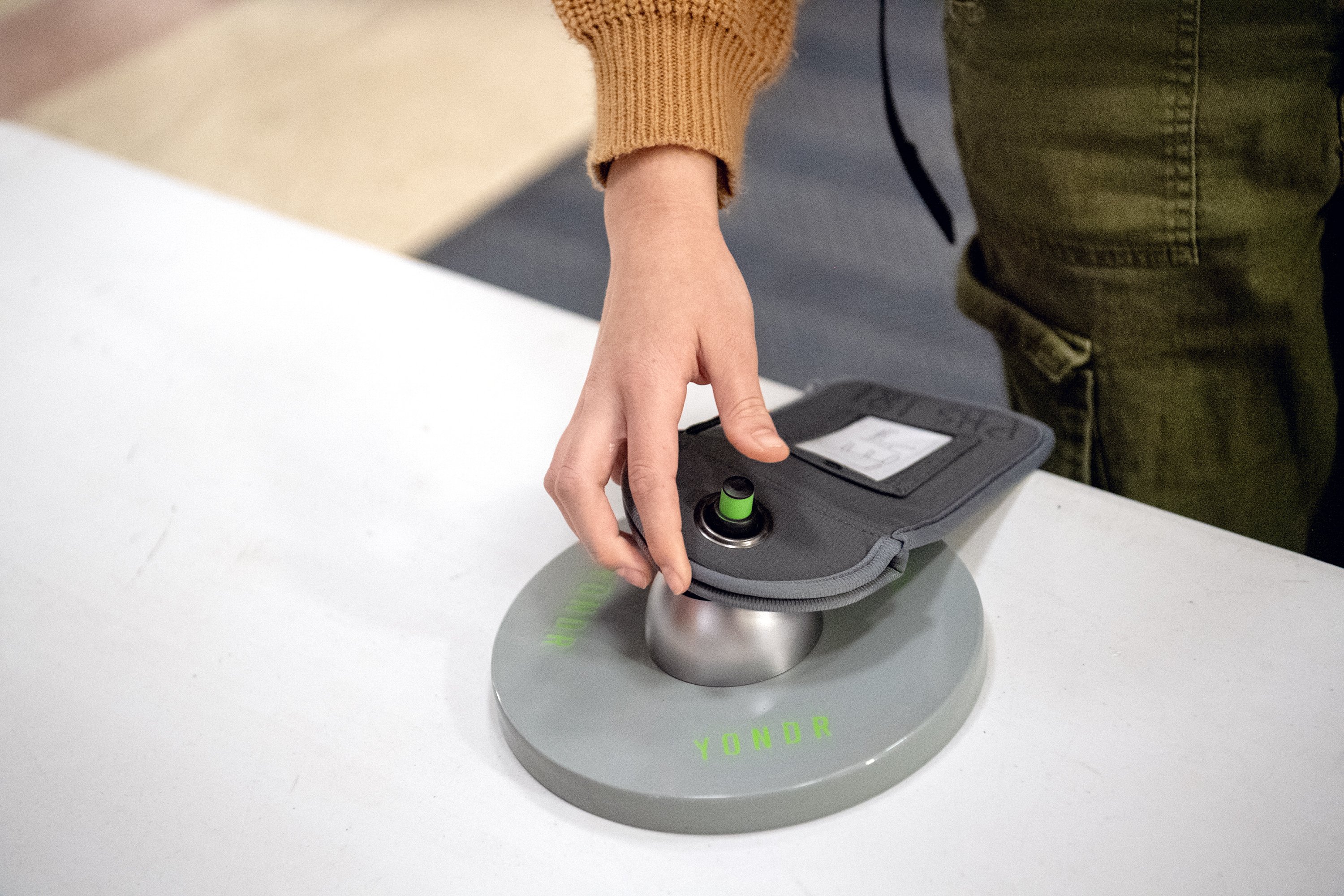
Many of those districts have opted to purchase Yondr Pouches, a brand of magnetically locking sleeves that allow students to keep their phones with them but make them inaccessible. The pouches cost about $20 to $25 per student, according to the company; Portland bought them for all of its middle and high school students at a cost of $110,000.
Another early adopter was York, where Superintendent Tim Doak said it’s the greatest decision the district ever made.
“Now that the state said it’s the best way, it just verifies that we did the right thing,” he said.
Rather than pouches, York uses what they call a phone hotel, a box with slots for devices in the front office, which Doak said was an affordable solution.
The supplemental budget included $350,000 — half of what Mills originally proposed — for the Maine Department of Education to support schools with the implementation of a cellphone ban. Department spokesperson Chloe Teboe said those funds would be proportionally distributed to any districts that serve middle or high school students, based on their October 2025 enrollment counts.
As of that date, Maine had 91,287 students in grades 6-12. That shakes out to about $3.83 per student. Distribution of funds will occur after the supplemental budget is enacted on July 29, Teboe said.
The department has no authority to monitor or sanction districts related to their adoption of the policy, she said, but it is in regular contact with school leaders and will continue to communicate about resources they might need.
‘THE STATE DID IT FOR US’
In June, Westbrook’s school committee approved a ban and the reallocation of $27,000 to buy pouches for all high schoolers. Cavallaro, the board member, said the district already had a draft of a phone ban policy ready to go when the state mandate passed.

She and Colgan, the assistant principal, had been overseeing an ad hoc committee for a year. Inspired by the success of Portland’s policy, the group decided early that it wanted a bell-to-bell ban. Both said they’re looking forward to a consistent policy that takes the burden off educators.
“Which is, I think, liberating for teachers,” Colgan said. “I think it’s liberating for students.”
In the Noble School District, encompassing North Berwick, Berwick and Lebanon, board member Alison Herlihy said she was looking forward to watching students sever their attachment to their devices when the board adopted a ban last month.
“I am so glad I didn’t have to be the person to recommend it for this school,” Herlihy said at the June meeting. “The state did it for us.”
Herlihy has long been an advocate for less screen time for kids, she said in an interview this week, and the mandate gave the district a pathway to accomplish that. She knows parents have concerns, including about being able to reach their students in an emergency, although she said law enforcement experts have consistently said that it’s safer if students don’t have cellphones in an active shooter situation.
There’s also an idea circulating online recently, she said, that cellphone bans prevent students from recording their teachers trying to ‘indoctrinate’ them. Herlihy said districts have measures in place to evaluate curricula, and students shouldn’t be recording their teachers.
Those concerns, and others, have come up in school board discussions even after the mandate.
“I know it’s state law, but I can’t vote in favor of this. I can’t do it,” Lewiston school board member Janet Beaudoin said. Lewiston passed a policy 5-2 that requires students to power off their cellphones for the day but allows them to keep them on their person. Lewiston did not purchase Yondr pouches.
“I’m sorry to the teachers and staff who have to police this,” Beaudoin said.
In Westbrook, one committee member, Noreen Poitras, voted against the policy and said she worried about safety, and the ability of parents to get in touch with their children.
District leaders say they’re gearing up for increased use of the front office phone to connect students and parents, a practice many say harkens back to their time in high school. The mandate also requires districts to make exceptions related to students with disabilities, medical needs or language translation needs.
The biggest opponents of phone bans are often students. In a survey conducted by Falmouth’s school board this year, just 11% of high schoolers supported a bell-to-bell ban, compared to 83% of staff and 79% of parents.
Mills anticipated the same resistance when she proposed the ban, but said students often come around once they see the policy in action. That was true, at least in Portland, where students who had strongly opposed the ban said it ultimately wasn’t too difficult of an adjustment.
Staff Writer Emily Duggan contributed to this story.

We invite you to add your comments. We encourage a thoughtful exchange of ideas and information on this website. By joining the conversation, you are agreeing to our commenting policy and terms of use. More information is found on our FAQs. You can update your screen name on the member's center.
Comments are managed by our staff during regular business hours Monday through Friday as well as limited hours on Saturday and Sunday. Comments held for moderation outside of those hours may take longer to approve.
Join the Conversation
Please sign into your Press Herald account to participate in conversations below. If you do not have an account, you can subscribe here. Questions? Please see our FAQs.