
CASCO – The three state agencies that oversee the historic Songo Lock in Casco decided this week to step up boat inspections instead of closing the historic lock to boating traffic.
Peter Lowell, executive director of the Bridgton-based Lakes Environmental Association, originally called for the lock’s closure in mid-July due to rapidly growing swaths of milfoil in the Lower Songo River below the lock. Warm weather has led to ideal growing conditions as well as a heavy boater presence, he said, and in reaction the milfoil is spreading rapidly into the boating channel of the narrow river.
Just last week, a boat inspector at the Lock found milfoil wrapped around a boat’s propeller, milfoil that without the inspection would have found its way into the Upper Songo River or Brandy Pond, or even Long Lake, which has yet to see milfoil take hold.
While Lowell failed to convince the Department of Conservation, Department of Environmental Protection and Department of Inland Fisheries and Wildlife – all of which have some stake in the lock’s operation – of the merits of a complete closure, he managed to convince the agencies to devote more money to fund increased milfoil inspections of boats passing through the lock. The boat inspections, performed by both paid and volunteer inspectors, will cease to be “courtesy boat inspections” but, according to Lowell, will be mandatory.
“I’m happy to see it. That means nobody can blow you off,” Lowell said Tuesday.
The only downside to the increased inspections, Lowell said, was the likely delay for boaters going through the lock during busy periods. Those delays, with boats having to wait in line below the Lock, could mean boats wandering into nearby milfoil patches and getting milfoil entangled somewhere on the boat or propeller. So, while he’s encouraged to see “the state agencies taking this problem very seriously,” Lowell is still “really nervous” that the inspections will fail to stop all milfoil fragments being ferried through the lock, from the infested areas south of the lock to the relatively milfoil-free zones above the lock in the Upper Songo River and Brandy Pond. As a result, he is renewing his request that boaters visiting the lock remain “on their side, don’t cross through the lock, so we avoid contaminating the upper reaches.”
Lowell said Wednesday should be the first day the locks are staffed throughout the entire day, each day. He said at least two inspectors working eight-hour shifts would be located at the lock each day, overlapping in the middle of the day, which is the busiest time for boating.
“We’ve been slowly ramping up to this over the past few weeks. And we’re happy to have more volunteers. Friday to Monday are our busiest times at the Lock, so we’re looking for competent volunteers,” Lowell said.
Since news reports of the group’s call to close the Lock several weeks ago, Lowell said three new volunteers have undergone training to become boat inspectors. In addition to the new volunteers, Lowell has received about $10,000 from the state to hire new inspectors for the remaining of the season. So far this season, the LEA had spent about $6,000 on paid inspectors at the Songo Lock alone. Paid inspectors receive minimum wage and usually have more experience than volunteers.
Dredging up a real solution
The decision to keep the lock open while stepping up inspections is being hailed by local business leaders who have said the lock’s closure could decimate the tourism-based economy in the Lakes Region and send the message that the area’s lakes aren’t healthy.
Naples-based Moose Landing Marina owner Dan Craffey said this week that the solution was just “common sense” given the economy and how important the lock is to local boating. However, Craffey believes a permanent solution would be dredging the length of the Songo River, which has filled in over the years, providing a haven for milfoil. Since milfoil can only grow in water less than 12-15 feet deep, digging a deep channel, Craffey said, would prevent milfoil’s spread.
“If they do dredge, that would resolve the issues. Closing the lock is not the answer. It’s just common sense,” Craffey said.
Lowell agrees that dredging is a solid answer to the problem. “We think it’s one of the better solutions for the lower river, definitely. And it is something we’re talking about, dredging the shelf around the shoreline. But it’s something DEP would have to get funding for,” Lowell said.
Rep. Rich Cebra, R-Naples, has been in talks with Lowell and local businessmen regarding the infestation for several weeks now. He also eyes dredging as a cost-effective and permanent solution.
“The economic impact could be phenomenal,” said Cebra, likening it to a game of dominoes where the loss of the boating-based sector of the Lakes Region economy could lead to the downfall of the entire region’s economic health. If milfoil is left to thrive and choke off lakes as it has in other states, Cebra said, everything from real estate and home construction to marinas and restaurants could feel the impact.
Through the 1970s and 1980s, Songo River Queen owner Frank Gerrish routinely dredged the entire length of the Songo, getting paid about $15,000 annually by the state to do so. Gerrish has said the state “stupidly” stopped paying for the service, allowing the river to fill in with silt pouring in from upstream sources. Gerrish said an initial dredging could cost $500,000 since the river is so clogged. Rep. Cebra said environmental regulations would also require the removed silt and sand to be trucked away, adding to the cost.
“If the state had been dredging the river as it used to 20 years ago, I’m sure we wouldn’t be talking about this right now,” Cebra said. “This is clearly something the state should have taken more seriously. But because of misplaced priorities, they’ve just let the river fill in and deteriorate. I’d say the state deserves their fair share of the blame.”
While a possible dredging could cost many thousands of dollars, Cebra issued a press release Tuesday praising the decision to increase inspections and in it looked toward dredging as a viable solution.
“I’d like to thank the (state agencies) for working on this issue together with the LEA and local businesses and town government. Inspections below the Lock sound like a reasonable, effective compromise that balances the needs of the environment and the interests of local area businesses,” Cebra said. “I hope in the near future we can all get together for a meeting and talk about formulating a plan for the long overdue dredging of the river.”
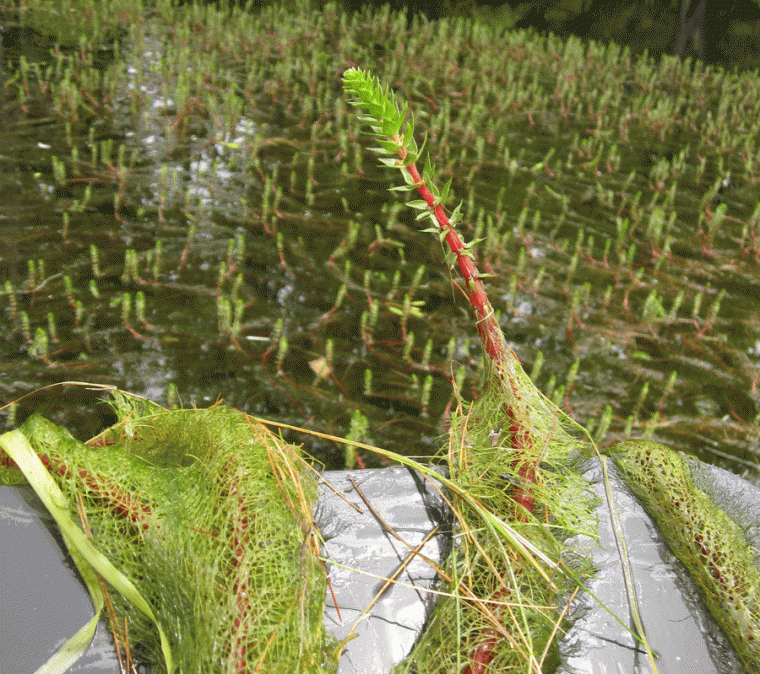 An oar full of variable leaf water milfoil shows how dense the invasive weed in the Lower Songo River has gotten in recent months as warm temperatures and heavy boating have combined to threaten the health of the river. The state has decided to keep the Songo Lock open, despite calls by the Lakes Environmental Association to close it. Instead, the state has dedicated more money from the state’s milfoil sticker program to fund full staffing at the popular lock. (Courtesy photo)
Comments are no longer available on this story