
FREEPORT – Peter Richardson, who owns an apiary in Freeport, will speak on the value of backyard beekeeping during the annual meeting of the Cumberland County Extension Association, Wednesday, Sept. 17, at 6 p.m., at the University of Maine Regional Learning Center in Falmouth. The public is invited to both the meeting and a light meal, beginning at 5. There is no cost.
Richardson, 57, is president of the Cumberland County Beekeepers Association, and is a master beekeeper with the Eastern Agricultural Society. He teaches beekeeping courses through the University of Maine Cooperative Extension.
Born and raised in Portland, Richardson and his wife Beth, a master gardener and food preserver, have two grown sons. He has been beekeeping since 2008, having gained interest at a beginner’s class offered through the Cooperative Extension.
“Ironically, I now teach that class,” Richardson said.
Richardson took some time recently to answer questions about beekeeping in Maine for the Tri-Town Weekly.
Q: What about the toxins found in plants from big-box stores that have been linked to bee deaths? Has the problem been addressed, in your estimation?
A: You are referring to neonicotinoids, a family of pesticides that are widely used in commercial farming operations and commercial landscape nurseries. They are “neuro-active insecticides” that, while they are less toxic to mammals, are highly toxic to insects. They are systemic pesticides, meaning that they get incorporated into the plant. They also are slow to degrade; thus, if they get into soil from inoculated plants, they stay in the soil and can be taken up by other plants that were not originally treated. Neonicotinoids have been linked to colony-collapse disorder, the much-publicized cause of honey bee colony decline. Despite compelling research indicating toxicity to honey bees and honey bee colony health, these have not been banned by the EPA. This problem has not been addressed. In Maine, beekeepers are engaged in a grass-roots effort to get so-called big-box retailers from selling neonicotinoid-treated plants. Q: Where is your bee operation? How many hives do you have, how much honey do your bees produce and what do you do with it?
A: While I live in Portland, I keep my bees on a small farm my wife and I own in Freeport. I currently have eight hives, and we grow a variety of fruit trees and vegetables on the farm. It is very small scale but manageable for two people with full-time jobs. The amount of honey produced from year to year varies widely with weather conditions, plant conditions and hive health. On average, one can expect to harvest about 60 to 100 pounds of honey per hive per year. Sixty pounds equates to 5 gallons. In a good year, I sell my surplus honey through farm markets. I always keep enough for our personal use and to give as gifts. People love to be given a jar of raw, local honey. I always get asked for more.
Q: Is this a costly pastime?
A: Not really. Startup costs for two new hives is about $500. After the initial outlay, ongoing costs are minimal. And you can recoup that quickly by selling not only honey, but beeswax products like candles and salves. Well-packaged local honey can sell for $10 per pound or more. Selling 60 pounds will recoup your initial investment.
Q: How many bees in a hive? What is a super? Should beekeepers know how to make their own supers?
A: The population in a hive varies from season to season. At the peak, there are 50,000 to 70,000 bees in a single hive. By the end of winter, that dwindles to 10,000 to 20,000. A super usually refers to a hive box used specifically to collect honey. Beekeepers must leave enough honey in the hive for the bees to survive the winter without starving. The supers are extra hive boxes that collect surplus honey and are removed at the end of the honey harvest. A hive consists of wooden several boxes that hold frames of wax combs on which the bees raise their brood and store their food. Add to that covers and bottom boards to round out the complete hive. This so-called woodenware can be made in one’s workshop but most people buy it from a supplier. These are purchased either fully assembled or in pre-cut parts that require gluing and nailing. No carpentry skills are needed.
Q: Do you have a sense of the health of Maine’s bee population?
A: Maine’s honeybee population is generally in good health. The Maine State Beekeepers Association has worked hard to provide educational programs and information to the public and beekeepers to support honey bee health. We are also blessed with excellent state apiarists, Tony Jadczak and Dave Smith, who are diligent about controlling diseases and inspecting hives brought into the state for commercial pollination. In addition to honeybees, we are all dependent on native pollinators, like solitary bees, bumble bees, certain flies, butterflies, moths, bats and hummingbirds for pollination of our gardens. While honeybees are managed by humans, who can detect and deal with problems early, our native pollinators have no such protectors. Human activities have destroyed and fragmented many native pollinator habitats. We can all help them by planting bee-friendly gardens, including pesticide-free water sources, being diligent about the use of any pesticides (such as lawn applications), and allowing dandelions and clover to grow in our yards.
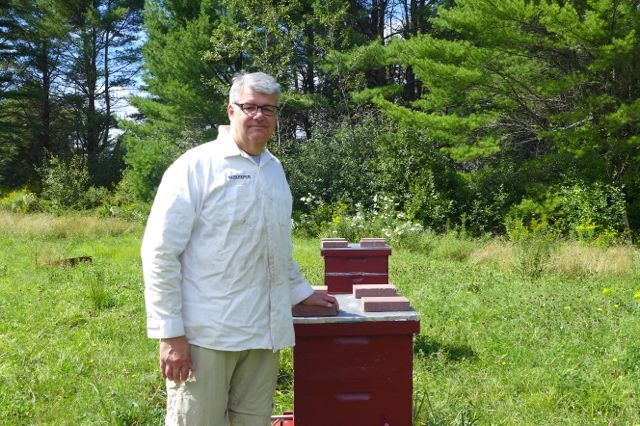 Peter Richardson
Comments are no longer available on this story