
The burdens put upon families dealing with an aging and/or ailing family member is something U.S. Sen. Angus King knows personally – both his mother and his wife’s mother spent time in assisted living facilities.
King, the junior senator from Maine and a political independent, served as Maine’s governor from 1995 to 2003. Since he went to Washington in 2013, he has co-sponsored legislation that seeks to improve care for the elderly, as well as to provide help to those caring for elderly family members.
King was a co-sponsor of The Living Independently for Extended Time (LIFETime) Act, which was introduced by Sen. Mazie Hirono, D-Hawaii, last December. The bill would direct the Department of Health and Human Services to create two grant programs to support increased access to long-term supports and services. According to King’s office, the first grant, authorized at $50 million, would support state planning via stakeholder meetings to identify innovative opportunities to address long-term supports and services. The second – authorized at $250 million – would support the development of pilot programs to expand long-term supports and services capability.
King is also a cosponsor of The Healthy Families Act, which was introduced by Sen. Patty Murray, D-Washington. The legislation, according to King’s office, would require employers with more than 15 employees to allow employees to earn up to seven paid sick days per year. Those sick days can be used for care for the employee or the employee’s spouse, child or parent.
Last December, King also introduced The Strong Families Act with Sen. Deb Fischer, R-Nebraska, which would provide tax credits to employers who provide paid family or medical leave to their employees. As King noted in an op-ed piece on CNN.com, there are more than 43 million Americans who provide direct care to older family members. In addition, nearly half of middle-aged adults have elderly parents and are still supporting their own children.
My Generation asked King several questions about these issues.
Q: What do you see as the biggest challenges for Maine in dealing with these long term care issues?
A: Well, Maine is the oldest state in the country. We have the highest median age and we have many, many people in the baby boom generation moving into being seniors, and quite often, people in their mid to late 60s are taking care of one or both of their parents in their 80s or 90s. That’s a very common situation.
Q: Have you personally had any experience with these issues?
A: My mom was in assisted living and Mary’s (wife Mary Herman) mom was in assisted living in a place right across the river in Topsham. So, we weren’t doing the hands-on care, but we spent a lot of time with her. The problem in Maine is that we don’t have a lot of housing options for seniors, particularly in rural areas, so the burden falls back on families.
Q: I know you have co-sponsored several pieces of legislation that deal with caregiver issues. Could you describe them and what you hope they will accomplish?
A: The first bill is giving companies a tax credit to provide family leave. It’s not mandatory. It’s voluntary. But it provides an advantageous tax credit to encourage this. The second one is with Sen. Maizie Hirono, a Democratic senator from Hawaii, which would authorize federal funds to states to support planning grants and pilot programs to see what will work. It’s not a panacea, but it’s to encourage experimentation in the states using federal funds.
Those are two that I’ve been working on. The other, I just signed on with Sen. Patty Murray, a Democrat from Washington state, allowing people to earn seven paid days of leave a year from being employed and working for the company. We’re one of the few countries in the world that doesn’t have required sick leave and paid family leave. Suriname, Papua New Guinea and the United States are the only countries in the world that don’t provide some kind of mandatory sick leave. Those are short term. But they’re some of the things I’ve been involved with.
Q: Why is the U.S. so far behind the rest of the world in terms of its attention to these issues?
A: There’s a lot of political opposition to the idea of a mandatory paid family leave in Washington. Part of the significance of Deb Fischer’s and my tax credit bill is that she’s a Republican and it’s been difficult to get them engaged in this issue, particularly if it’s mandatory. But the two of us felt that this was something we could move and subject to budget constraints, I’m still optimistic that this might be a compromise. It would be a significant incentive for companies to provide. My orientation is rather than engage in wishful thinking, I try to figure out what we actually might get done.
Q: In what ways would these pieces of legislation change things?
A: It’s important to emphasize that there are two separate issues when you talk about caregiving. One is paid family leave that, even in the most generous situations, is a relatively short-term proposition – a couple of weeks, maybe four weeks a year. It’s if you have someone with an immediate health crisis or have to get someone to a doctor.
That’s different from long-term care for parents and how to ease that burden of family care and respite care so that the caregivers have some time off. There’s nothing new about that. People have been having mother-in-law apartments and having to take care of elderly parents for thousands of years, but what’s different now, I think, is that more people are facing this kind of reality because of the demographics of society.
Q: Are you optimistic about our ability to deal with long-term care issues?
A: There are lots of ideas out there that communities are working on. It will probably take some time, but I think as people are aging, there’s going to be a greater demand for some programs. They may not be big expensive programs, but they’re programs that can ease the burden. And that’s where you get to the creativity of individual communities and individual families to figure out how to best deal with what is going to be an issue that is only going to grow in significance as we live longer.
People are doing good work on these issues. A name that comes to mind is Stacy Frizzle, executive director at People Plus in Brunswick. Also, Sen. Susan Collins is the Senate chair on the special committee on aging. She’s right in the middle of these issues.
Q: Do you think the increased attention to Alzheimer’s and dementia will turn the long-term care situation into a crisis that can’t be ignored?
A: I always hesitate to use the term crisis, but it’s certainly a major issue. Alzheimer’s and other issues of dementia are an aspect of it. At some point, Alzheimer’s and dementia patients can’t be cared for at home and the question is: Do we have adequate long-term care facilities that Alzheimer’s patients need.
Again, that’s a particular issue for the baby boom generation. It would be interesting to draw a chart that shows this big bubble of people who are now in their mid to late 60s and in 10 or 15 years will be in their 70s, 80s and 90s. That’s something new. The ratio of people over 65 to people under 65 is changing significantly and that’s a function of medicine and diet and living healthier lives. That’s something that we are going to have to deal with.
Joanne Lannin, who lives in Gorham, is a high school English teacher and freelance writer.
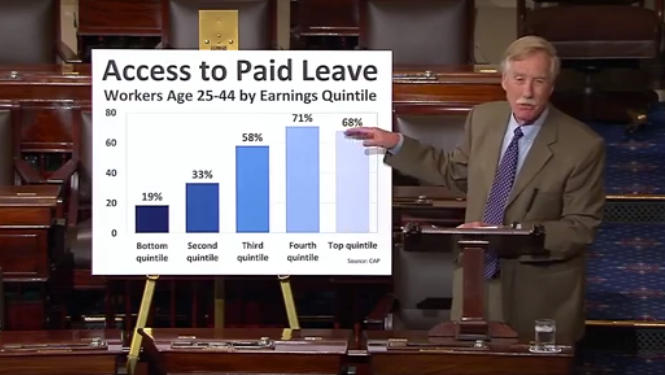
Maine Sen. Angus King discusses The Healthy Families Act, he co-sponsored with Sen. Patty Murray, D-Washington. He says the legislation would require employers with more than 15 employees to allow employees to earn up to seven paid sick days per year.
U.S. Senate Photographic Studio
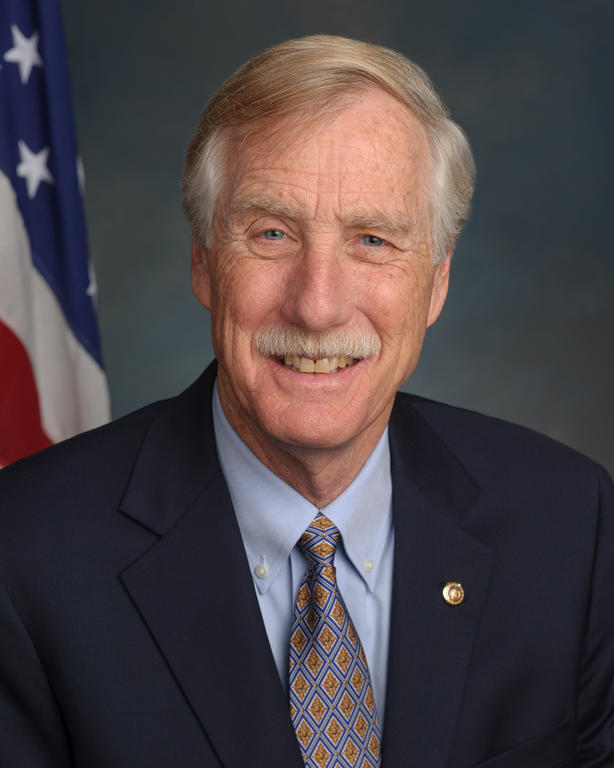
“My orientation is rather than engage in wishful thinking, I try to figure out what we actually might get done,” says Maine Sen. Angus King.
Comments are no longer available on this story