
A fledgling Durham Comprehensive Planning Committee seeks public input in order to move forward with a new plan that could be two years in the making.
Kevin Nadeau, chairman of the committee, said last week that questionnaires will be distributed to Durham Community School, the town office and the Durham Get & Go by Nov. 1. In addition, the committee will staff a table at Election Day on Nov. 8, at the school.
“The public input is absolutely critical,” Nadeau said. “The survey contains visionary questions, like what do you want the town to look like in 20 years? We’re looking for themes.”
The Comprehensive Planning Committee, appointed last summer by the Board of Selectmen, meets on the first Monday of the month at the town office, beginning at 6:30 p.m. Among other issues, the committee wants to bring the comprehensive plan passed in 2002 in line with state ordinances. One example: housing permits.
“Several years ago, during a growth boom, Durham passed an ordinance that limited new housing permits to 45 a year,” Nadeau said. “That’s not enforceable because that comprehensive plan was not certified by the state.”
Nadeau added that the committee aims to draft a new comprehensive plan – subject to approval at the annual town meeting – but with some elements of the 2002 document included.
Nadeau said that back lots, and the length of their access roads, has been a town issue that could be settled by a comprehensive plan.
Paul Baines, the town’s code-enforcement officer, will attend the Comprehensive Planning Committee on an advisory basis. Baines agreed with Nadeau that back roads is a “big issue” in Durham, but emphasized the bigger picture.
“It’s really the entirety of our ordinances,” Baines said. “There are circumstances around subdivisions and open space.”
Baines added, however, that back lots have been a sticking point in town for years. Families gift house lots to children or grandchildren, which creates the issue of access roads.
“A little dirt road becomes a substandard road years later, and is not fit for emergency vehicles,” he said. “From a municipal standpoint, it’s different because we have a responsibility to the town, and not just individuals. We don’t want to say no to people, but we must look down the road.”
In a letter to residents, the committee pointed out that the state in 1988 adopted the Comprehensive Planning and Land Use Act, in response to the rapid growth experienced by many communities in the 1970s and ’80s. Many comunities were not well prepared to manage this growth in an effective way, the letter continued. The result was often a pattern of urban sprawl that forever altered the character of these communities. Issues also arose regarding water quality, open spaces, agricultural lands, wildlife habitat and property development rights.
“The comprehensive planning process provides communities an opportunity to manage growth, plan for economic development and protect important natural resources in a way that is consistent with the wishes of the community members,” the letter continued. “Comprehensive plans also provide the legal framework upon which local ordinances are written. Without a plan that has been reviewed by the state and found to be consistent with state guidelines, many ordinances are not legally enforceable.”
Nadeau said that the Comprehensive Planning Committee is “just getting our feet under us.” The committee wants and needs public participation, he said.
“Without a comprehensive plan, the default is where the state comes down on issues, and many towns don’t want to be in that situation,” he said. “House lot size is an example. The state minimum size for house lots is probably a lot smaller than a lot of towns – especially rural towns – would want. Also, without a good comprehensive plan, you can have sprawl. But we must allow for growth in some capacity.”
Nadeau said that the “long process” of adopting a comprehensive plan could take 18-24 months.
Residents can contact committee members, or email [email protected]. Nadeau can be reached at 751-4641. Jake Atherton is the committee vice chairman, and the panel also includes Page Crowley, secretary; Wally Staples, treasurer; Pam Bosarge; Lon Butcher; Juliet Caplinger; Seren Sinisi; Steve Sinisi; and Chelsea Stewart.
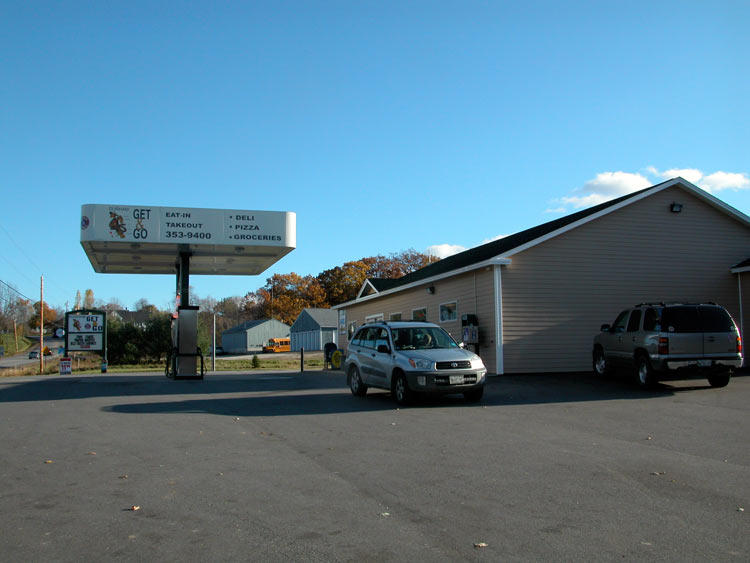
Questionnaires seeking input on a new Durham comprehensive plan will be available at the Durham Get & Go (above), Durham Community School and the town office.
Comments are no longer available on this story