


Four buildings in Portland’s East Bayside neighborhood that have offered affordable housing for more than 50 years have been reduced to rubble.
They will soon be replaced by three new buildings that will quadruple the number of apartments on the site.
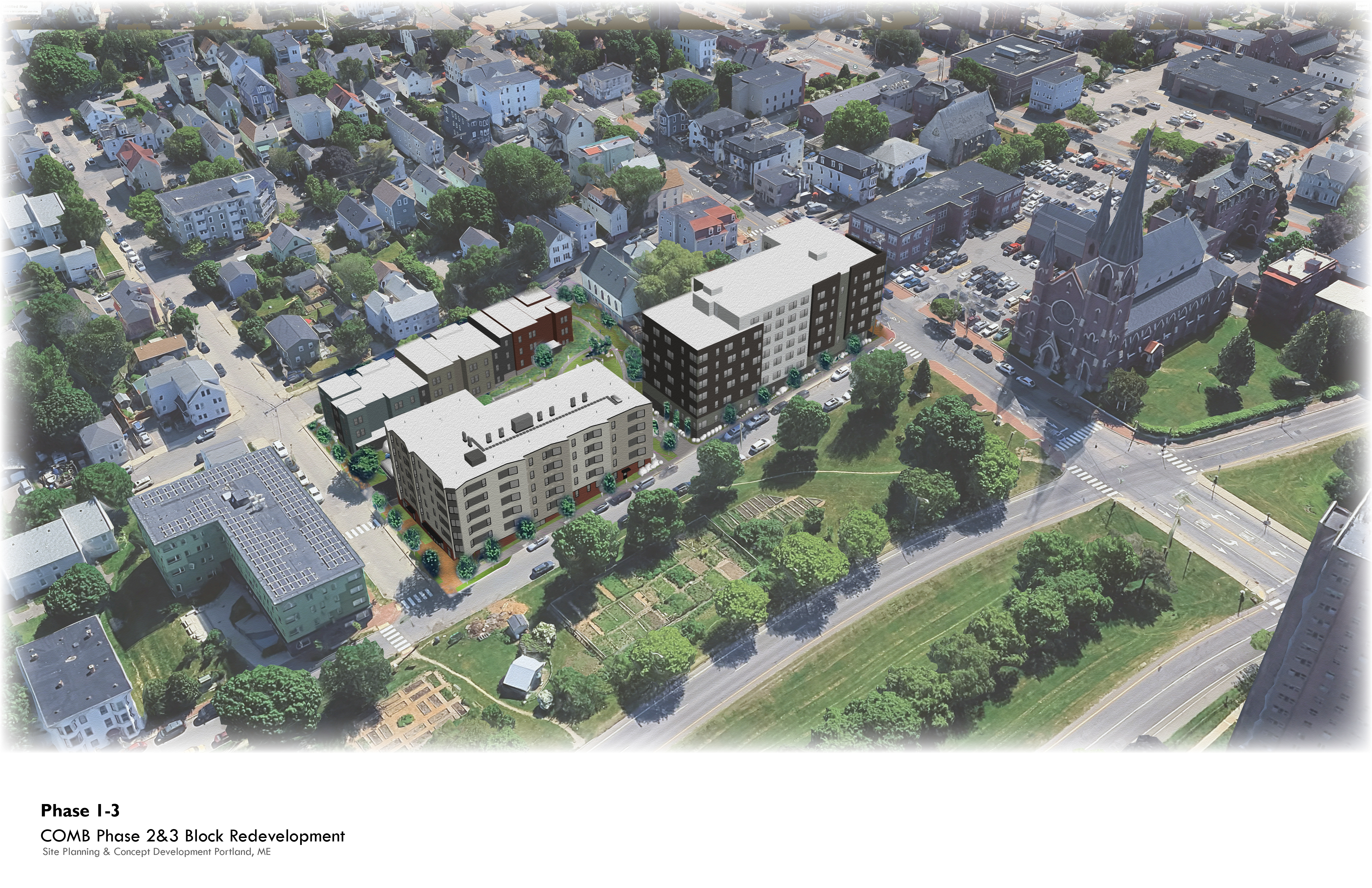
Demolition started early this year on the site known as the COMB Block — a property bounded by Cumberland, Oxford, Mayo and Boyd streets — that will ultimately replace the 40 existing units that the housing authority says are showing their age with 173 new units in a three-phase project expected to be completed in late 2028 or early 2029.
The housing authority says construction will begin later this year.
“These new developments create modern, efficient housing designed to serve Portland residents for decades to come while also helping address the city’s urgent need for additional housing and increased density,” Portland Housing Authority said in a post on a website created for the project.
Residents of the original apartments, built in 1972, were moved to new units in 2023 and will be given the opportunity to return to a unit at the COMB Block that fits their household’s needs, according to Sarah Tatarczuk, development officer with Portland Housing Development Corporation, the housing authority’s real estate development arm.
THREE PHASES
The first phase will include 55 one- two- and three-bedroom apartments. At least 50 of those units will be reserved for very low- and low-income households, meaning they make between 50% and 80% of the area median income.
In Portland, that would be between about $45,000 and $72,000 for a single person or between $65,000 and $104,000 for a family of four.
Dry Landscape Architecture and Acorn Engineering)
Eleven of the apartments are designed to be accessible for people with physical disabilities. The first phase will also include a community room with a kitchen, meeting room and “service partner offices,” according to the housing authority.
The second phase of the project will include a seven-story building dubbed “Cumberland Housing,” with 81 affordable units for older adults and 10 market-rate apartments. Of those, 36 are expected to be accessible for people with physical disabilities.
The final phase, Mayo Housing, will offer 27 apartments with two and three bedrooms for low- and very low-income families. Of those, 20% will be set aside for “special needs populations,” which can include people experiencing homelessness, people with physical disabilities or people escaping domestic violence. The three-story townhome-style buildings are designed to blend in with the lower-density neighborhoods on that side of the block.
CHANGE HEADED FOR BAYSIDE
The block is located in an ideal, walkable location, close to public transportation and amenities like grocery stores and other services, Tatarczuk said.
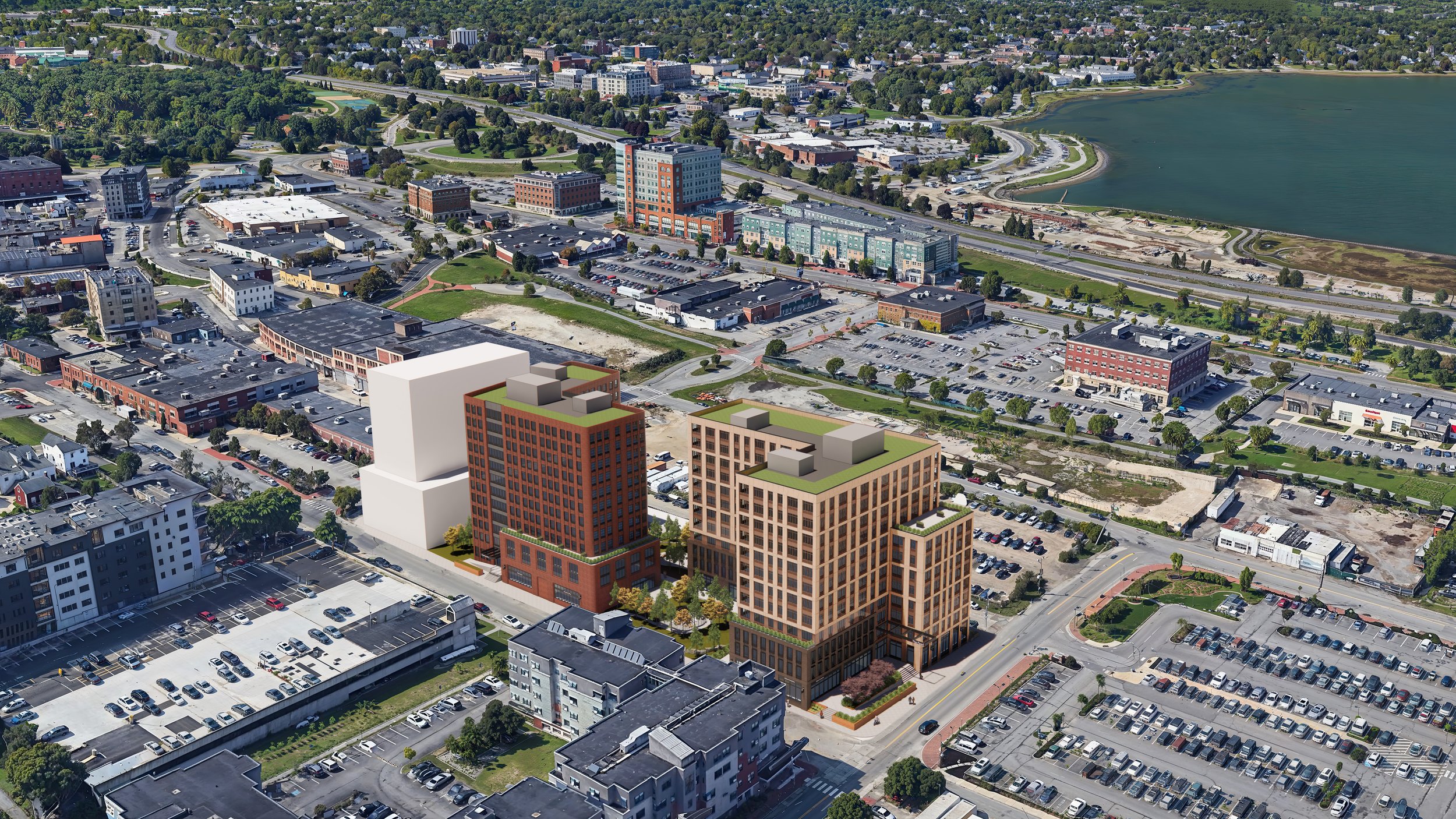
It’s one of several planned developments poised to add hundreds of units to the Bayside neighborhood.
Reveler Development is a few years into a decade-long redevelopment plan that includes building over 800 apartments and nearly 30,000 square feet of commercial space.
Redfern Properties hopes to add more than 500 units to a stretch dubbed The Kennebec Block, though developer Jonathan Culley has shelved the project until market conditions (or the city’s inclusionary zoning ordinance) improve.
Meanwhile, the city in February hired the Boulos Group to help it sell about 3.25 acres of land it recently repurchased after a failed housing development that mired both the city and the developer in a lengthy legal battle.
BUILD AMERICA, BUY AMERICA
The COMB Block is one of few Maine affordable housing projects able to break ground — 10 other projects are currently stuck, unable to move forward thanks to a newly enacted federal program that requires projects receiving certain federal funds to use materials almost exclusively from the United States.
Projects are languishing as developers wait months for waivers for certain items, primarily HVAC equipment, that they can’t find domestically.
The COMB Block was almost among them — and part of it still could be in jeopardy.
The first phase of the project was originally subject to the Build America, Buy America requirements, triggered by money from the National Housing Trust Fund.
However, Tatarczuk said Portland Housing was able to access some Efficiency Maine money that allowed them to “reshuffle our capital stack.” That money, she said, was “hugely instrumental in the project moving forward in 2026.”
The third phase could still be beholden to BABA requirements, she said, but the agency is still working out the funding.

We invite you to add your comments. We encourage a thoughtful exchange of ideas and information on this website. By joining the conversation, you are agreeing to our commenting policy and terms of use. More information is found on our FAQs. You can update your screen name on the member's center.
Comments are managed by our staff during regular business hours Monday through Friday as well as limited hours on Saturday and Sunday. Comments held for moderation outside of those hours may take longer to approve.
Join the Conversation
Please sign into your Press Herald account to participate in conversations below. If you do not have an account, you can subscribe here. Questions? Please see our FAQs.