


PORTLAND — The planning board on Tuesday recommended against mandating a 750-foot buffer between large entertainment venues downtown, with members calling it arbitrary and out of line with the city’s long-term planning.
Following considerable debate during public comment, the 5-0 vote sets the stage for a City Council decision next month that could clear the way for a 3,300-seat Live Nation venue proposed at the corner of Cumberland Avenue and Myrtle Street next to Merrill Auditorium.
While the planning board vote is only a recommendation to the council, Tuesday’s vote could also sway councilors to lift a moratorium on large venues that was extended last month.
The council is tentatively scheduled to vote on the buffer proposal on April 27.
The Portland Music Hall project has faced significant resistance, both from members of the city’s music scene, who have rallied against Live Nation’s business practices, and residents concerned about increased traffic and safety next to City Hall.
Councilors Wes Pelletier and Pious Ali forwarded the proposal in response to what they said had been “widespread constituent concerns” regarding the spacing of large entertainment venues downtown and in hopes of mitigating traffic and parking issues “bound to arise from thousands of people arriving to and leaving from multiple venues at the same time.”
The city currently requires a 100-foot buffer between businesses with entertainment licenses. The proposal would increase the buffer to 750 feet for large entertainment venues, defined as those with a capacity of over 1,000 people.
Board Chair Joseph Zamboni said while he isn’t opposed to a buffer, he hasn’t seen enough rationale and clear data behind the 750-foot proposal, adding that he believes a court would find it arbitrary.
Some councilors have already signaled that they would oppose the language, with some showing interest in a smaller, 250-foot buffer, which would prompt the developers to move the front entrance of the Portland Music Hall farther from Merrill Auditorium.
Board member Nick Messina said the proposal amounted to a “blunt spatial tool incorrectly being applied to address site-specific issues” that the city can address through other means.
Other board members argued that the buffer could potentially prohibit other venues in a downtown area that’s meant for growth. Existing venues — such as Cross Insurance Arena and Aura, which sit across the street from each other — would be grandfathered, or considered legally nonconforming.
Leading up to Tuesday’s meeting, staff and board members had already received a mix of public comment on the proposal. Some said the expanded buffers would set a bad precedent and are simply a vessel to kill the project, while others said the move is part of ensuring that large venues are “sited responsibly” in ways that don’t negatively impact the surrounding neighborhood and businesses.
Mary Costigan, an attorney representing venue developer Mile Marker Investments, said the “only rationale seems to be to kill a project” that complied with all city zoning regulations at the time it was proposed.
However, others speaking Tuesday said there are already issues with traffic safety and parking that the city is underestimating.
Allison Page, director of marketing for the Portland Symphony Orchestra, which operates out of the city-owned Merrill Auditorium, said they already hear consistently from patrons about the difficulty and high cost of parking for PSO events.
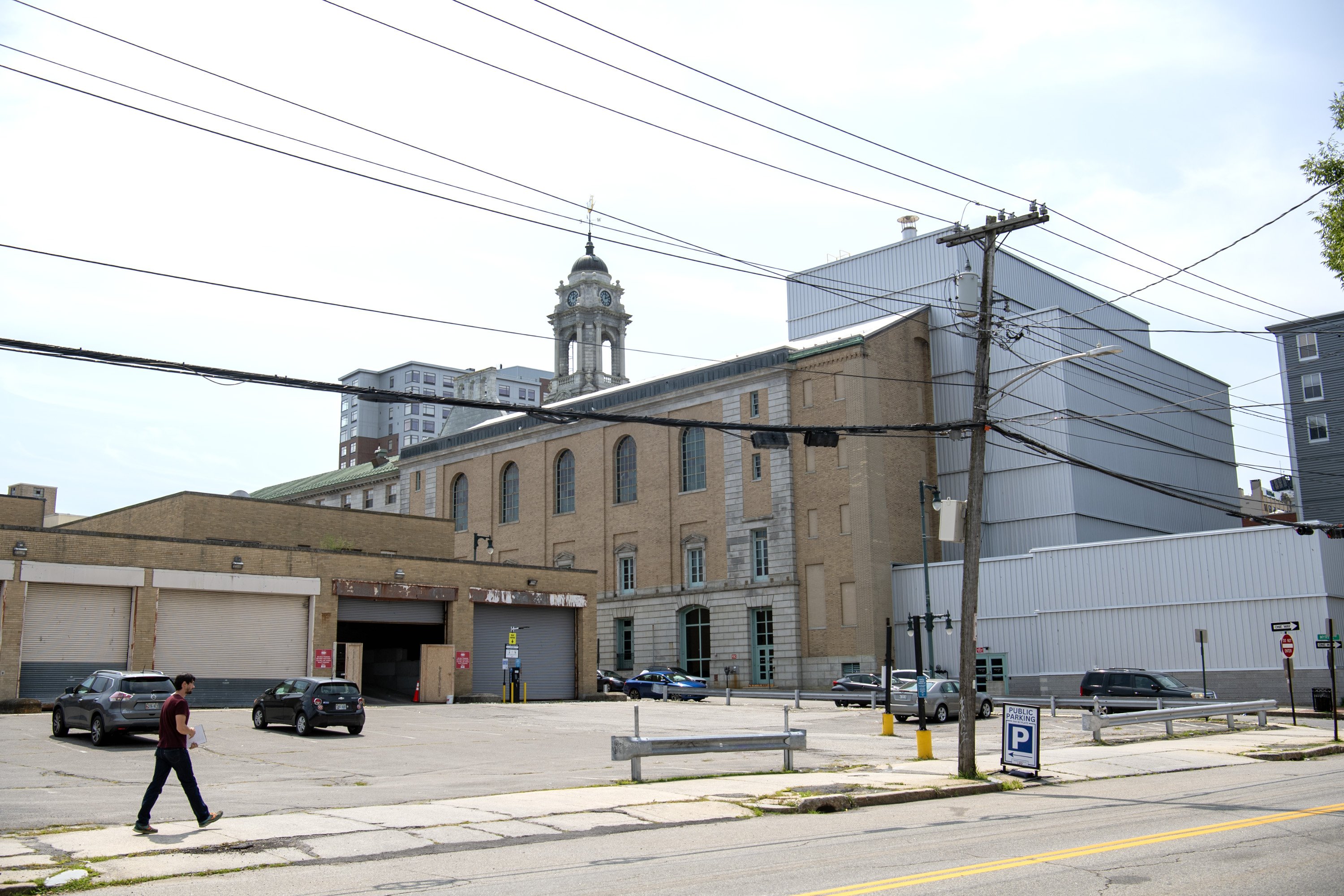
She and others said the city’s use of a 2017 parking study is outdated, and called on the city to conduct both a parking study and economic impact study.
“It’s not anti-development, it’s pro-planning,” she said.
Portland resident Martin Lodish believes it’s clear that putting a large venue across the street from Merrill Auditorium would have a negative impact. He said the clientele, which skews older, would be further discouraged by difficult accessibility, and the loss of business would impact taxpayers.
A memo to the planning board said a May 2025 staff review of approximately 2,700 parking spaces within a quarter-mile radius of the proposed venue showed an average “utilization rate” of 19% between 5:30 p.m. and 8 p.m. on three different nights. Stretched to a half-mile, it was 18%.
Scott Mohler, executive director of the Maine Music Alliance, which has organized the Portland music scene’s opposition to the project, urged the board to support the expanded buffer. He cited the results of a recent community survey, which showed that among the chief concerns from Portland residents is traffic flow and ease of getting around the city.
“I believe this project will create unnecessary congestion in a downtown district that is already under significant strain,” he said in a letter to the board. “Some have characterized this proposal as targeting Live Nation specifically. I do not see it that way. I see it as an effort to simply get this right.”
As the debate has unfolded, the Maine Music Alliance has pointed to an antitrust lawsuit against Live Nation as evidence that a Portland venue could be detrimental to the city. Earlier this month, the Department of Justice reached a surprise settlement with Live Nation, but some three dozen states have continued the case, claiming Live Nation and its subsidiary, Ticketmaster, are blocking competition and driving up prices for fans.
Prior to the board’s deliberation, Planning Director Kevin Kraft said Portland currently has large venues operating side-by-side and that traffic and access impacts are managed. He pointed to facilities like the Portland Expo, Hadlock Field and Fitzpatrick Stadium, and presented the board with case studies of cities that have encouraged the clustering of venues.
Councilor Pelletier, calling in to public comment, said he disagrees with that concept and said the buffer is meant to ease congestion.
“I love the arts,” he said. “I love retail. But, I don’t think we should put a Walmart super center there.”

We invite you to add your comments. We encourage a thoughtful exchange of ideas and information on this website. By joining the conversation, you are agreeing to our commenting policy and terms of use. More information is found on our FAQs. You can update your screen name on the member's center.
Comments are managed by our staff during regular business hours Monday through Friday as well as limited hours on Saturday and Sunday. Comments held for moderation outside of those hours may take longer to approve.
Join the Conversation
Please sign into your Press Herald account to participate in conversations below. If you do not have an account, you can subscribe here. Questions? Please see our FAQs.