


Muddy water dripped down Deb Freedman’s hands and wrists as she formed a mud ball in her palm.
“It’s like making a meatball,” she said, a grin spreading across her face. It reminded her of when she made mudpies with her friends as a child, only they called them brownies.
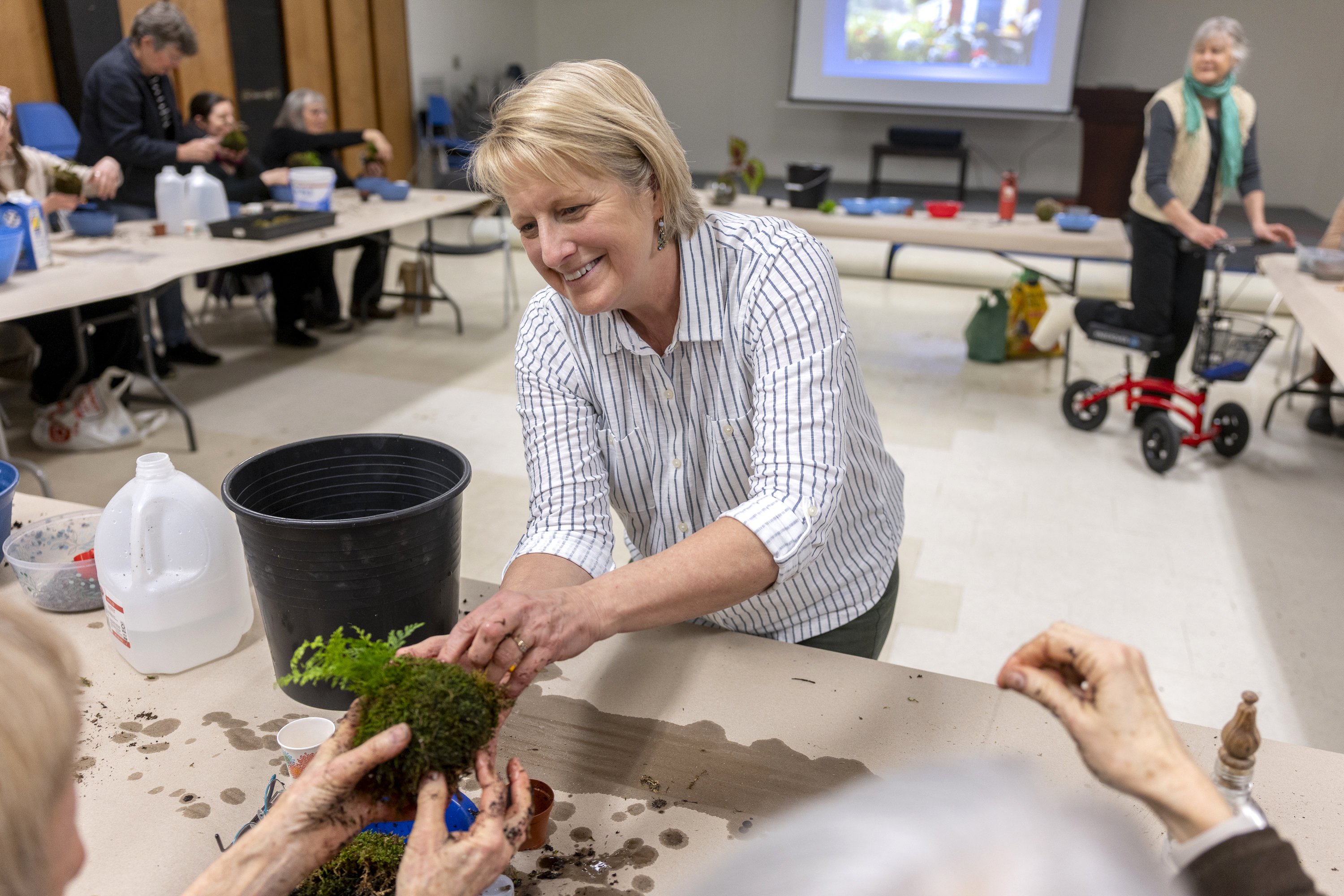
Laura Simonds-Rumpf, one of the instructors, slowly made her way around the semicircle of plastic tables in the windowless room in the South Portland Public Library basement, inspecting her class’ handiwork.
“It’s mud season, right,” she said. “It’s OK to get soil under your fingernails. It’s actually beneficial.”
About 30 participants, most of them seniors, made kokedamas or moss balls — a version of bonsai — on a dreary Monday afternoon.
Colleen Griffin and Simonds-Rumpf, trained horticultural therapists, have led a series of four horticultural therapy sessions at the South Portland library during the winter to draw people aging in place out of isolation. The pair plans to offer the series again next year.
Their first workshop, held on the winter solstice, was flower arranging with natural materials, encouraging participants to appreciate the natural beauty around them even when it’s dormant. The session in January featured botanical rubbings, and in February, they made fairy gardens.
The last workshop, on April 27, will be willow weaving. Participants will make their own nesting balls to help birds build their homes, and wreaths to welcome in spring.
Griffin and Simonds-Rumpf will also lead a drop-in willow weaving and nesting ball workshop at the library on April 25 as part of the city’s Earth Day Resource Fair.
Betty Johnson, 71, stumbled upon the February session when she was stopping by the library to drop off a book.
Johnson said she’s known for her garden. There’s no grass in her front or back yards, and she loves to grow native plants and hostas, and said she had such a fantastic time talking and learning about plants that she signed up for the March workshop.
Most of the participants are seniors, but the rest are young people also looking for community who hustle to get there on their lunch breaks.
Blyss Bieber, 29, moved from Philadelphia two weeks before the kokedama workshop. One of the first things she did was get her library card.
Another participant drove an hour to the kokedama workshop, Griffin said. And someone else played hooky from work.
The workshops provide opportunities to connect with nature in a hands-on way at a time when it is harder to do so, Griffin said. And they promote emotional well-being, self care and strategies to sustain mental health.
It’s a form of social prescribing, Simonds-Rumpf said, or the idea that social activity can be used in tandem with medical treatments to help with anxiety and depression.
And humans have a natural affinity for nature.
Griffin worked as a dental hygienist for 20 years before burning out. She started taking horticulture classes at Southern Maine Community College and fell in love with it.
“I realized when I was in the garden, I felt better,” she said. And she wanted to share that with others.
Simonds-Rumf discovered the power of plants while she lived abroad while her husband was in the U.S. Foreign Service.
There was a community garden at their last posting at an American embassy in Baghdad. People who spoke different languages shared seeds, crops and dinners together, and it helped them cope with the stressful environment.
Griffin and Simonds-Rumf met at a therapeutic horticulture conference, and Simonds-Rumf, who is originally from Cape Elizabeth, would meet up with Griffin when she visited her father in Maine.
When Simonds-Rumf moved back to Maine, they started their therapeutic horticulture business, Cultivating Well-Being. They’ve been facilitating workshops together since 2022, first at SMCC and now at libraries and other social service providers.
MAKING A KOKEDAMA
The kokedama workshop began with grounding.
Everyone stood up, breathed in through their noses and hummed until their lungs were empty.
Simonds-Rumf calls these moments “collective effervescence” or the beauty of all doing the same thing at the same time.
Horticulture stimulates all of the senses, occupying the brain so it’s not ruminating on the past or anxious about the future, she said.
Participants were encouraged to touch and smell the materials that they used to make their moss balls.
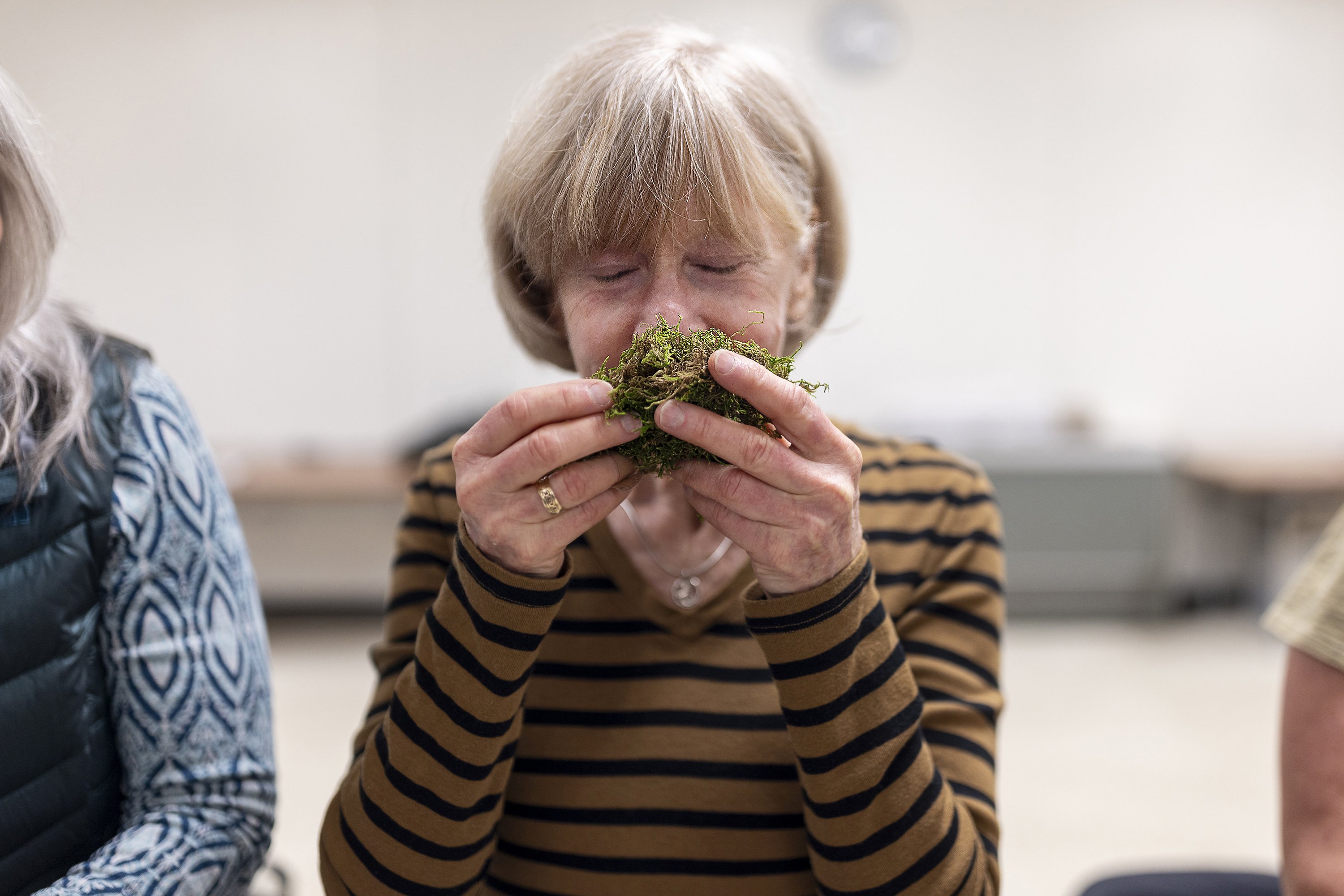
The moss, when dehydrated, smelled like salty swamp water, and it was soft and fragile. The potting soil was dark and damp, crumbling at a touch and smelling like spring. The vermiculite was light and shiny. The bonsai soil was sandy and rough.
Attendees passed the bowls of soils to their neighbors, like they were sharing dishes at a family meal.
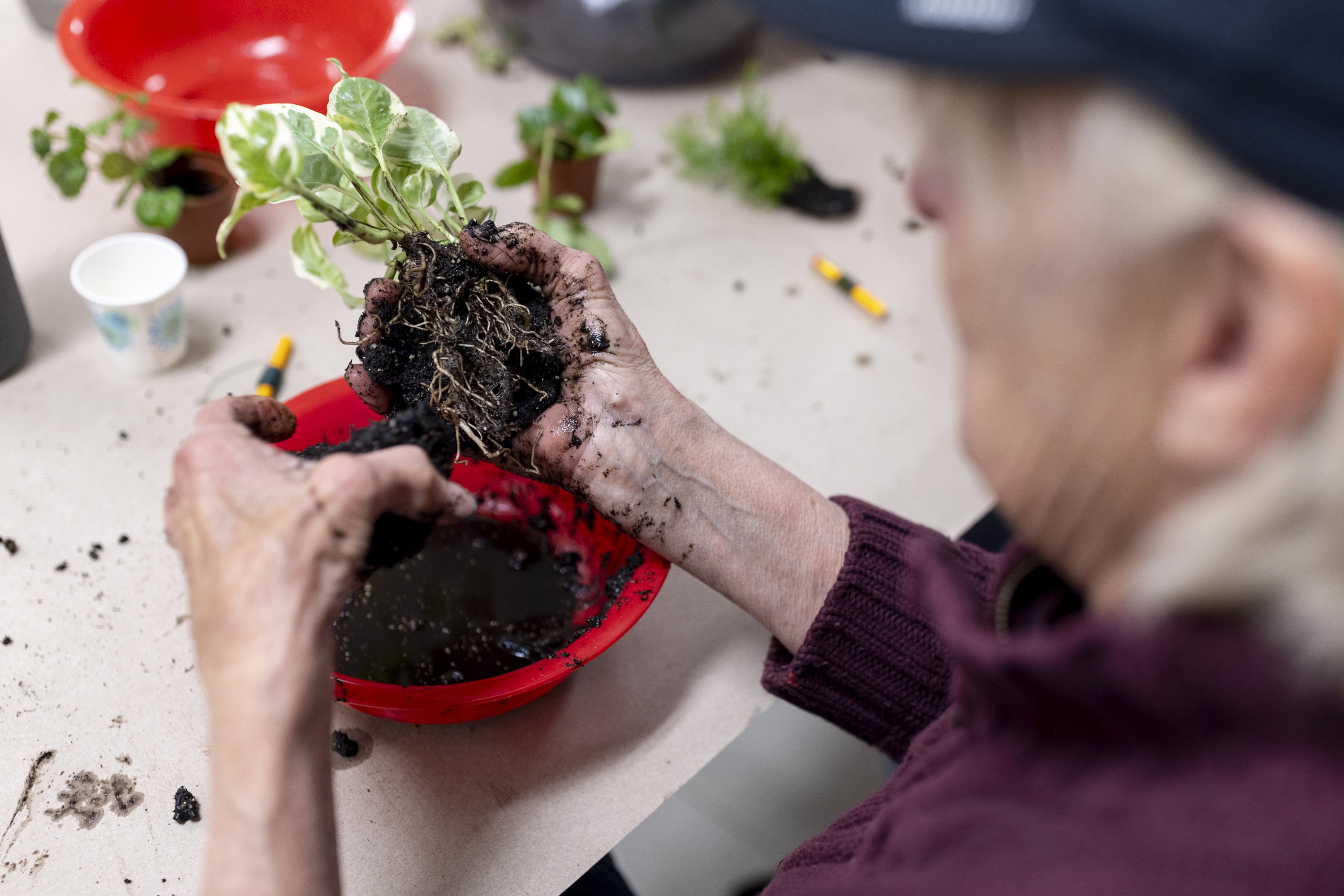
Each person gingerly removed the soil from the roots of their baby plant, tickling away the loose parts and washing the more stubborn pieces with water.
“It’s not serving us anymore,” Simonds-Rumf said. “See it as a metaphor. Get rid of those toxic elements.”
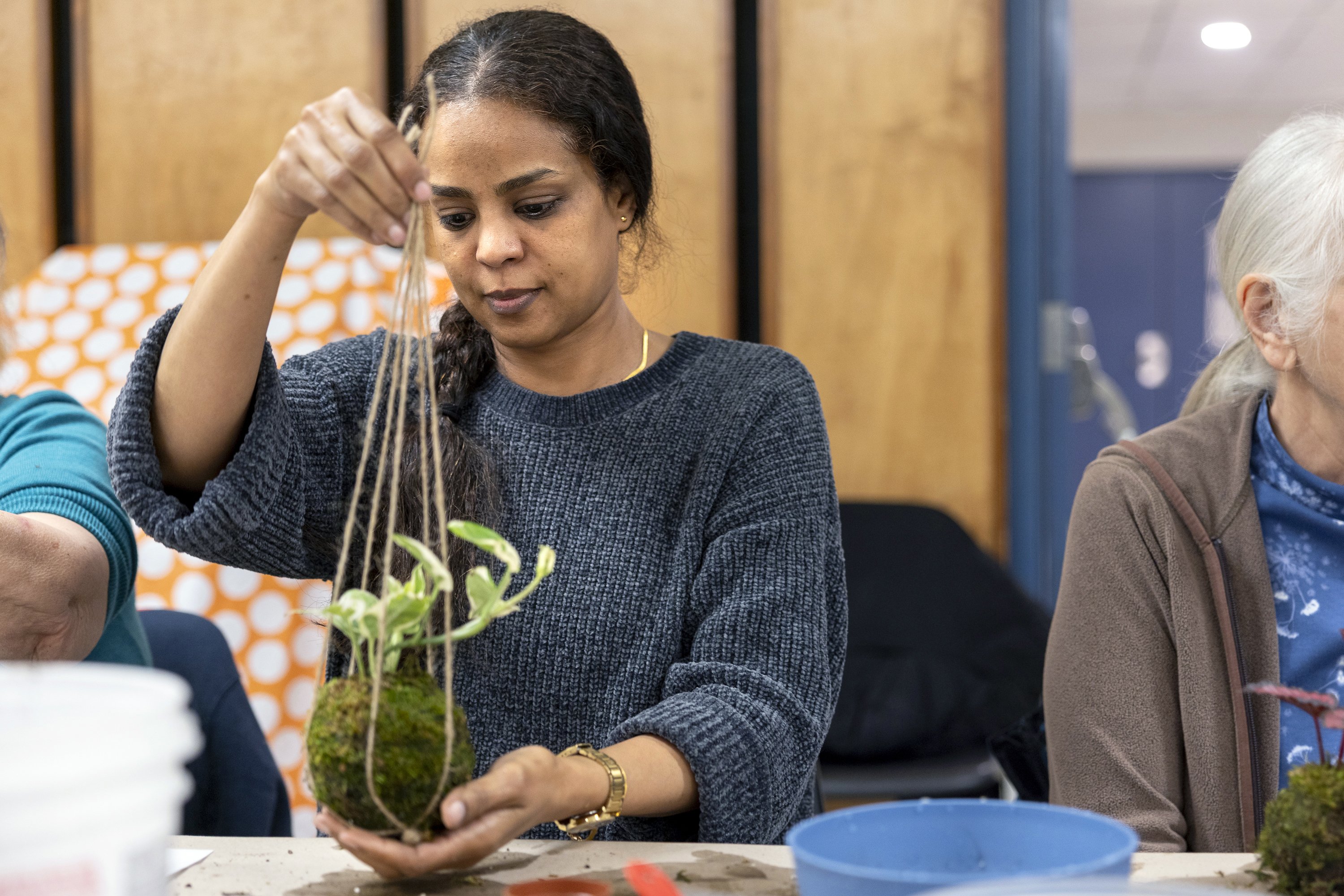
The attendees put their plants in the middle of their balls and wrapped damp moss around it like a cozy blanket. They each wound a piece of thread around their creation so it held its shape. Snug, but not tight, Simonds-Rumf instructed.
“You need three hands to do this,” Griffin said. “Rely on your neighbors.”
It’s a metaphor, like most things with plants.
The thread is thin but strong enough for initial support, Simonds-Rumf said. As the plant grows, the thread will disintegrate and won’t be needed anymore.
“Sometimes, we need support in our lives to feel strong,” she said.
Kokedamas thrive in indirect light and humid environments, Griffin said as the participants admired their creations.
Plant care is connected to taking care of yourself, Simonds-Rumf said. Watch for signs of distress, she instructed.
“Are the roots poking out?” she said. “Think of yourself. Are you cramped? Do you need to stretch your limbs, your roots?”

We invite you to add your comments. We encourage a thoughtful exchange of ideas and information on this website. By joining the conversation, you are agreeing to our commenting policy and terms of use. More information is found on our FAQs. You can update your screen name on the member's center.
Comments are managed by our staff during regular business hours Monday through Friday as well as limited hours on Saturday and Sunday. Comments held for moderation outside of those hours may take longer to approve.
Join the Conversation
Please sign into your Press Herald account to participate in conversations below. If you do not have an account, you can subscribe here. Questions? Please see our FAQs.