
From a young age, he possessed great ambitions and he grew to become a man of numerous accomplishments. From business concerns to military affairs and the attainment of high political posts, this prominent man led a rags-to-riches life and he made history in the process.
John Campbell Humphreys was born in Phippsburg on Feb. 22, 1798, to Lawrence and Frances Campbell Humphreys.
Lawrence had arrived in America “as Supercargo aboard a vessel laden with Molasses [from Jamaica],” destined for the Kennebec River. There, “the ship went ashore on the rocks at Parkers Island and was totally wrecked,” stranding Humphreys to settle in Phippsburg. Eventually, Lawrence moved his family to Main Street in Topsham.
Lawrence and Frances’ son J.C., was an “active, intelligent, upright, and energetic young man” filled with ambition, and “he sustained a character above reproach.”
By the age of 14, J.C. took a job in “the store of Jotham Stone on Maine Street at the southerly corner of Mill Street.”
By the age of 16, J.C. became a charter member of the “first fire company in Brunswick, the Washington Fire Club,” where he eventually served for many years “as chief fire warden.” And J.C. also joined the Brunswick Militia “as a Captain.”
By the age of 22, J.C. partnered with Ephraim Brown to buy Stone’s store, which was “considered one of the best in town.” And two years later, J.C. married Miss “Angeline Whitmore of Bath” and began what would become a very large family.”
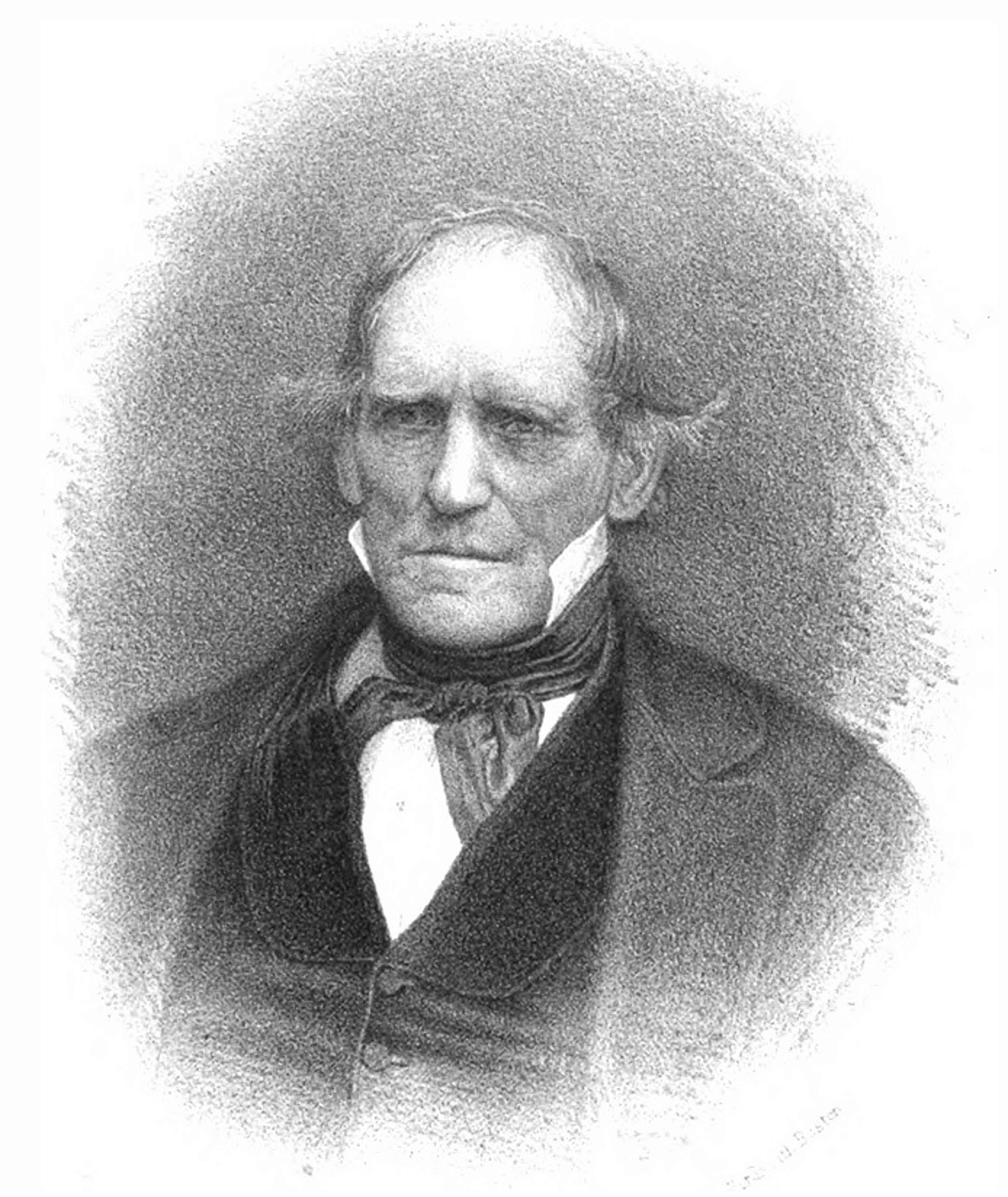
In 1825, J.C. “was promoted to the rank of Lieutenant Colonel in the militia,” and he partnered with Abner B. Thompson to start “a saw-mill in the cove,” just below the falls in Brunswick. J.C. was now one of the most respected men in town.
By 1827, J.C. accepted an appointment as a deputy sheriff with the Cumberland County Sheriff’s Office, serving the area of Brunswick, Topsham and Harpswell.
Over the next few years, J.C. became one of the “original stockholders of the Tontine Hotel Company,” and he “established the Maine Mustard Mills Company” where he manufactured “brown and yellow mustard, to National fame.”
In 1833, a 35-year-old J.C. Humphreys was honorably discharged from the Brunswick Militia with the rank of major general. Two years later, General Humphreys purchased an “existing water-pail” manufactory and expanded his lumbering interests.
By 1836, J.C. became “a director of the Brunswick Bank,” before entering politics just one year later when he served as a Brunswick selectman. Then, in 1838, J.C. was elected to one term in the Maine Legislature as a senator from Brunswick.
In 1839, as the “bloodless Aroostook War” between Maine and Canada saw the northern most boundary of Maine redrawn, Sen. J.C. Humphreys accepted an appointment from Gov. John Fairfield to serve for two years as the “High Sheriff of Cumberland County.”
By 1846, J.C. was now “considered the fifth wealthiest man” in Brunswick, when he was appointed by President James Polk to serve for two years as the collector of the Port of Bath.
Two years later, J.C. Humphreys “purchased the 95-acre Dunning Farm … at the narrows” of the Androscoggin River and named it “Humphreysville.”
There, J.C. moved his saw-mill operation to the farm and expanded it to include two large, steam-operated saws, and he began a ship-building business on the banks of the Androscoggin.
J.C.’s family now included at least nine adult children and his elderly mother, and Humphreysville included their separate homes, a boarding house for employees and many other buildings.
Humphreys’ mill crafted “barrel and hogshead staves, pails, lumber, and other wooden items,” all from the logs brought to the mill on the Androscoggin. There, with an ample supply of lumber, J.C. built and launched six seagoing ships.
By 1857, through sheer will and determination, John C. Humphreys had built an empire in Brunswick — and though nearly 60 years of age, he showed no signs of slowing down. Yet, the American Financial Panic of 1857 hit J.C.’s interests hard and may have “caught him carrying too much debt.”
One year later, J.C. “stopped running his steam mills,” and his enterprise at Humphreysville slowly began fading away. By 1860, J.C. Humphreys’ combined personal worth was only “listed as $1,000.”
On June 18, 1865, John Campbell Humphreys died “of dropsy” at the age of 67 and was interred at the Pine Grove Cemetery, while “hundred of citizens” attended his funeral.
By 1898, the land once known as Humphreysville had been sold and razed, and the Merrymeeting Park and Casino was erected.
Today, although Humphreysville may be gone, John Campbell Humphreys’ rags-to-riches story of ambition and determination remains deeply embossed in Brunswick’s history and in the long and enduring memory of our Stories from Maine.
Historian Lori-Suzanne Dell has authored five books on Maine history and administers the popular “Stories From Maine” page on Facebook, YouTube and Instagram.

The Times Record Sustaining Sponsor
We believe a community must be informed to thrive. bowdoin.edu
Comments are not available on this story. Read more about why we allow commenting on some stories and not on others.
We believe it's important to offer commenting on certain stories as a benefit to our readers. At its best, our comments sections can be a productive platform for readers to engage with our journalism, offer thoughts on coverage and issues, and drive conversation in a respectful, solutions-based way. It's a form of open discourse that can be useful to our community, public officials, journalists and others.
We do not enable comments on everything — exceptions include most crime stories, and coverage involving personal tragedy or sensitive issues that invite personal attacks instead of thoughtful discussion.
You can read more here about our commenting policy and terms of use. More information is also found on our FAQs.
Show less