


PORTLAND — Maine’s Jewish community gathered at places of worship on Wednesday and Thursday evenings to mark the beginning of Passover.
The Chabad of Maine in Portland was packed for its First Seder dinner on Wednesday. While the Second Seder dinner on Thursday was a more lightly attended affair, both were centered on the celebration and remembrance of the Jewish people’s liberation from slavery in Egypt.
To begin both evenings, Chana Wilanksy, co-director of the Chabad of Maine, lit candles and recited a blessing before attendees took their seats.

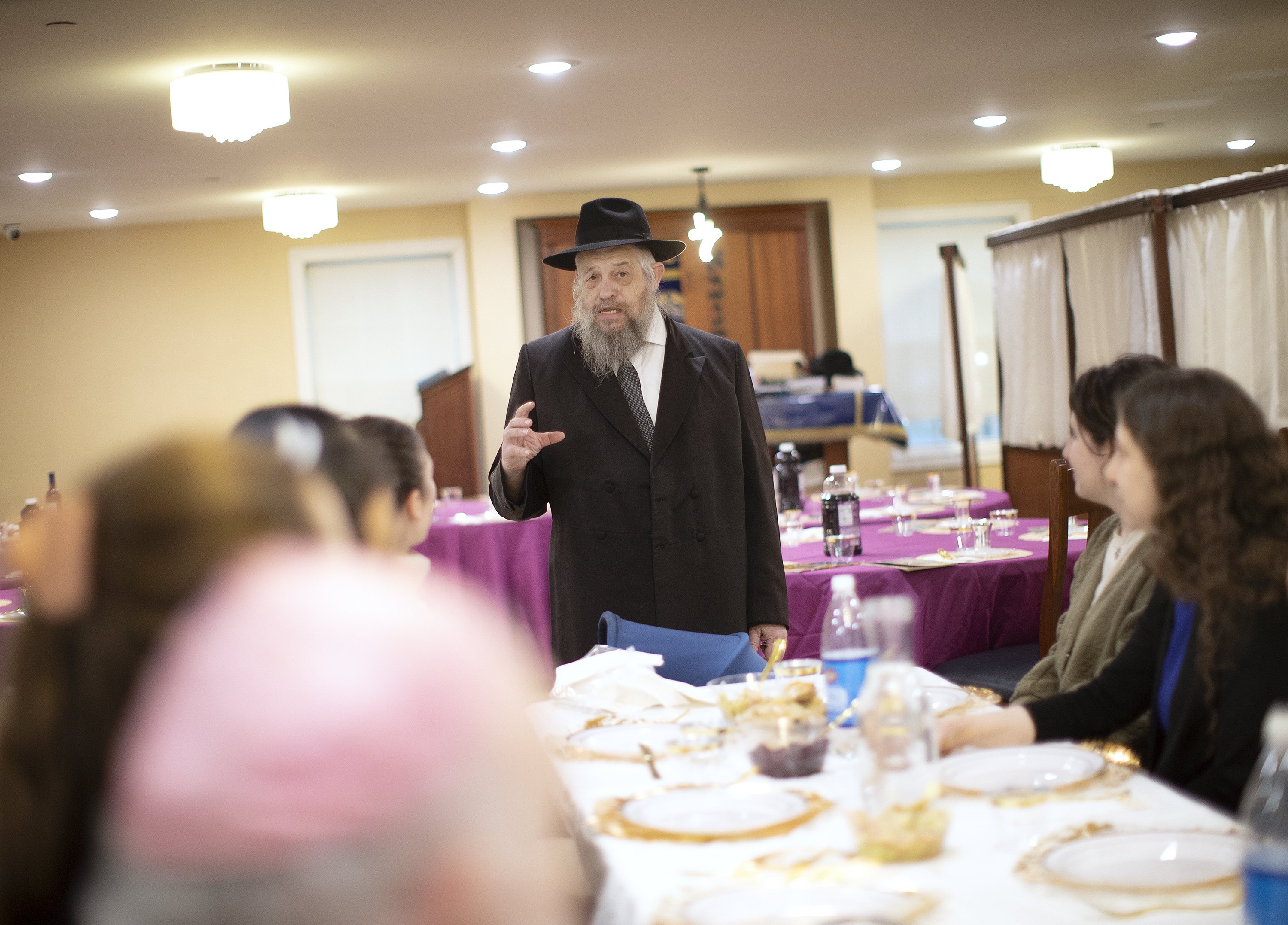
Rabbi Moshe Wilansky, director of the Chabad of Maine, then guided the attendees through the Haggadah, which tells the story of the Exodus from Egypt through prayers, songs, instruction, food and wine — or grape juice for those who prefer and for children.
Early into Thursday’s Second Seder, the youngest child in the room capable of reciting Mah Nishtanah, or The Four Questions, in Hebrew was asked to do so. That they did, with some sporadic guidance from their mother. The questions prompt others to explain why the night is such a special occasion.
Wilansky, at times, called upon others to read passages from the Haggadah aloud. Most everything has a symbol that is dissected, including the food, such as onions or potatoes dipped in salt water, resembling tears, or the matzah, which symbolizes the haste with which the Jews left Egypt.
“There was not enough time for the dough to rise,” one attendee explained, noting that it is eaten in exchange for grains during Passover. “You wind up eating a lot of matzah.”
Between passages, bites of food and sips of wine, there are also songs. Perhaps sung most emphatically was Dayenu, a song of gratitude, which was met with accompanying stomping and clapping.
Many of the passages gave way to discussions. Some people broke down the stanzas of a song, for instance, while others used the teachings as allegories for their own lives.
“What is my Egypt?” one asked aloud.
“It feels like we never fully left,” says another.
Rabbi Levi Wilansky, assistant director of the Chabad of Maine, wrote a column for the Press Herald on Jewish history in the Portland area, dating to the 19th century. At the end, he invited readers to the Chabad of Maine’s seders.
“All are welcome to join regardless of prior Jewish knowledge or synagogue affiliation,” he wrote.
An attendee said they appreciated how everyone could feel comfortable at the Second Seder on Thursday and mark Passover in their own way. He pointed to Rabbi Levi Wilansky, who at that moment was deep in prayer, and to himself, who had earlier shared a fun fact about a voice actor in the film “The Prince of Egypt,” which is based on the Exodus.
“Everyone is welcome,” he said.


Comments are not available on this story. Read more about why we allow commenting on some stories and not on others.
We believe it's important to offer commenting on certain stories as a benefit to our readers. At its best, our comments sections can be a productive platform for readers to engage with our journalism, offer thoughts on coverage and issues, and drive conversation in a respectful, solutions-based way. It's a form of open discourse that can be useful to our community, public officials, journalists and others.
We do not enable comments on everything — exceptions include most crime stories, and coverage involving personal tragedy or sensitive issues that invite personal attacks instead of thoughtful discussion.
You can read more here about our commenting policy and terms of use. More information is also found on our FAQs.
Show less