


A team of Bowdoin College students have returned with a second season of their podcast delving into politics in the Pine State. While their inaugural season explained key functions of Maine government, new episodes premiering this month focus in on the crowded race to be the state’s next governor.
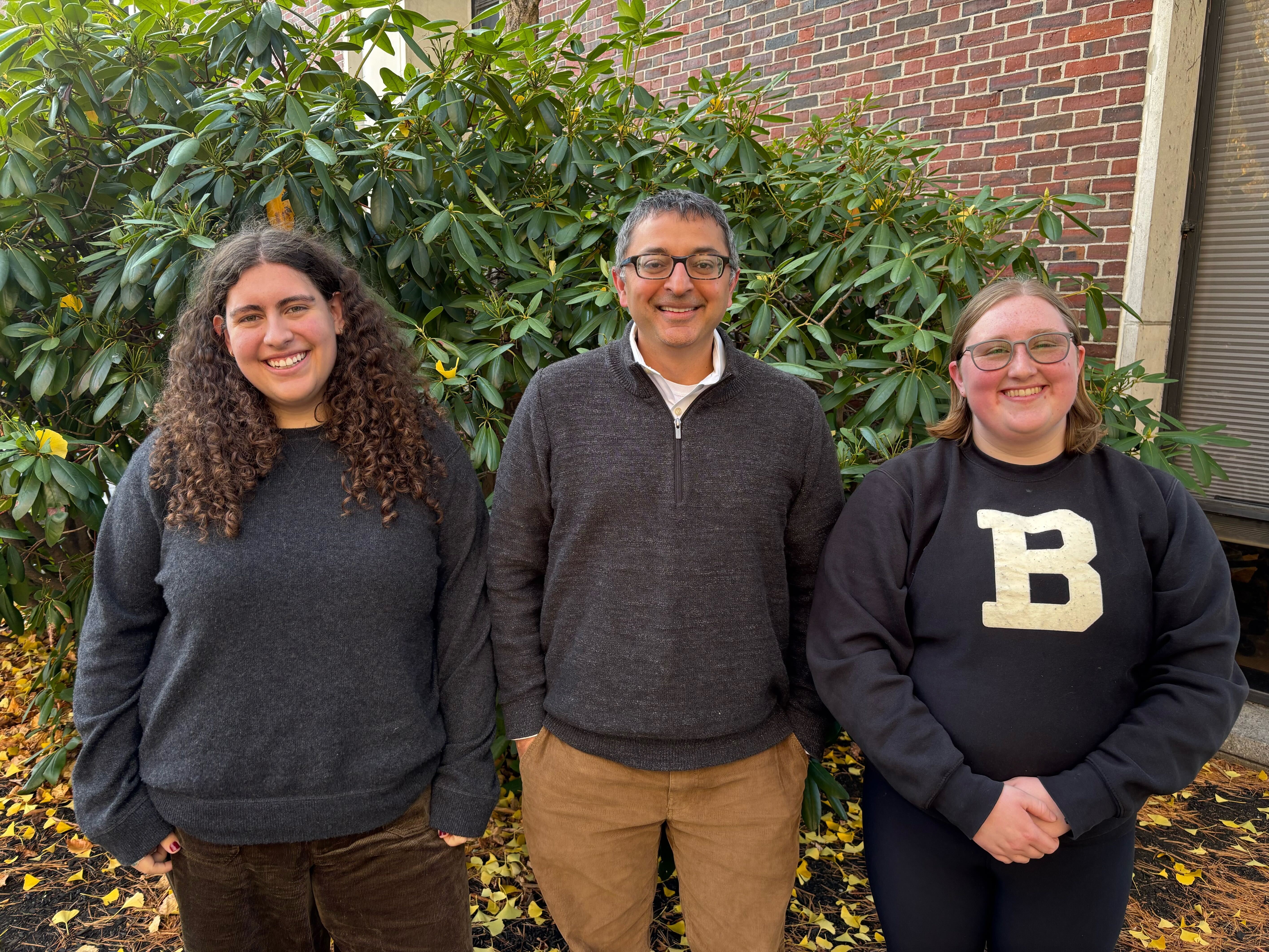
Bowdoin juniors and “Pine State Politics” co-creators Natalie Emmerson and Larsen Van Horn, along with senior Sofia Fogg, interviewed nine candidates for the Maine governor for their latest season.
While the hosts are taking on a partisan race, they said their mission remains to be a trusted, neutral source of information for Mainers.
“This is a great way of understanding who might be representing you in the future, so you can vote the best possible way and have the most information before you vote,” said Van Horn, who is originally from Oklahoma.
Their guests this season include all five Democratic primary candidates who will be on the ballot in June — Nirav Shah, former director of the Maine Center for Disease Control and Prevention; Shenna Bellows, Maine’s secretary of state; Hannah Pingree, former speaker of the Maine House and daughter of U.S. Rep. Chellie Pingree; Troy Jackson, former Maine Senate president; and Angus King III, a renewable energy entrepreneur and the son of U.S. Sen. Angus King.
The student podcasters also sat down with Republican candidates David Jones, a real estate broker; Jim Libby, a state senator and Thomas College professor; and Owen McCarthy, a medical technology entrepreneur; and independent candidate and longtime Republican lawmaker Rick Bennett.
Emmerson, who is from Woolwich, said working on this second season reminded her why she loves politics — even in a deeply politically divisive time.
“There are so many good people with so many good ideas that want to make Maine a better place and can focus on that, and can have a political conversation about policy, and about background and philosophy, without being combative or strategic or maneuvering,” she said.
The hosts asked all of the candidates the same basic questions about their backgrounds, inspirations and introductions to politics to help listeners get to know each person.
They also prepared party-specific questions on some hot-button issues. For example, they delved into the topic of tribal sovereignty for Democratic guests. For Republicans, the hosts asked about guests’ stances on last November’s state referendums and a citizen initiative restricting transgender athletes’ ability to compete in school sports that could appear on the ballot this year.
“We tried to write the questions from the perspective of ‘What would a voter in each primary want to know?'” Emmerson said. For the Democratic candidates, those included what issues on which they agree and disagree with Gov. Janet Mills; and for Republicans, where they support or break with President Donald Trump.
Van Horn and Emmerson were inspired to create the podcast to inform Mainers about their state government while working as interns in Sen. Angus King’s office.
The first eight episodes of “Pine State Politics,” released last May, examined questions like “What is ranked choice voting?” and “How do petitions work?” Emmerson and Van Horn were joined in their first season by Maine newsmakers including former U.S. Secretary of Defense Bill Cohen, Bellows and Sen. Angus King.

The podcasters later worked with the state Department of Education to plan lessons for use in Maine classrooms based on the first season‘s episodes.
The hosts said they hope new episodes continue to attract listeners from all sides of the political spectrum.
“Because this was our second season, I felt more confident about being able to interview all the candidates from a nonpartisan perspective,” Van Horn said. “I hope we established that, by having our first season be an introduction to Maine government, we are just a purely educational, non-partisan podcast.”
The second season of “Pine State Politics” comes out on April 13 on all major podcast platforms.

The Times Record Sustaining Sponsor
We believe a community must be informed to thrive. bowdoin.edu

Comments are not available on this story. Read more about why we allow commenting on some stories and not on others.
We believe it's important to offer commenting on certain stories as a benefit to our readers. At its best, our comments sections can be a productive platform for readers to engage with our journalism, offer thoughts on coverage and issues, and drive conversation in a respectful, solutions-based way. It's a form of open discourse that can be useful to our community, public officials, journalists and others.
We do not enable comments on everything — exceptions include most crime stories, and coverage involving personal tragedy or sensitive issues that invite personal attacks instead of thoughtful discussion.
You can read more here about our commenting policy and terms of use. More information is also found on our FAQs.
Show less