

Every winter, my outdoor club, the Penobscot Paddle & Chowder Society (PPCS), prepares a spring paddling schedule. The emphasis is on whitewater trips on coastal rivers and streams as they experience ice-out first and are located where the snow begins melting earliest.
The availability of whitewater varies every spring, so predicting it is not an exact science. Some years, there is deep snowpack but a major rainstorm washes it away all at once. In other years, snow levels are low yet sustained, moderate rain events keep streams and rivers high for weeks.
This year is unusual. Although we had moderate snow accumulation in the winter and have experienced several rainy days this spring, the coastal rivers and streams are lower than normal. I believe the reasons are threefold: The snow has melted gradually; sustained, moderate rain events have been nonexistent; and we’re in the midst of a yearlong drought. Unusually low water levels are problematic for whitewater boaters.
Not only are club trips adversely affected by low water levels but the spring downriver racing circuit is negatively impacted. Many PPCS members participate in races on the St. George, Passagassawakeag, Souadabscook, Marsh and Kenduskeag. So, as water levels diminish, the search for quality whitewater options increases.
Early paddling trips on the Sheepscot and St. George rivers during the first two weekends of the PPCS 2026 schedule were low but runnable. An outing on Souadabscook Stream in Hampden was planned for the first weekend of April but doubt remained as to whether or not there would be sufficient water.
Good news followed when Souadabscook trip coordinator, Helen Hess, announced that although the water level was low, there would be adequate flow for a fun paddle. Despite a cool, breezy weather forecast, a large group of PPCS Chowderheads anxious for a paddling opportunity decided to brave the cold and join her.
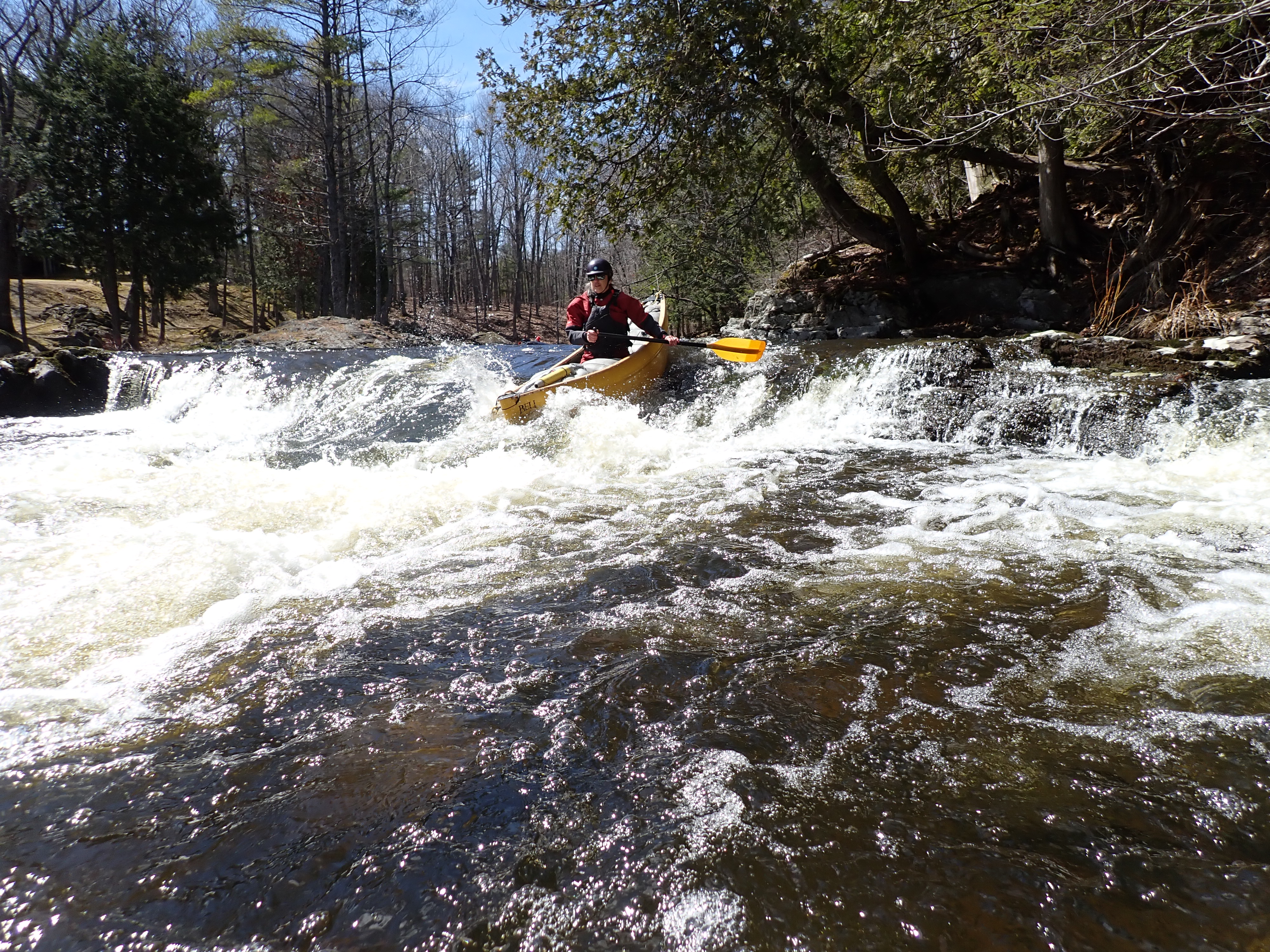
Sixteen club members paddling 15 canoes and kayaks assembled at a bridge over the “Sou” on Manning Mill Road in Hampden on a brisk, sunny morning. Helen gave us two options: a short run or a long run. I chose the longer alternative that ends at Route 1A in Hampden. The takeout for the shorter route is at Papermill Park on Papermill Road. We then transported shuttle vehicles to the respective takeout.
Once everyone was back at the Manning Mill Road put-in, the fun began. Many of us carried boats upstream from the bridge to the top of a feisty Class II rapid while others launched immediately below the bridge.
The trip began with quick water and easy rapids offering several surfing opportunities. Shortly after, the stream turned sharp right and we plunged over a tricky drop called Boy Scout Rapid. A smooth wave just below provided for some stimulating surfing.
After an easy rapid, we arrived at Emerson Mill Falls, a substantial pitch. Most of us plummeted over the right side, which is about a 5-foot drop. Immediately below, we passed under the Emerson Mill Road Bridge where the painted gauge reflected the obvious — low.
Entertaining rapids and surfing waves ensued to Crawfords, a complex Class III falls. We entered tight left, turned abruptly right and plunged to the bottom. Quick water and straightforward Papermill Rapid followed to Grand Falls, the most substantial descent on the stream.
Grand Falls is often navigated at higher water. Not this day, as the risk of colliding with rocks was too high. We portaged river right on a rough, boulder-strewn path that made bouncing down the rocky falls seem appealing. An impressive wave train called Rec Center brought us to the Papermill Park takeout.
Leaving some of our companions behind, the rest of us continued through a circuitous section of flatwater for about a mile to another falls called Cement Plant. The constricted entrance begins directly under a snowmobile bridge. We entered left-center and rode rolling waves to the bottom.
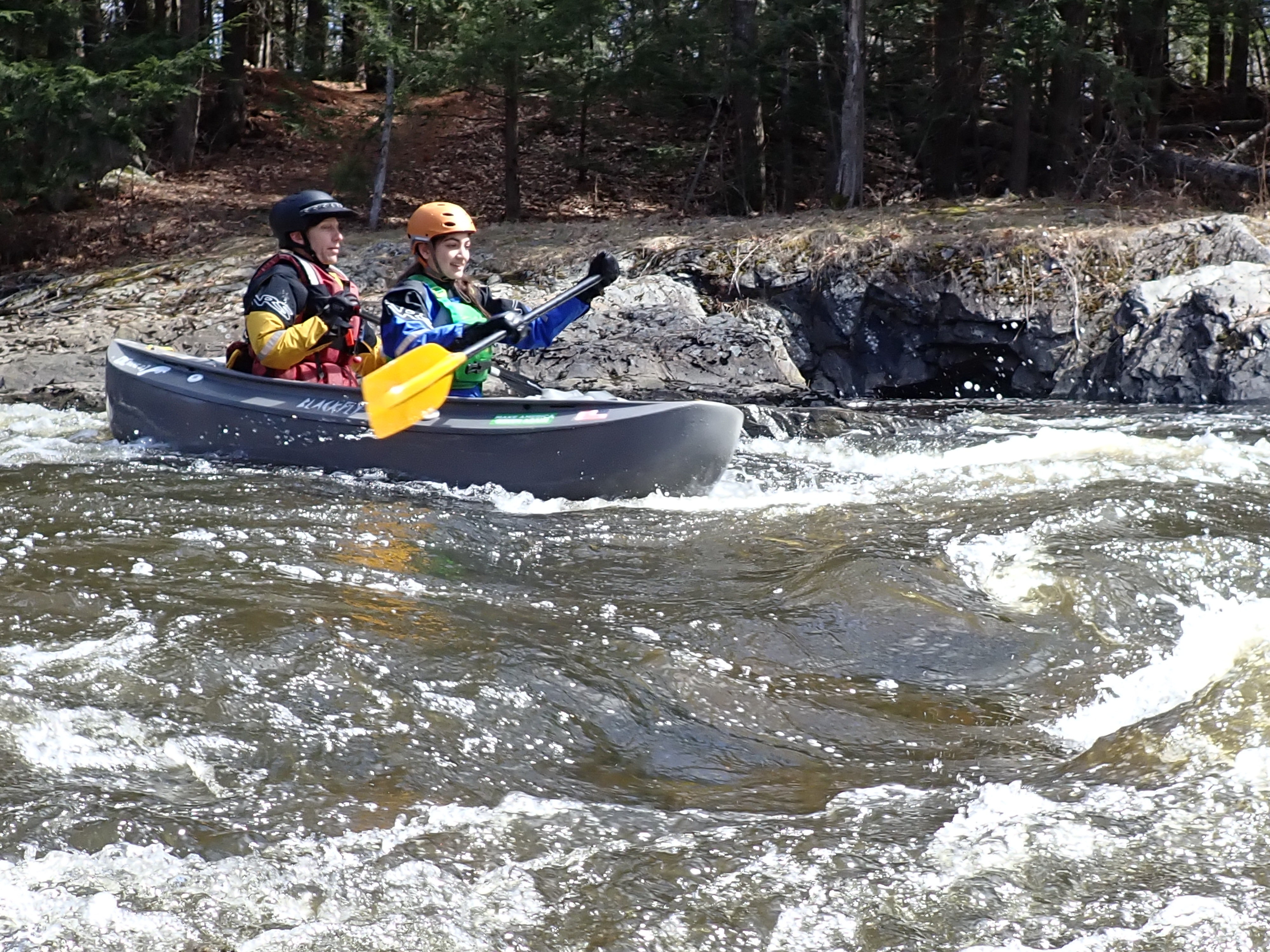
More engaging rapids followed; one required careful boat scouting to find a route through a rocky maze. Afterwards, we rounded a sweeping bend and arrived at the final takeout at Hampden Waterworks.
Helen made the right call. Despite relatively low water, we experienced a pleasurable day of paddling and camaraderie. We need rain. Otherwise, the search continues.
My book, “Maine Al Fresco: The Fifty Finest Outdoor Adventures in Maine,” describes nine more exciting whitewater escapades, including a descent of Gulf Hagas, arguably the most difficult paddle trip in Maine.
The author of “The Great Mars Hill Bank Robbery” and “Mountains for Mortals – New England,” Ron Chase resides in Topsham. His latest book, “Maine Al Fresco: The Fifty Finest Outdoor Adventures in Maine,” is available at North Country Press and through online retailers. Visit his website at ronchaseoutdoors.com or he can be reached at [email protected].

The Times Record Sustaining Sponsor
We believe a community must be informed to thrive. bowdoin.edu
Comments are not available on this story. Read more about why we allow commenting on some stories and not on others.
We believe it's important to offer commenting on certain stories as a benefit to our readers. At its best, our comments sections can be a productive platform for readers to engage with our journalism, offer thoughts on coverage and issues, and drive conversation in a respectful, solutions-based way. It's a form of open discourse that can be useful to our community, public officials, journalists and others.
We do not enable comments on everything — exceptions include most crime stories, and coverage involving personal tragedy or sensitive issues that invite personal attacks instead of thoughtful discussion.
You can read more here about our commenting policy and terms of use. More information is also found on our FAQs.
Show less