
Marshall McLuhan, considered the father of media studies, famously argued that “the medium is the message.” By that, he meant that since the characteristics of the tools we use to express our ideas determine how we perceive their content, they’re more important than the content itself.
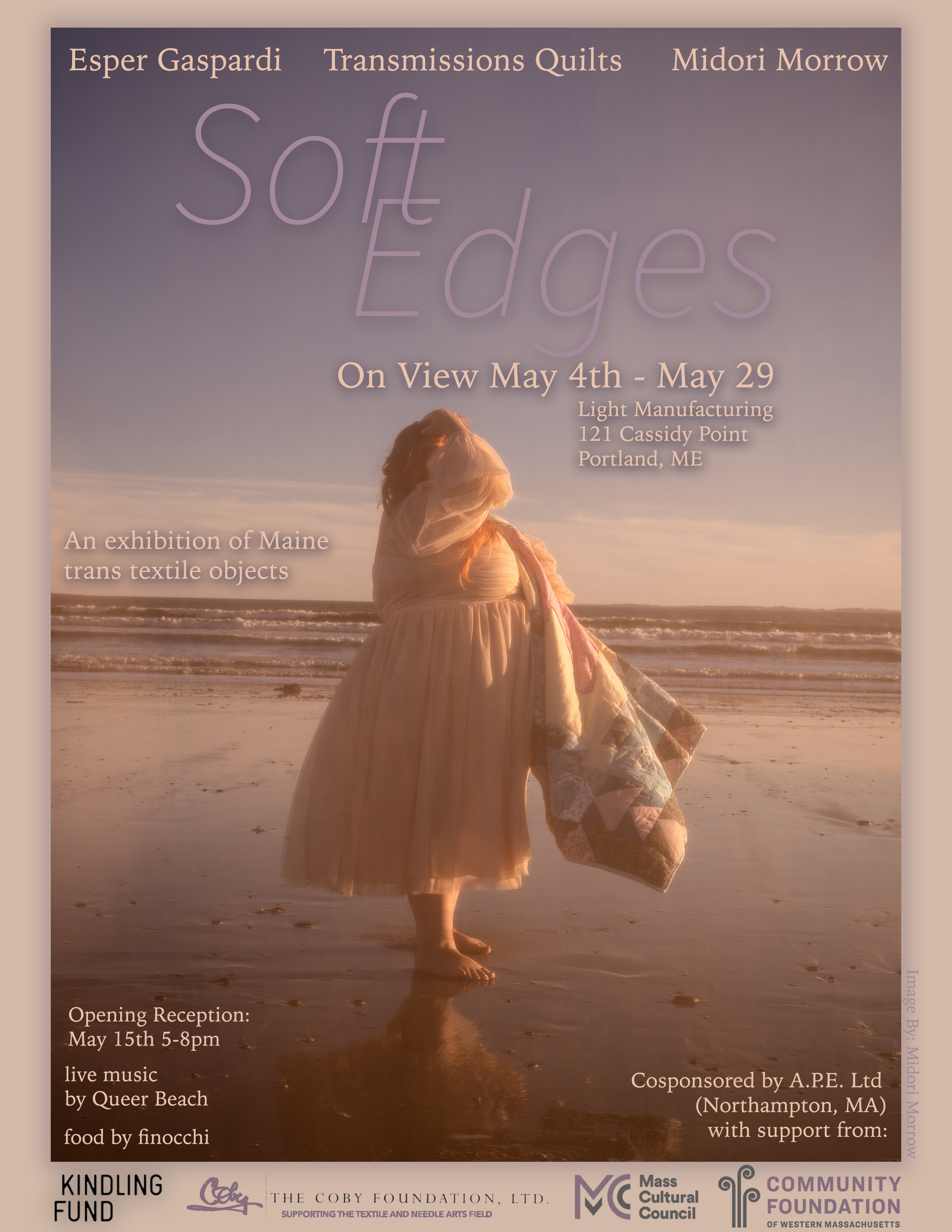
Given that McLuhan considered art to be a form of media, it’s tempting to wonder what he would have to say about “Soft Edges,” a new exhibition in Portland from Monday through May 29 at Light Manufacturing studio space on Cassidy Point. After all, it isn’t every day that an exhibition’s artists have the opportunity to expand the meaning of their medium by making themselves a primary part of its message.
The Portland exhibition is part of The Transmissions Quilt Project, which was started in California by artist and educator Cordy Joan and is now an international tour that includes almost 200 artists. It spotlights quilts made by and for trans people. “I was just doing this project informally, and it didn’t have a name,” says Joan. “It was just me in my studio, making gifts for friends.” After an initial grant funded a first show in Berkeley last June, Joan began to explore expanding the project to other states when they met Travis Clough, who comes from a long line of quilters from Maine.
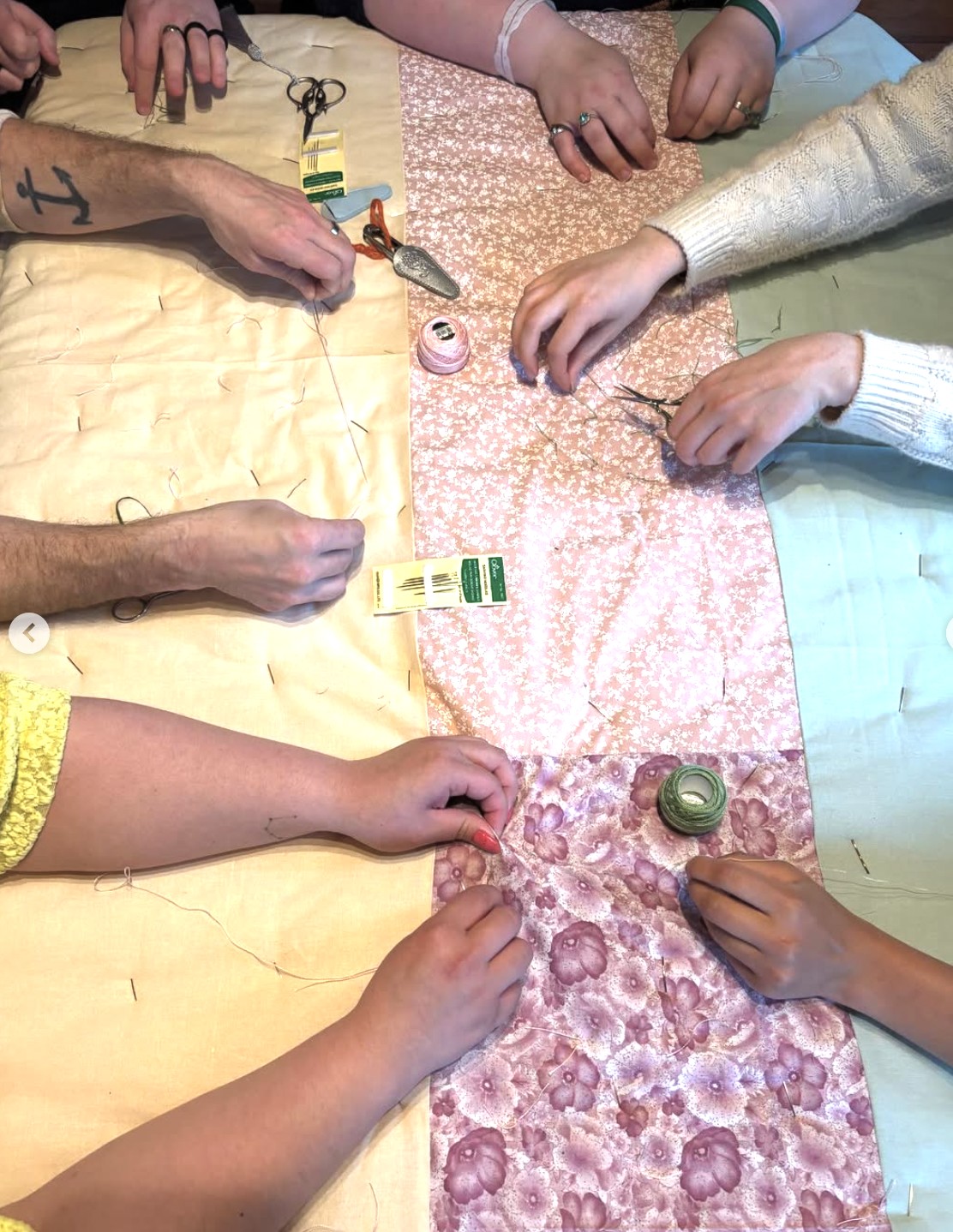
“Cordy asked if I wanted to get involved and we started looking at all of the trans quilters doing work in Maine,” Clough said. “We created a quilting team of three people and did an oral history. And then also found out about the possibility of getting a grant.” Clough (who incidentally will be playing drums in the band Queer Beach at the exhibition’s reception on May 15) then spearheaded their successful application process for a Kindling Fund grant through SPACE Gallery.
Since then a handful of other project chapters (essentially teams of trans quilters) have spread around the country. “The strongest one we have is in Portland,” Joan said.
The tour includes eight stops, from Oakland, California to Birmingham, England, with a number in the Northeast. Following Portland, a second Maine exhibition will take place in Belfast this June at Waterfall Arts. “Each show on the tour is unique,” says Joan. “They’re all a collaboration with local trans artists in that area. Sometimes they’re textile artists, while others are working in different mediums. We’ve had people make quilts out of everything from pieces of chain mail to poems.”
The work is always in the service of telling personal stories. Take artist Esper Gaspardi, who grew up in Freeport and attended school in Portland, for instance, whose work will be on display in “Soft Edges.”
“I do a lot of cyanotypes in my quilting,” Gaspardi said, referring to the 19th-century camera-less photographic process invented by Sir John Herschel. “And I’m deeply obsessed with deer and other materials I find on the road.”
In fact, many of Gaspardi’s materials are found objects — organic and otherwise, from egg cartons to elk horn. “I feel really badly about things going away,” says Gaspardi, who uses the materials to explore moving between multiple worlds. “It’s about finding where I fit, and creating transformational scenes that represent how you’re caught in between different things. It’s finding belonging and bursting out in an elegant way.”
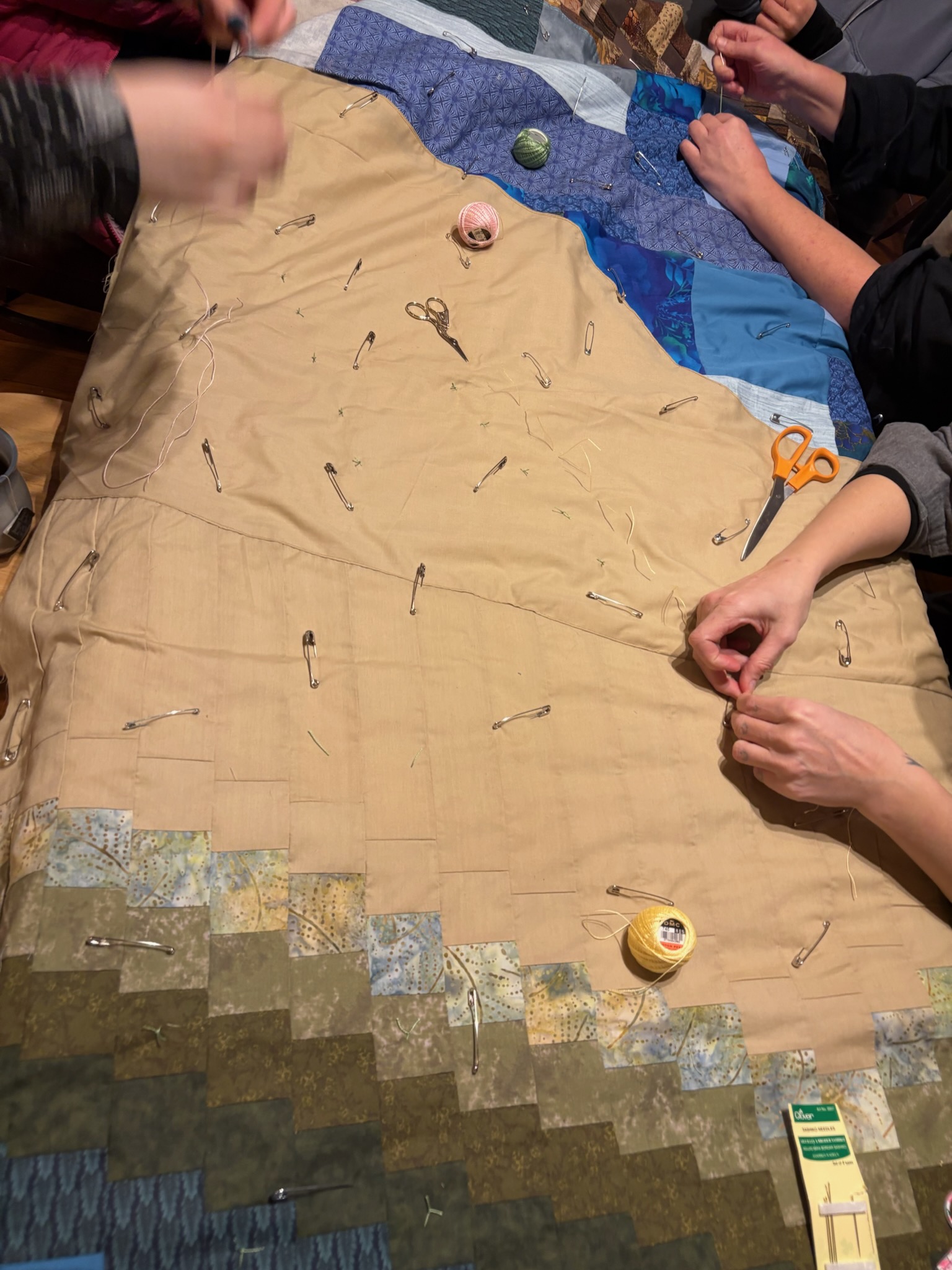
On a larger conceptual scale, the quilts themselves and the process of creating and bestowing them within the project function as both medium and message. Here’s how it works: Recipients are nominated by anyone in their community. Once they accept the nomination, the recipients then choose someone to record and edit an interview with them, as well as three trans artists to create three individual pieces of art in any medium, based on that interview. Then a quilter creates a design based on those three pieces, and a quilting bee is convened to make the quilt, which is gifted to the recipient.
“Each quilt has about 10 artists touching it,” Joan said. “From the people doing the interviews all the way through to the end, which includes everyone making quilts to sometimes even a photo shoot.”
Joan said it’s integral to the project’s message that the materials represent personal journeys and stories rather than monetary value or exchange. “The recipient gets their gift. The artist gets a chance to deepen their practice. But there’s no expectation of money passing hands in order for people to receive their quilts — to do that would really undermine the whole thing.”
Gifts, after all, were how the project originated when Joan started it. “We’re going to make you a quilt simply because your friend nominated you and we want you to have one.”
Clough, who also teaches quilting, further underlines their point. “The act of quilting is never about making something for yourself. Just like teaching is about sparking love and interest for other people, so is this project. They’re both about giving something.”
Fundamentally, the traditions within multiple cultures of using quilts to welcome people, to symbolize community support and convey a sense of belonging, take on new meaning when extended within the trans community.
Joan emphasizes the personalized nature of that concept within this project’s format. “We so often come across quilts and don’t know who made them,” they said. “What we’re trying to do with our project is claim that a gift is powerful when both actors (the giver and the recipient) are present.”
The artists hope their message will shine through. “We’re making and sharing so many stories within the project, in so many ways,” Joan said. “But hopefully people are also getting to know the trans community better, whether it’s in their town or a quilter across the country.”
Alexandra Hall is a longtime New England lifestyle writer who lives in Maine.
IF YOU GO
“Soft Edges,” through May 29 at Light Manufacturing, 121 Cassidy Point, Portland. Gallery hours are noon-6 p.m. Wednesday-Sunday. Exhibit reception is 5-8 p.m. May 15. For more, visit transquilts.net/portland.
Comments are not available on this story. Read more about why we allow commenting on some stories and not on others.
We believe it's important to offer commenting on certain stories as a benefit to our readers. At its best, our comments sections can be a productive platform for readers to engage with our journalism, offer thoughts on coverage and issues, and drive conversation in a respectful, solutions-based way. It's a form of open discourse that can be useful to our community, public officials, journalists and others.
We do not enable comments on everything — exceptions include most crime stories, and coverage involving personal tragedy or sensitive issues that invite personal attacks instead of thoughtful discussion.
You can read more here about our commenting policy and terms of use. More information is also found on our FAQs.
Show less